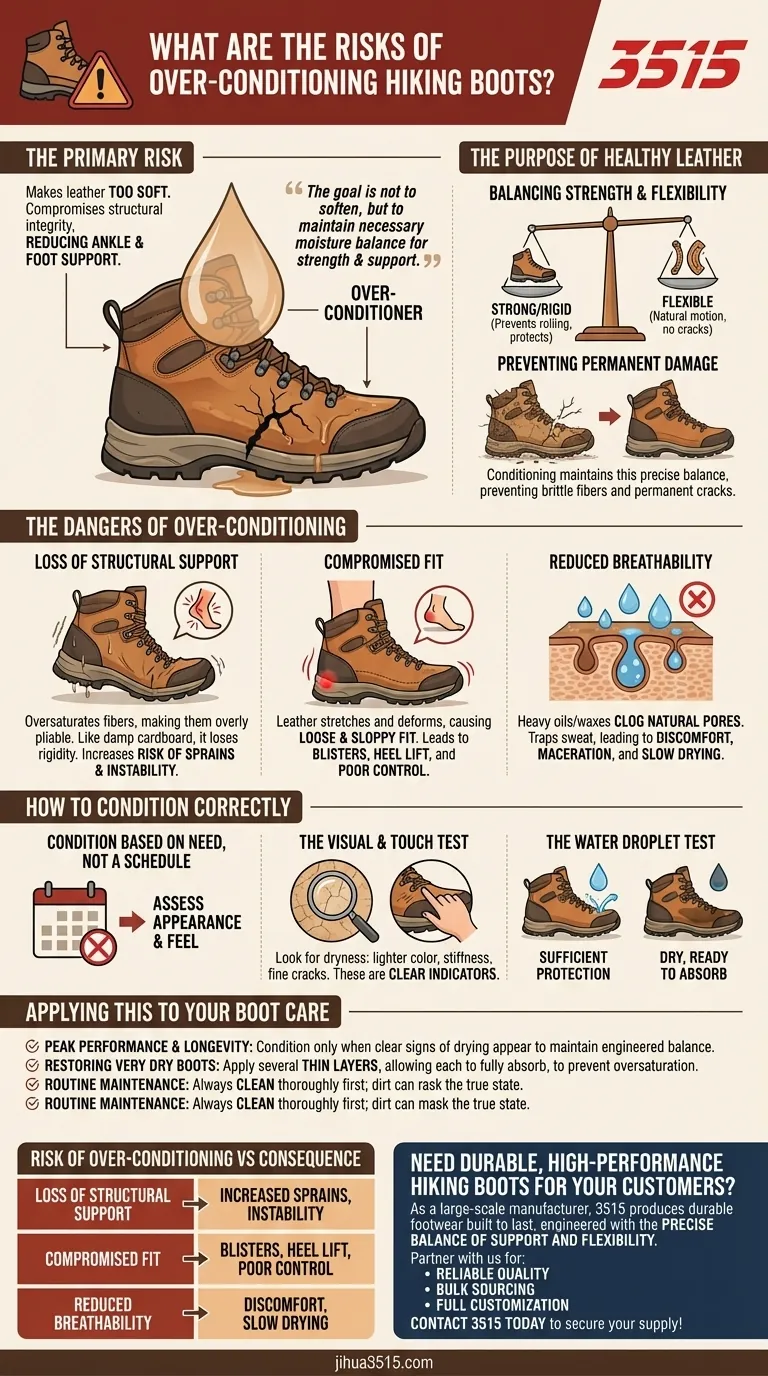
The primary risk of over-conditioning hiking boots is that the excess conditioner makes the leather too soft. This compromises the boot's structural integrity, significantly reducing the critical ankle and foot support necessary for navigating uneven terrain.
The goal of conditioning is not to soften leather, but to maintain its necessary moisture balance. Proper conditioning preserves the strength and support that are fundamental to a hiking boot's performance and your safety on the trail.
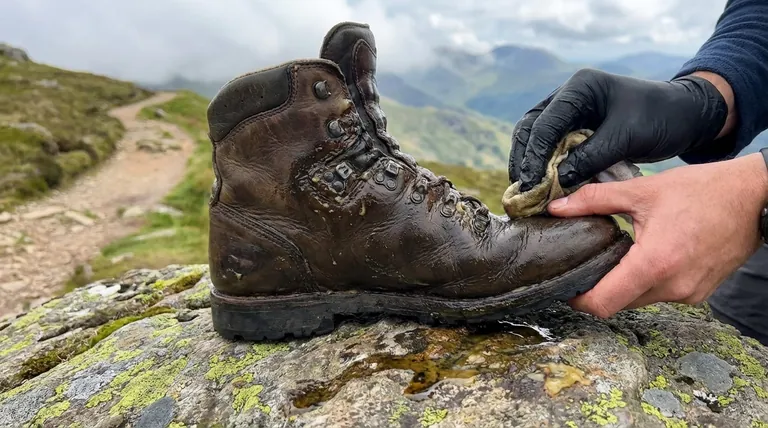
The Purpose of Healthy Leather
Balancing Strength and Flexibility
A hiking boot's leather upper is engineered to be a support system for your foot. It must be strong and rigid enough to prevent ankle rolling and protect you from impacts.
At the same time, it needs enough flexibility to allow for a natural walking motion without cracking. Conditioning helps maintain this precise balance.
Preventing Permanent Damage
As leather is used, it loses its natural oils and moisture, particularly in dry climates or after repeated wet-dry cycles.
This dryness causes the leather's fibers to become brittle. Without conditioning, these fibers will eventually break, leading to permanent cracks, especially at flex points around the ankle and toes.
The Dangers of Over-Conditioning
Loss of Structural Support
The most significant danger is a loss of support. Excessive conditioning oversaturates the leather's fibrous structure, causing it to become overly pliable and soft.
Think of it like a firm piece of cardboard getting damp. It loses its rigidity and can no longer hold its shape. A boot that has lost its structure cannot securely hold your foot, increasing the risk of sprains and instability.
Compromised Fit
When leather becomes too soft, it can stretch and deform. A boot that was once perfectly molded to your foot can become loose and sloppy.
This poor fit is a primary cause of blisters, heel lift, and a general lack of control, making your footing less secure on challenging ground.
Reduced Breathability
Heavy oils, greases, or waxes, when applied too liberally, can clog the natural pores in the leather.
This traps sweat and moisture inside the boot, which can lead to discomfort, maceration (skin breakdown), and a damp internal environment that is slow to dry.
How to Condition Correctly
Condition Based on Need, Not a Schedule
Do not condition your boots on a fixed timeline. Instead, assess them based on their appearance and feel. Factors like your climate and frequency of use will dictate the need.
The Visual and Touch Test
Look for signs of dryness. The leather may appear lighter in color, feel stiff to the touch, or show very fine surface-level cracks. These are clear indicators that it's time to apply conditioner.
The Water Droplet Test
A simple test is to sprinkle a few drops of water on a clean, dry boot. If the water beads up and rolls off, the existing protection is sufficient. If the water soaks in immediately and darkens the leather, the fibers are dry and ready to absorb moisture.
Applying This to Your Boot Care
- If your primary focus is peak performance and longevity: Condition your boots only when they show clear signs of drying to maintain the engineered balance of support and flexibility.
- If you are trying to restore very dry, neglected boots: Apply conditioner in several thin layers, allowing each one to fully absorb before applying the next, to prevent oversaturation.
- If you are performing routine maintenance: Always clean your boots thoroughly before evaluating them. Dirt and dust can absorb conditioner and mask the true state of the leather beneath.
Ultimately, treat boot care as a technical task to preserve performance, not just a cosmetic one to make them look new.
Summary Table:
| Risk of Over-Conditioning | Consequence |
|---|---|
| Loss of Structural Support | Leather becomes too soft, increasing risk of ankle sprains and instability. |
| Compromised Fit | Boots stretch and deform, leading to blisters, heel lift, and poor control. |
| Reduced Breathability | Pores clog, trapping moisture and causing discomfort and slow drying. |
Need Durable, High-Performance Hiking Boots for Your Customers?
As a large-scale manufacturer, 3515 produces a comprehensive range of durable footwear built to last. Our hiking boots are engineered with the precise balance of support and flexibility in mind, ensuring your customers get the safety and performance they need on the trail.
Partner with us for:
- Reliable Quality: Boots designed for longevity and peak performance.
- Bulk Sourcing: Ideal for distributors, brand owners, and bulk clients.
- Full Customization: We produce all types of shoes and boots to meet your specifications.
Contact 3515 today to discuss your footwear needs and secure a reliable supply of high-quality hiking boots!
Visual Guide
Related Products
- Wholesale High-Traction Camo Boots - Custom Manufacturer for Brands
- Durable Rubber Sole Outdoor Shoes Wholesale & Custom Manufacturing
- Durable Spiked Camouflage Boots Wholesale & Factory Production
- Wholesale Lightweight Tactical Boots Custom Manufacturer for Desert & Combat Use
- Wholesale Waterproof Tactical Boots Custom Suede & High-Traction Soles
People Also Ask
- What are the key features of the new line of camo boots? Built for Extreme Cold & Rugged Terrain
- Are camo boots necessary for hunting success? Prioritize Performance Over Pattern
- How does the Rank Score Test identify the primary causes of premature failure in tactical and work boots? Key Insights
- What is the technical logic behind using closed-eye testing for tactical boots? Unlocking Peak Footwear Stability
- What shoes to wear for a security job? Durable, Protective Footwear for Long Shifts