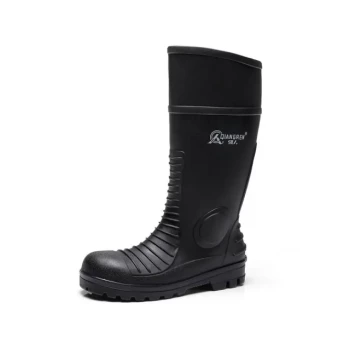
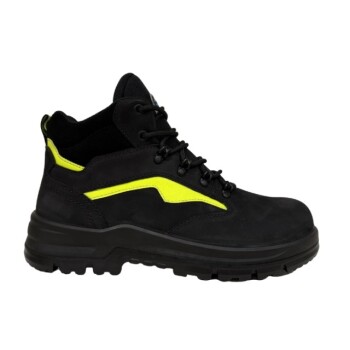
Properly cleaning your work boots is not just about appearance; it's the most critical factor in their longevity and performance. The core process involves a consistent routine: use a soft brush to remove loose debris after each wear, perform a deeper clean with mild soap and lukewarm water as needed, always air dry them away from direct heat, and periodically treat the material with a conditioner or waterproofing agent.
The goal of a cleaning routine is not just to remove dirt. It is to actively preserve the materials, maintain the structural integrity of the boot, and ensure its safety features continue to function as intended.
The Foundation: A Routine for Longevity
A consistent cleaning process prevents abrasive dirt from permanently damaging the boot's materials and seams. Breaking it down into simple, repeatable steps makes it manageable.
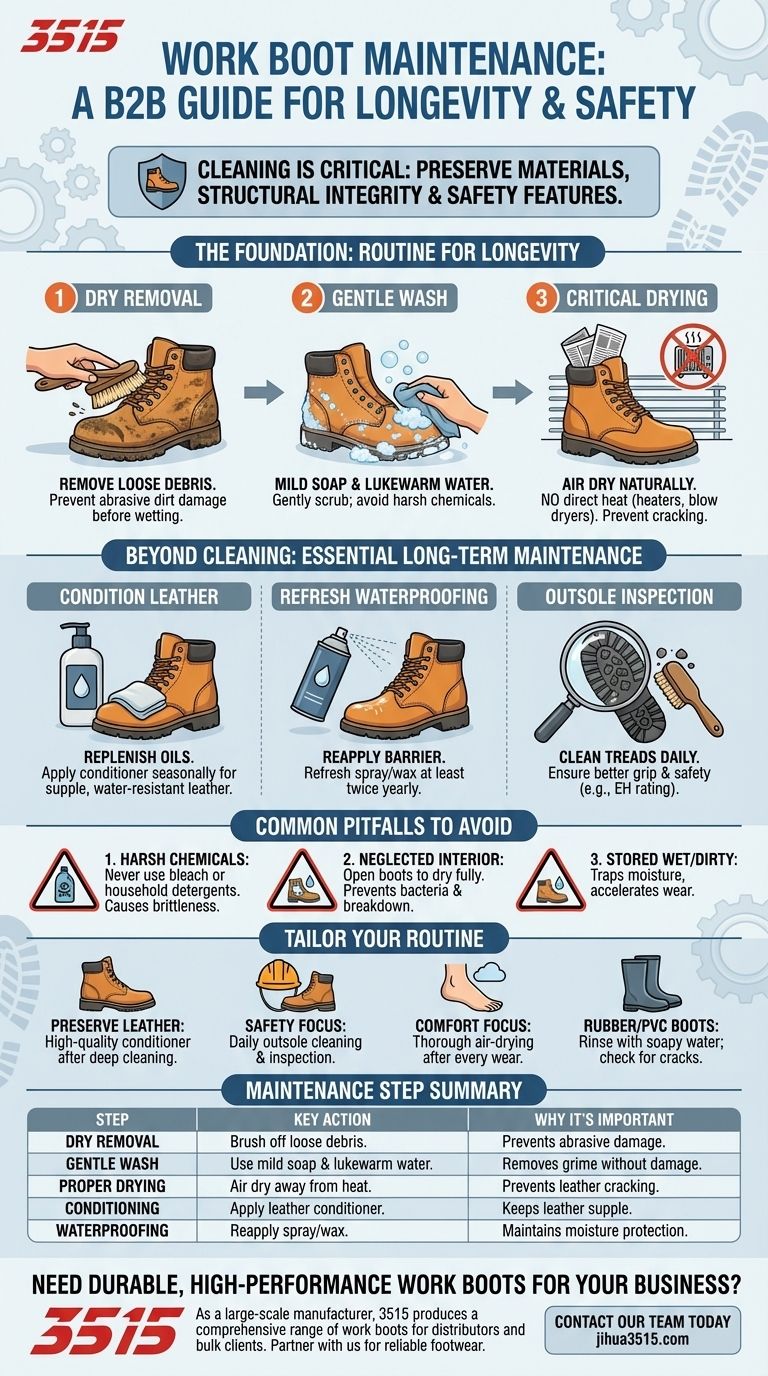
Step 1: The Dry Removal
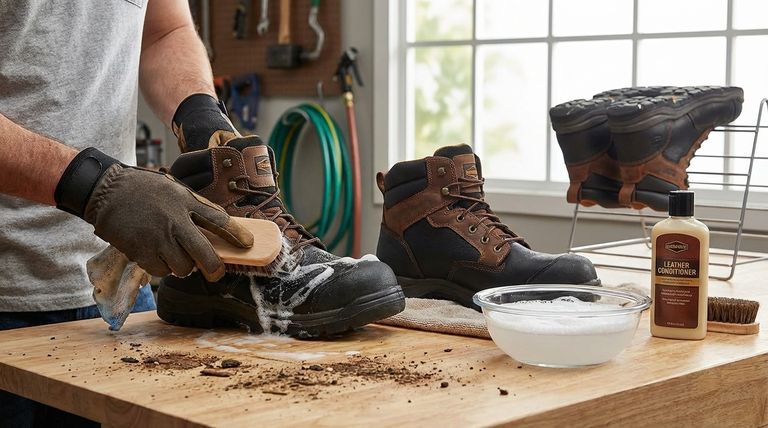
Before introducing any water, always remove dry, caked-on mud and debris. This prevents you from simply turning dirt into abrasive mud that you rub deeper into the material.
Use a soft-bristled boot brush to vigorously clean the entire surface, paying special attention to seams, welts, and the crevices in the outsole lugs.
Step 2: The Gentle Wash
For a deeper clean, a gentle wash is required. First, remove the laces to ensure you can access the tongue and all hidden areas of the boot.
Using a damp cloth with a solution of lukewarm water and a mild soap (like saddle soap for leather), gently scrub the surface panel by panel. Avoid harsh chemical cleaners or solvents, as they can strip essential oils from leather and degrade synthetic materials.
After washing, use a clean, damp microfiber cloth to wipe away any soap residue.
Step 3: The Critical Drying Process
How you dry your boots is as important as how you wash them. Improper drying can cause irreversible damage, such as cracking leather and weakening adhesives.
Never place boots in direct sunlight, near a heater, or use a blow dryer. This forced heat will damage them. Stuff the boots with newspaper to absorb internal moisture and let them air dry naturally overnight at room temperature in a well-ventilated area.
Beyond Cleaning: Essential Long-Term Maintenance
Cleaning is the first step. To truly extend the life of your boots, you must also condition and protect the materials.
Conditioning Leather
Leather is a natural skin that can dry out and crack over time. A quality leather conditioner replenishes the oils in the hide, keeping it soft, supple, and water-resistant.
After your boots are completely dry from a deep clean, apply a leather conditioner with a soft cloth. Allow it to soak in for 20-30 minutes before buffing off any excess. This should be done seasonally or whenever the leather looks dry.
Refreshing Waterproofing
Factory-applied waterproofing wears off over time. To maintain this protective barrier against moisture, you should reapply a waterproofing treatment.
Depending on wear and tear, plan to refresh the waterproofing spray or wax at least twice a year. This is crucial for keeping your feet dry and protecting the boots from salt and chemicals.
Outsole and Safety Inspection
Your routine should always include cleaning the outsole. A clean tread provides better grip and allows for a proper safety inspection.
Ensure the outsole is free of embedded rocks, screws, or conductive materials that could compromise safety features like electrical hazard (EH) ratings.
Common Pitfalls to Avoid
Building good habits means knowing what not to do. These common mistakes can dramatically shorten the lifespan of your work boots.
Mistake 1: Using Harsh Chemicals
Never use household detergents, bleach, or other harsh chemicals. These products are not designed for boot materials and will cause them to become brittle and fail prematurely.
Mistake 2: Neglecting the Interior
A damp interior from sweat can breed bacteria and degrade the boot from the inside out. When air-drying your boots, ensure you open them up as much as possible to allow the interior to dry fully.
Mistake 3: Storing Boots When Wet or Dirty
Never toss your boots in a closet at the end of the day while they are still dirty or damp. This traps moisture and allows abrasive dirt to work its way into the materials, accelerating wear and tear.
Making the Right Choice for Your Goal
Tailor your maintenance routine to your specific needs and boot type to maximize their lifespan and performance.
- If your primary focus is preserving expensive leather boots: Prioritize the regular use of a high-quality leather conditioner after every deep clean.
- If your primary focus is safety in hazardous environments: Make daily outsole cleaning and inspection a non-negotiable part of your routine.
- If your primary focus is comfort during long workdays: Ensure you are thoroughly air-drying your boots after each wear to manage moisture and prevent interior breakdown.
- If your primary focus is maintaining rubber or PVC boots: A simple rinse with soapy water is sufficient, but regular inspection for cracks or punctures is critical.
A well-maintained pair of work boots is an investment in your safety, comfort, and productivity.
Summary Table:
| Maintenance Step | Key Action | Why It's Important |
|---|---|---|
| Dry Removal | Brush off loose debris with a soft brush. | Prevents abrasive dirt from damaging materials. |
| Gentle Wash | Clean with mild soap & lukewarm water. | Removes grime without stripping essential oils. |
| Proper Drying | Air dry naturally, away from direct heat. | Critical to prevent cracking leather & weakening adhesives. |
| Conditioning | Apply leather conditioner seasonally. | Keeps leather supple and water-resistant. |
| Waterproofing | Reapply waterproofing spray/wax twice a year. | Maintains protection against moisture and chemicals. |
Need Durable, High-Performance Work Boots for Your Business?
As a large-scale manufacturer, 3515 produces a comprehensive range of work boots and footwear for distributors, brand owners, and bulk clients. Our production capabilities encompass all types of safety and occupational shoes and boots, built to withstand demanding conditions.
Partner with us to provide your customers with reliable footwear that lasts.
Contact our team today to discuss your specific needs and discover how we can support your business.
Visual Guide
Related Products
- Durable Leather Work Boots for Wholesale & Custom Manufacturing
- Durable Leather Work Boots for Wholesale & Custom OEM Manufacturing
- Durable Leather Work Boots Wholesale Manufacturer & Custom Factory
- Durable Leather Moc Toe Work Boots for Wholesale & Custom Manufacturing
- Wholesale Leather Work Boots with Customizable Wedge Sole for Brands
People Also Ask
- What is the difference between full-grain and top-grain leather? Premium Material Guide for Boot Manufacturers
- What are the common workplace hazards that can be mitigated with the right work boots? Protect Your Workforce
- What are the common foot issues workers face due to uncomfortable work boots? Prevent Pain & Deformities
- What are the advantages of leather versus synthetic work boots? A Guide to Choosing the Right Material
- What are the key components of modern work boots? Engineered for Ultimate Durability and Comfort