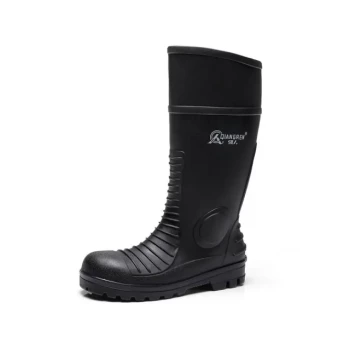
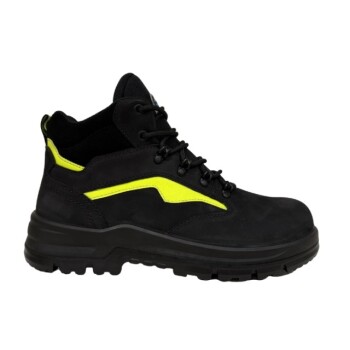
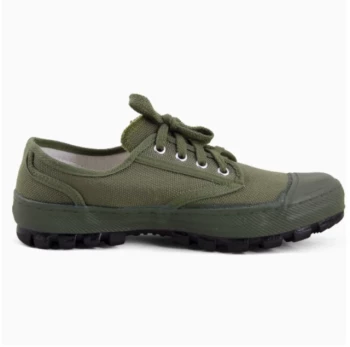
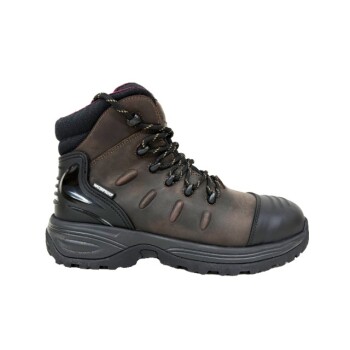
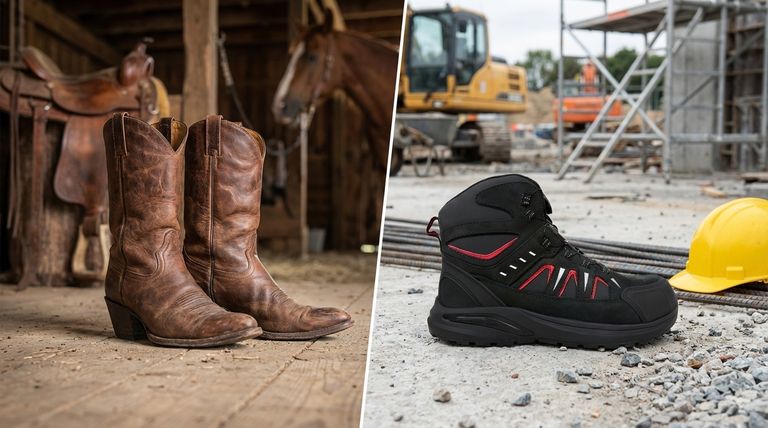
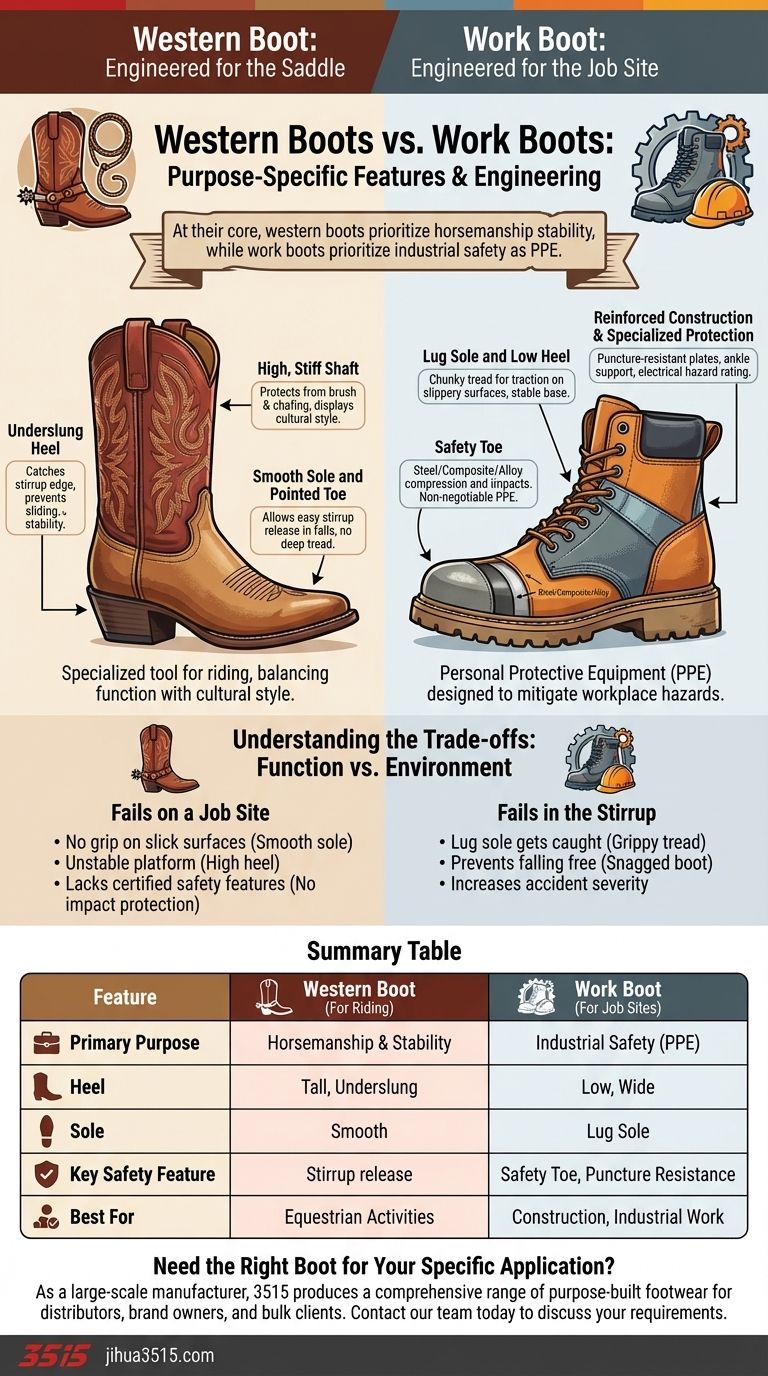
At their core, the features of a western boot are engineered for horsemanship, while the features of a work boot are engineered for industrial safety. Western boots prioritize a rider's stability and safety in a stirrup with a high, underslung heel and a smooth sole. In contrast, work boots prioritize a worker's protection on a job site with features like safety toes, puncture-resistant plates, and high-traction lug soles.
While both are durable footwear, they serve fundamentally different purposes. A western boot is a specialized tool for riding that balances function with cultural style, whereas a work boot is a piece of Personal Protective Equipment (PPE) designed to mitigate workplace hazards.
The Anatomy of a Western Boot: Designed for the Saddle
The classic design of a western boot is the direct result of function dictating form. Every key feature was developed to solve a specific challenge faced by a person on horseback.
The Underslung Heel
The tall, angled heel is arguably the most critical feature. It is specifically designed to catch the edge of a stirrup, preventing the rider's foot from sliding too far forward and getting stuck.
This design provides a secure anchor point, giving the rider stability and control in the saddle, especially during quick movements.
The High, Stiff Shaft
The tall leather shaft, typically reaching mid-calf, serves a dual purpose. Its primary function is to protect the rider's leg from brush, chafing against the saddle, and other environmental hazards.
It also provides a canvas for the ornate stitching and decorative elements that give western boots their distinct cultural identity.
The Smooth Sole and Pointed Toe
Western boots feature a smooth, often leather, sole with no deep tread. This is a crucial safety feature that allows the foot to slide out of the stirrup easily in case of a fall.
The traditionally pointed toe complements this by making it easier to guide the foot into the stirrup quickly.
The Anatomy of a Work Boot: Engineered for the Job Site
A work boot is built from the ground up with a single mission: to protect the wearer's feet in unpredictable and often hazardous environments. Its features are purely functional.
The Lug Sole and Low Heel
Unlike the smooth sole of a western boot, a work boot features a chunky, flat tread or lug sole. This is designed for maximum traction and grip on slippery or uneven surfaces like mud, concrete, or steel.
The low, wide heel provides a stable base for walking and standing for long periods, reducing the risk of slips and ankle rolls.
The Safety Toe
Modern work boots almost always include a reinforced safety toe. This can be made of steel, composite materials, or alloy to protect the toes from compression and heavy impacts from falling objects.
This single feature is a non-negotiable requirement on most industrial job sites and is a core element of its PPE designation.
Reinforced Construction
Beyond the toe, work boots often include puncture-resistant plates in the sole to guard against nails and other sharp objects.
The high-cut design offers critical ankle support to prevent twists, while a reinforced arch is often included to provide stability when climbing ladders.
Specialized Hazard Protection
Many work boots are designed for specific threats. This includes features like an Electrical Hazard (EH) rating to protect against shock, moisture-resistant materials for wet conditions, and moisture-wicking linings to keep feet dry.
Understanding the Trade-offs: Function vs. Environment
The specialized designs of these boots mean they excel in their intended environment but can become a liability when used for the wrong task.
Why Western Boots Fail on a Job Site
Using a western boot in an industrial setting is unsafe. The smooth leather sole offers almost no grip on slick surfaces, and the high heel creates an unstable platform for walking on flat ground.
Most importantly, they lack any certified safety features, offering no protection from impact, compression, or punctures.
Why Work Boots Fail in the Stirrup
Wearing a work boot for horseback riding is equally dangerous. The deep, grippy tread of the lug sole can easily get caught in a stirrup.
If a rider falls, a snagged boot can prevent them from falling free of the horse, leading to a much more severe accident.
Making the Right Choice for Your Goal
Selecting the correct boot is about aligning its specific, purpose-built features with your primary activity.
- If your primary focus is equestrian activities: Choose a western boot, as its smooth sole and high heel are explicitly designed for stirrup safety and rider stability.
- If your primary focus is industrial work or construction: Select a certified work boot with the specific safety features your job requires, such as a steel toe and non-slip sole.
- If your primary focus is all-day comfort and support on hard surfaces: A quality work boot often provides superior cushioning and a more stable walking base than a traditional western boot.
Choosing the right boot is about matching its engineered purpose to your specific environment.
Summary Table:
| Feature | Western Boot (For Riding) | Work Boot (For Job Sites) |
|---|---|---|
| Primary Purpose | Horsemanship & Stability | Industrial Safety (PPE) |
| Heel | Tall, Underslung (for stirrups) | Low, Wide (for stability) |
| Sole | Smooth (for easy stirrup release) | Lug Sole (for maximum traction) |
| Key Safety Feature | Prevents foot from slipping through stirrup | Safety Toe (steel/composite), Puncture Resistance |
| Best For | Equestrian Activities | Construction, Industrial Work |
Need the Right Boot for Your Specific Application?
As a large-scale manufacturer, 3515 produces a comprehensive range of purpose-built footwear for distributors, brand owners, and bulk clients. Whether you need authentic western boots designed for rider safety or certified work boots engineered for industrial hazards, our production capabilities encompass all types of shoes and boots.
Let us help you equip your customers with the perfect footwear solution. Contact our team today to discuss your requirements.
Visual Guide
Related Products
- Durable Leather Work Boots for Wholesale & Custom Manufacturing
- Durable Leather Work Boots for Wholesale & Custom OEM Manufacturing
- Durable Leather Work Boots Wholesale Manufacturer & Custom Factory
- Durable Leather Moc Toe Work Boots for Wholesale & Custom Manufacturing
- Wholesale Leather Work Boots with Customizable Wedge Sole for Brands
People Also Ask
- What is the difference between full-grain and top-grain leather? Premium Material Guide for Boot Manufacturers
- What are the common workplace hazards that can be mitigated with the right work boots? Protect Your Workforce
- What are the common foot issues workers face due to uncomfortable work boots? Prevent Pain & Deformities
- What are the advantages of leather versus synthetic work boots? A Guide to Choosing the Right Material
- What are the key components of modern work boots? Engineered for Ultimate Durability and Comfort