
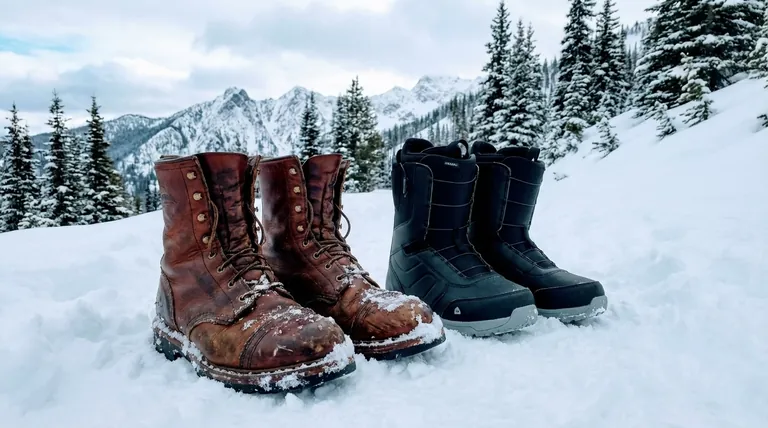
At its core, choosing a leather snow boot is a decision for durability and breathability over convenience. The primary advantages of leather are its long-term toughness and its ability to let foot perspiration escape, while its main disadvantages are its heavier weight and the consistent maintenance required to keep it water-resistant and in good condition.
The central trade-off is simple: Leather offers superior, long-lasting performance for those willing to invest the effort in its upkeep. Synthetics, in contrast, provide immediate, lightweight convenience with less need for maintenance.
Deconstructing the Leather Advantage
Leather's reputation in footwear is built on a foundation of performance characteristics that are difficult to replicate. Understanding these specific traits is key to knowing if it's the right choice for you.
Unmatched Durability
High-quality leather is exceptionally tough and resistant to abrasion. With proper care, a good pair of leather snow boots can last for many seasons, often outliving multiple pairs of their synthetic counterparts.
This material resilience means leather can better withstand rough terrain, scrapes from ice, or contact with snowshoe bindings without tearing.
Superior Breathability
Leather is a naturally porous material, which is its greatest advantage in both cold and active conditions. These pores allow water vapor (sweat) to escape from inside the boot.
This process, known as breathability, is critical for keeping your feet dry from the inside out. Dry feet are warm feet, as moisture buildup rapidly pulls heat away from the body.
A Moldable, Custom Fit
Over time, leather will conform to the unique shape of your foot. This break-in period results in a custom-like fit that provides exceptional comfort and support for long hours of wear.
Understanding the Trade-offs
The benefits of leather do not come without compromises. These trade-offs are the most common reasons why a user might opt for a synthetic alternative instead.
The Weight Factor
Leather is inherently denser and heavier than synthetic materials like nylon or polyester. While this may be unnoticeable on short walks, the extra weight can contribute to fatigue on long winter hikes or snowshoeing treks.
The Maintenance Commitment
Leather is not naturally waterproof; it is water-resistant, and this resistance must be maintained. This requires a commitment to regularly cleaning, drying, and treating the boots with conditioning creams or waxing products.
If this maintenance is neglected, the leather can dry out, crack, and lose its ability to repel water, leading to leaks and permanent damage.
Drying Time
When leather does become saturated with water, it takes significantly longer to dry than synthetic fabrics. This can be a major drawback on multi-day trips or if you need to wear the boots again the next day.
How Leather Compares to Modern Synthetics
Modern synthetic boots present a compelling alternative, excelling in areas where leather falls short, but they also have their own set of limitations.
The Synthetic Alternative
Synthetic boots are typically constructed from materials like nylon and are often paired with a built-in waterproof membrane. This provides out-of-the-box waterproofing with no treatment required.
They are also significantly lighter than leather boots and dry very quickly when wet, making them a highly convenient choice.
The Durability and Breathability Gap
The primary weakness of many synthetic boots is twofold. First, they are generally less durable than a well-made leather boot and more susceptible to tears and seam failure.
Second, while the waterproof membrane keeps external water out, it can also trap sweat inside. Many synthetics have inferior breathability compared to leather, which can lead to damp, cold feet during strenuous activity.
Making the Right Choice for Your Needs
Your ideal boot material depends entirely on your planned activities and your willingness to perform upkeep.
- If your primary focus is long-term durability for frequent, rugged use: Choose a high-quality leather boot and commit to its regular maintenance.
- If your primary focus is lightweight convenience for casual winter walks or commuting: A modern synthetic boot is likely the more practical and comfortable choice.
- If your primary focus is guaranteed waterproofing for deep, wet snow or slush: A synthetic boot with a proven waterproof membrane is your most reliable option.
Ultimately, the right material is the one that best aligns with your performance needs and lifestyle.
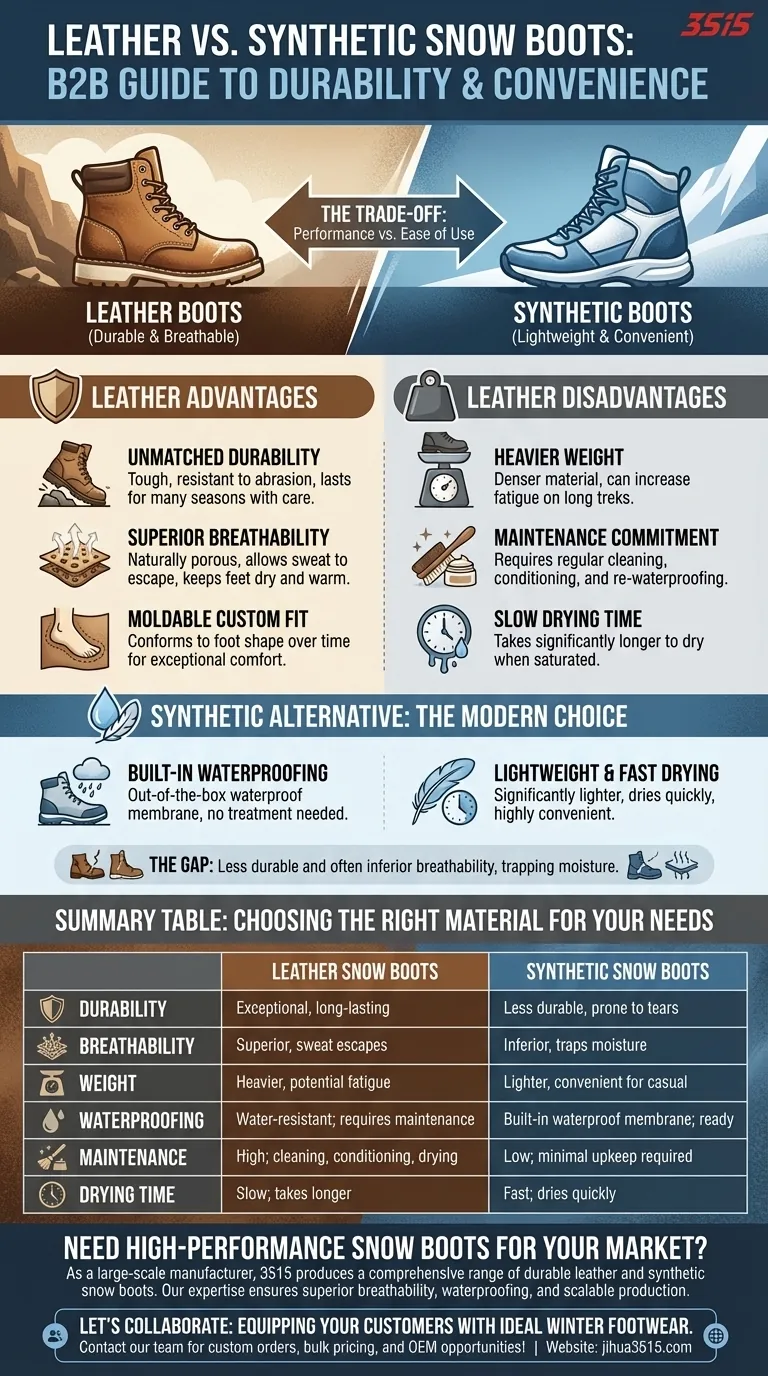
Summary Table:
| Aspect | Leather Snow Boots | Synthetic Snow Boots |
|---|---|---|
| Durability | Exceptional, long-lasting with proper care | Less durable, prone to tearing over time |
| Breathability | Superior, allows sweat to escape | Often inferior, can trap moisture inside |
| Weight | Heavier, may cause fatigue on long treks | Lighter, more convenient for casual use |
| Waterproofing | Water-resistant; requires regular maintenance | Built-in waterproof membrane; ready to use |
| Maintenance | High; needs cleaning, conditioning, and drying | Low; minimal upkeep required |
| Drying Time | Slow; takes longer to dry when wet | Fast; dries quickly for multi-day trips |
Need High-Performance Snow Boots for Your Market?
As a large-scale manufacturer, 3515 produces a comprehensive range of durable leather and synthetic snow boots tailored for distributors, brand owners, and bulk clients. Our expertise ensures superior breathability, waterproofing, and long-lasting performance—backed by scalable production capabilities for all types of footwear.
Let’s collaborate to equip your customers with the ideal winter footwear solution. Contact our team today to discuss custom orders, bulk pricing, and OEM opportunities!
Visual Guide
Related Products
- Durable Goodyear Welt Leather Work Boots for Wholesale & Private Label
- Durable Leather Work Boots Wholesale Manufacturer & Custom Factory
- Durable Leather High-Ankle Tactical Boots for Wholesale & Custom Manufacturing
- Durable Leather Work Boots for Wholesale & Custom Manufacturing
- Wholesale Leather Ankle Boots with Lug Soles for Custom Brand Manufacturing
People Also Ask
- What is the difference between full-grain and top-grain leather? Premium Material Guide for Boot Manufacturers
- What are the advantages of leather as an upper material for work boots? Unmatched Durability & Custom Comfort
- Why is it important to waterproof leather work boots? Protect Your Investment and Performance
- How should new leather work boots be broken in? A Guide to Comfort and Durability
- What are the advantages of leather uppers in work boots? Unmatched Durability & Protection
















