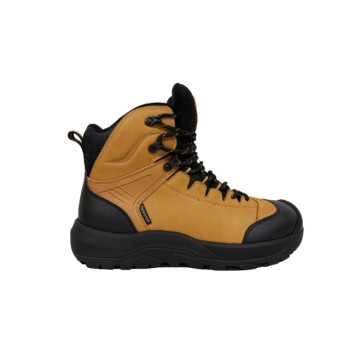
In short, snow boots are specialized footwear designed to provide warmth, waterproofing, and traction in cold, wet, and slippery conditions. They are engineered to keep your feet dry and protected from the elements, whether you are walking through deep snow, slush, or even crossing a shallow, icy stream.
The core purpose of a snow boot is not just to be a "winter shoe," but to function as a dedicated system for protecting your feet from the specific challenges of cold and moisture, ensuring both safety and comfort.

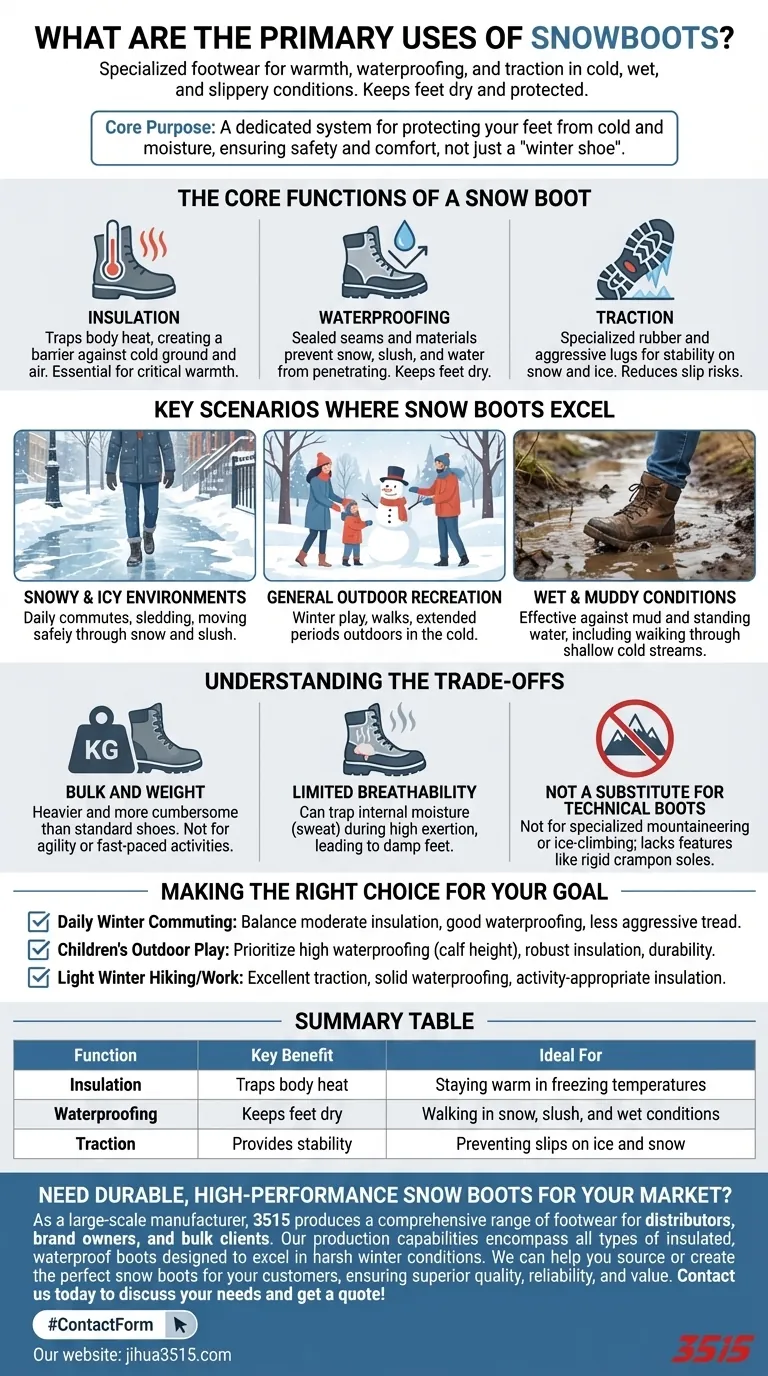
The Core Functions of a Snow Boot
A snow boot's utility comes from a combination of three critical features that work together. Understanding these functions helps clarify why they are the correct tool for certain jobs.
Insulation for Critical Warmth
The primary function of a snow boot is to prevent heat loss. They are built with layers of insulation designed to trap body heat and create a barrier against the cold ground and air. This is what separates them from a standard waterproof hiking boot.
Waterproofing for Dryness
Keeping feet dry is essential for warmth and health in winter. Snow boots use waterproof materials and construction methods, like sealed seams, to prevent snow, slush, and water from penetrating the boot.
Traction for Stability
Winter surfaces are inherently unstable. The outsoles of snow boots are made from specialized rubber compounds that remain flexible in the cold and feature deep, aggressive lugs (treads) designed to grip snow and ice, reducing the risk of slips and falls.
Key Scenarios Where Snow Boots Excel
While their name implies a singular purpose, their design makes them versatile for a range of cold and wet environments.
Navigating Snowy and Icy Environments
This is their most obvious use. Whether for a daily commute on uncleared sidewalks or for recreational activities like sledding, snow boots provide the necessary protection and stability to move through snow and slush safely.
General Outdoor Recreation and Play
Snow boots are essential for children and adults during winter play. Activities like building a snowman, winter walks, or simply being outdoors for extended periods in the cold require the robust protection these boots offer.
Wet and Muddy Conditions
The waterproofing that keeps snow out is equally effective against mud and standing water. This makes them a practical choice for muddy fields, wet lawns, or even for tasks like walking through a shallow, cold stream where insulated, waterproof footwear is necessary.
Understanding the Trade-offs
While highly effective, snow boots are a specialized tool and come with inherent limitations. Choosing them for the wrong task can lead to discomfort.
Bulk and Weight
The insulation and rugged materials that make snow boots effective also make them heavier and more cumbersome than standard shoes or hikers. They are not designed for agility or long-distance, fast-paced activities.
Limited Breathability
The same membrane that blocks external water can also trap internal moisture (sweat). During high-exertion activities, this can lead to damp feet, which ironically increases the risk of getting cold once you stop moving.
Not a Substitute for Technical Boots
Snow boots are for general winter use. They are not a substitute for specialized mountaineering or ice-climbing boots, which have features like rigid soles for crampons and are designed for extreme technical terrain.
Making the Right Choice for Your Goal
Selecting the right footwear depends entirely on the conditions you expect to face.
- If your primary focus is daily winter commuting: A boot that balances moderate insulation with good waterproofing and a less aggressive tread is often sufficient.
- If your primary focus is children's outdoor play: Prioritize high waterproofing (often up to the calf), robust insulation, and durability.
- If your primary focus is light winter hiking or outdoor work: Look for a boot with excellent traction, solid waterproofing, and enough insulation for your activity level.
Ultimately, choosing a snow boot is about matching the tool to the specific challenge your environment presents.
Summary Table:
| Function | Key Benefit | Ideal For |
|---|---|---|
| Insulation | Traps body heat | Staying warm in freezing temperatures |
| Waterproofing | Keeps feet dry | Walking in snow, slush, and wet conditions |
| Traction | Provides stability | Preventing slips on ice and snow |
Need Durable, High-Performance Snow Boots for Your Market?
As a large-scale manufacturer, 3515 produces a comprehensive range of footwear for distributors, brand owners, and bulk clients. Our production capabilities encompass all types of insulated, waterproof boots designed to excel in harsh winter conditions.
We can help you source or create the perfect snow boots for your customers, ensuring superior quality, reliability, and value.
Contact us today to discuss your needs and get a quote!
Visual Guide
Related Products
- Premium Insulated Safety Boots and Shoes for Wholesale & Bulk Orders
- Durable Waterproof Rain Boots | Custom Manufacturer for Wholesale & Brands
- Factory Direct Wholesale Rain Boots Durable Waterproof & Fully Customizable
- Wholesale Durable Camouflage Canvas Shoes with High-Traction Cleated Rubber Sole
- Wholesale Waterproof Tactical Boots Custom Suede & High-Traction Soles
People Also Ask
- What are the recommended insulation ratings for mild winter conditions? A Guide for Active & Stationary Workers
- How does insulation thickness correlate with temperature ranges? A Guide to Choosing the Right Warmth
- What insulation level is needed for severe cold and stationary work? 1200g or Higher is Essential
- What safety advantages do insulated boots offer beyond warmth? Dielectric Protection & Superior Grip
- How does fleece lining contribute to the warmth of insulated boots? Trapping Air for Superior Cold Protection