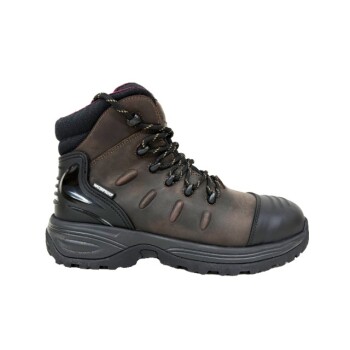
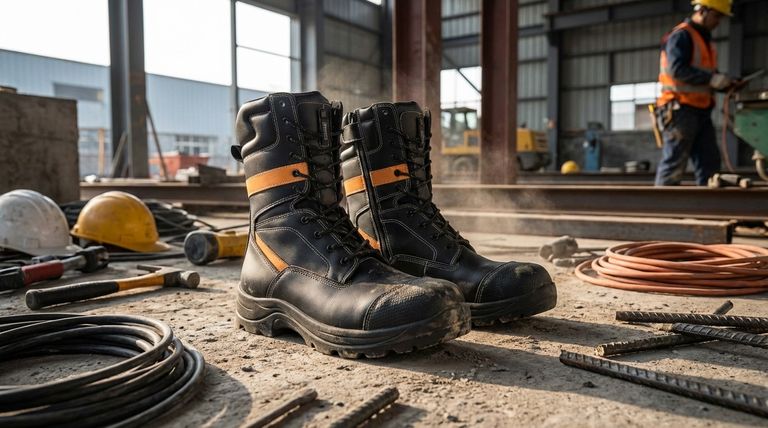
At their core, work boots are a system of integrated safety features designed to protect against specific workplace hazards. The primary features include protective toe caps, puncture-resistant midsoles for shielding against sharp objects, and slip-resistant outsoles to ensure stability. They also incorporate crucial elements like ankle support, arch reinforcement, and insulation from electrical currents.
A work boot is not merely durable footwear; it is a critical piece of Personal Protective Equipment (PPE). Understanding its components is essential for matching the right protection to the specific risks of your work environment.
Foundational Protection: The Core Structure
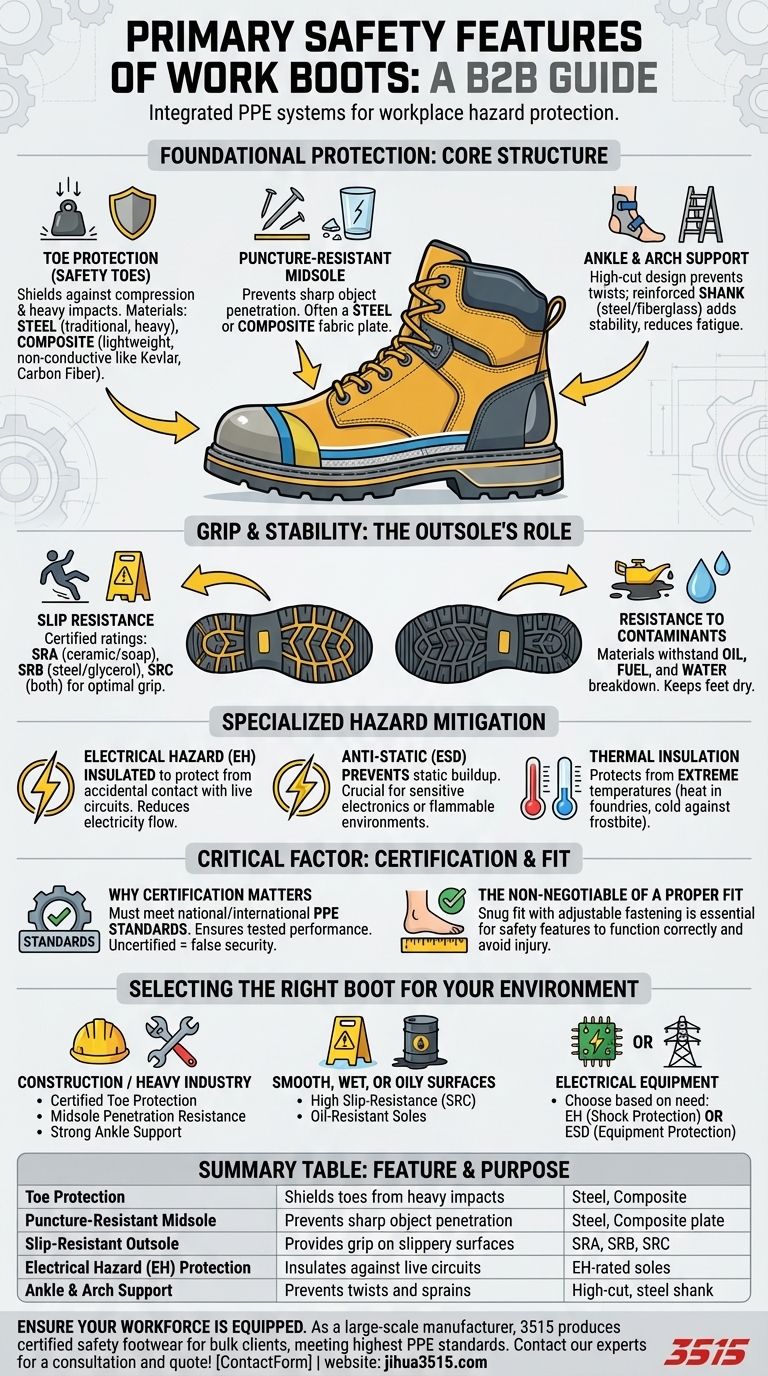
The fundamental purpose of a work boot is to defend against physical impacts and punctures that can cause severe injury. This protection is built into the boot's essential structure.
Toe Protection (Safety Toes)
The most recognized feature is the reinforced toe cap, which protects the toes from compression and heavy impacts. These must meet national safety standards, typically rated to withstand a force of 200 joules.
They are commonly made from steel, but composite materials (like Kevlar, carbon fiber, or plastic) are lighter alternatives that don't conduct electricity or temperature.
Midsole Penetration Resistance
A reinforced plate, often made of steel or flexible composite fabric, is positioned within the sole. This feature is critical for preventing punctures from sharp objects on the ground, such as nails, screws, or glass.
Ankle and Arch Support
Most work boots feature a high-cut design to provide robust ankle support, protecting against twists and sprains on uneven terrain.
Additionally, a reinforced arch or shank (often steel) provides stability, especially when climbing ladders, by preventing the boot from flexing and fatiguing the foot.
Grip and Stability: The Outsole's Role
A boot's outsole is its direct point of contact with the working surface. Its design is critical for preventing slips, trips, and falls, which are among the most common workplace accidents.
Slip Resistance
The tread pattern and material of the outsole are engineered for grip. Soles are often certified with ratings like SRA (tested on ceramic tile with soap), SRB (tested on steel with glycerol), or SRC (tested under both conditions).
Resistance to Contaminants
For environments where spills are common, outsoles are made from materials resistant to breakdown from oil and fuel. Many boots also use water-resistant materials like treated leather to keep feet dry and prevent damage.
Specialized Hazard Mitigation
Beyond physical impacts and slips, work boots can be equipped with features to mitigate less obvious but equally dangerous environmental hazards.
Electrical Hazard (EH) Protection
Boots with an EH rating are insulated to protect the wearer from accidental contact with live electrical circuits. Their soles are designed to significantly reduce the flow of electricity through the foot.
Anti-Static Properties (ESD)
Conversely, anti-static or Electro-Static Dissipative (ESD) boots are designed to prevent the buildup of static electricity in the body. This is crucial in environments with sensitive electronics or flammable materials where a static discharge could be catastrophic.
Thermal Insulation
Specialized boots offer protection from extreme temperatures. This can include insulation to prevent heat transfer in hot environments like foundries or cold insulation to protect against hypothermia and frostbite in freezing conditions.
The Critical Factor: Certification and Fit
A boot's features are meaningless if they haven't been tested to perform under stress or if the boot doesn't fit properly.
Why Certification Matters
Reputable work boots must be certified to meet specific national or international PPE standards. This certification ensures the boot has passed rigorous tests for impact resistance, compression, sole penetration, and slip resistance. Uncertified boots offer a false sense of security.
The Non-Negotiable of a Proper Fit
An ill-fitting boot can cause pain and strain, but it also compromises safety. A loose boot can reduce ankle support and stability, while a tight boot can create dangerous pressure points. A snug fit with adjustable fastening is essential for all features to function correctly.
Selecting the Right Boot for Your Environment
Choosing the right boot requires a clear understanding of the primary hazards you face on the job.
- If your primary focus is construction or heavy industry: Prioritize boots with certified toe protection, midsole penetration resistance, and strong ankle support.
- If your primary focus is working on smooth, wet, or oily surfaces: Ensure your boot has a high slip-resistance rating (SRC is best) and oil-resistant soles.
- If your primary focus is around electrical equipment: You must distinguish between your needs. Choose an EH-rated boot to protect from shock, or an ESD boot to protect sensitive equipment.
Investing in the correct, certified work boot is a direct investment in your personal safety and capability on the job.
Summary Table:
| Feature | Purpose | Common Materials/Certifications |
|---|---|---|
| Toe Protection | Shields toes from heavy impacts | Steel, Composite (Kevlar, carbon fiber) |
| Puncture-Resistant Midsole | Prevents sharp object penetration | Steel, Composite fabric plate |
| Slip-Resistant Outsole | Provides grip on slippery surfaces | SRA, SRB, SRC ratings |
| Electrical Hazard (EH) Protection | Insulates against live circuits | EH-rated soles |
| Ankle & Arch Support | Prevents twists and sprains | High-cut design, steel shank |
Ensure your workforce is equipped with the right protection. As a large-scale manufacturer, 3515 produces a comprehensive range of certified safety footwear for distributors, brand owners, and bulk clients. Our production capabilities encompass all types of safety shoes and boots, designed to meet the highest standards for impact, puncture, and slip resistance. Let us help you source the perfect PPE for your specific work environment. Contact our experts today for a consultation and quote!
Visual Guide
Related Products
- Durable Leather Work Boots for Wholesale & Custom Manufacturing
- Durable Leather Work Boots for Wholesale & Custom OEM Manufacturing
- Durable Leather Work Boots Wholesale Manufacturer & Custom Factory
- Durable Leather Moc Toe Work Boots for Wholesale & Custom Manufacturing
- Wholesale Leather Work Boots with Customizable Wedge Sole for Brands
People Also Ask
- What is the difference between full-grain and top-grain leather? Premium Material Guide for Boot Manufacturers
- What are the common workplace hazards that can be mitigated with the right work boots? Protect Your Workforce
- What are the common foot issues workers face due to uncomfortable work boots? Prevent Pain & Deformities
- What are the advantages of leather versus synthetic work boots? A Guide to Choosing the Right Material
- What are the key components of modern work boots? Engineered for Ultimate Durability and Comfort