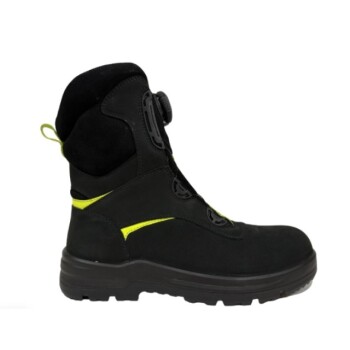
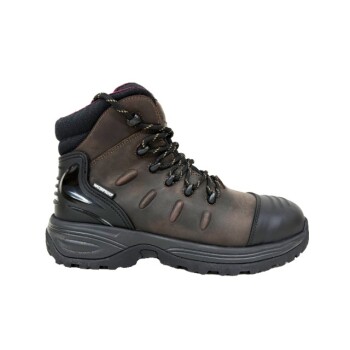
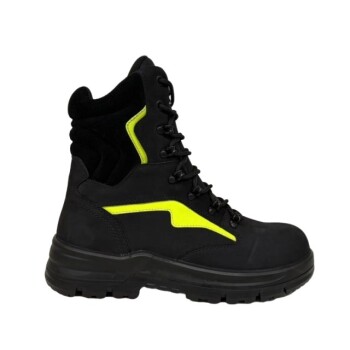
The primary difference between men’s and women’s professional safety boots lies in the anatomical engineering of the "last"—the physical mold used to shape the boot. Men’s boots are constructed with a larger last to accommodate higher foot volume, broader widths, and higher ankle support. Conversely, women’s safety boots are engineered with a lower-volume last, featuring narrower heels, higher arch support, and shallower toe boxes to ensure proper fit and specialized protection.
Professional safety footwear must move beyond "unisex" sizing to address gender-specific biomechanics. For distributors and brand owners, providing footwear built on gender-correct lasts is essential for reducing workplace fatigue and ensuring international safety compliance.
Precision Anatomical Engineering
The Critical Role of the Footwear Last
Professional manufacturing begins with a gender-specific last that mirrors the unique geometry of the foot. Men’s boots typically feature a wider footbed and a larger calf opening to accommodate a broader skeletal structure.
Women’s boots require a specialized mold that accounts for a narrower heel and a smaller Achilles tendon area. Simply scaling down a man’s boot size leads to heel slippage, which compromises the safety benefits of the footwear.
Arch Support and Toe Box Geometry
Women’s professional boots are designed with higher arches integrated into the insoles to align with female anatomical trends. This reduces the risk of arch pain and long-term musculoskeletal strain during extended shifts.
The toe box area in women’s boots is often shorter and shallower. This ensures that the protective safety toe cap (whether steel or composite) sits correctly over the digits without creating dangerous gaps or pressure points.
Structural and Performance Variations
Weight Distribution and Material Density
Men’s safety boots are often characterized by a heavier, chunkier construction designed for high-impact durability in extreme industrial environments. These models prioritize maximum volume and ruggedness.
Women’s professional footwear often utilizes lightweight materials and sleeker profiles without sacrificing safety ratings. This design philosophy balances the need for specialized protection with the ergonomic requirements of a typically lighter frame.
Calf and Ankle Support Height
Men’s boots often feature higher ankle support to stabilize larger foot volumes under heavy loads. This is a core requirement for heavy industry and construction sectors.
Women's boots are engineered with narrower calf openings and tailored ankle heights. This provides a more customized fit that prevents debris from entering the boot while maintaining the necessary range of motion.
Manufacturing Excellence and Supply Chain Reliability
Leveraging Decades of Technical Heritage
Producing high-performance safety footwear requires a deep understanding of international standards and state-of-the-art equipment. High-tier manufacturers have been refining these processes since 1951, ensuring that every last meets rigorous ergonomic criteria.
A robust supply chain is defined by its ability to deliver consistent large-volume orders across diverse gender-specific SKU sets. This ensures that distributors can meet the growing demand for inclusive PPE without facing inventory gaps.
Premium OEM and ODM Capabilities
Top-tier manufacturing facilities offer premium OEM/ODM services that allow brand owners to customize footwear for specific regional markets. This includes integrating international certifications (such as ASTM or CE) into both men’s and women’s product lines.
By utilizing advanced machinery and massive production scales, manufacturers can produce highly specialized gender-specific designs at a competitive cost. This stability is vital for B2B resellers who require long-term procurement security.
Understanding the Trade-offs: The "Shrink It and Pink It" Pitfall
The Danger of Scaled-Down Designs
A common pitfall in the industry is the "shrink it and pink it" strategy—merely reducing the size of a man’s boot and changing the color. This approach is technically flawed because it ignores width-to-length ratios and volume differences.
Fit vs. Safety Ratings
If a boot does not fit the heel and arch correctly, the wearer’s foot will shift inside the footwear. This displacement can move the toes out of the "safe zone" provided by the protective toe cap, effectively nullifying the boot’s safety certification in a real-world impact scenario.
How to Apply This to Your Portfolio
- If your primary focus is brand integrity: Prioritize manufacturers who utilize gender-specific lasts rather than modified unisex molds to ensure superior wearer comfort.
- If your primary focus is market expansion: Source a diverse range of sizes that include specialized women's widths to capture the increasing demand for female-specific PPE in industrial sectors.
- If your primary focus is supply chain stability: Partner with established manufacturers with a heritage dating back decades and the capacity for consistent, high-volume delivery of certified safety gear.
True professional safety is achieved only when technical engineering aligns perfectly with the anatomical reality of the worker.
Summary Table:
| Feature | Men's Professional Safety Boots | Women's Professional Safety Boots |
|---|---|---|
| Footwear Last | High volume, broad width, large calf opening | Lower volume, narrow heel, tailored Achilles |
| Arch Support | Standard industrial contouring | Higher integrated arches for musculoskeletal health |
| Toe Box | Deep and wide for maximum clearance | Shallow and short for precise safety cap alignment |
| Construction | Heavier, rugged design for high-impact use | Lightweight materials with ergonomic profiles |
| Ankle Support | Higher profile for stabilizing larger loads | Customized heights for range of motion and fit |
Partner with 3515 for Certified Safety Footwear Excellence
Ensure your inventory meets the highest standards of anatomical precision and international compliance. As a large-scale manufacturer serving distributors and brand owners since 1951, 3515 offers massive production scale and premium OEM/ODM capabilities.
From our flagship Safety Shoes series to tactical boots, outdoor footwear, and formal dress shoes, we provide the supply chain stability and consistent large-volume delivery your business requires. Benefit from our state-of-the-art equipment and decades of technical heritage to gain a competitive edge in the B2B market.
Ready to scale your footwear line? Contact 3515 Today to discuss your bulk requirements and custom manufacturing needs.
Related Products
- Premium High-Cut Waterproof Safety Boots Manufacturing & Wholesale Solutions
- Premium Waterproof High-Cut Industrial Safety Boots for Wholesale and Bulk Orders
- Puncture-Resistant Velcro Safety Boots for Wholesale & Custom Manufacturing
- Premium Wholesale Waterproof Safety Boots High Performance Protection for Industrial Markets
- Premium Grain Leather Safety Boots for Bulk Supply
People Also Ask
- Which industries commonly use safety boots and why? Protect Your Workforce from Top Hazards
- What are the common hazards present in work environments that safety boots protect against? Find Your Perfect Match
- What future trends are emerging in safety boot technology? Discover Lighter, Smarter, and More Sustainable Footwear
- What are the slip resistance requirements for safety boots? Professional Grip Standards for Poultry Facility Cleaning
- Why is a high-precision 3D motion capture system necessary for measuring joint range of motion? Optimize Safety & Mobility