The primary methods for waterproofing leather shoes are applying a dedicated waterproofing spray, working in a wax-based polish or cream, or using physical barriers like galoshes. Each method offers a different level of protection and has specific use cases depending on the type of leather and the conditions you expect to face.
The most effective waterproofing strategy depends on balancing protection, breathability, and the specific type of leather. Robust waxes offer the highest level of durable water resistance for smooth leather, while specialized sprays preserve the texture of delicate materials like suede.
Preparation: The Foundation of Effective Waterproofing
Before applying any protective product, you must ensure your shoes are perfectly clean. Applying a waterproofing agent over dirt and grime traps it against the leather, degrading the material and preventing the product from bonding correctly.
Start with a Clean Surface
First, remove the laces to ensure you can access the entire shoe, including the tongue. Use a brush to knock off any loose dirt, mud, or dust from the leather and the seams.
Perform a Deep Clean
For a thorough cleaning, use a dedicated leather cleaner or saddle soap with a damp cloth. Work the cleaner in gently to lift scuffs and embedded dirt. Avoid over-saturating the leather with water and never dry your shoes in direct sunlight or near a heat source, as this can cause the leather to crack.
Choosing Your Waterproofing Method
The right method depends on your shoe's material and your desired level of protection. The most common and effective options fall into two categories: surface treatments and physical barriers.
Waterproofing Sprays
Sprays are the fastest and easiest method to apply. They create a protective barrier on the surface of the leather that repels water.
These are the best choice for delicate leathers like suede or nubuck, as they won't mat the fine texture. Opt for a non-silicone spray, as silicone-based products can clog the leather's pores and prevent it from breathing.
Wax-Based Polishes and Creams
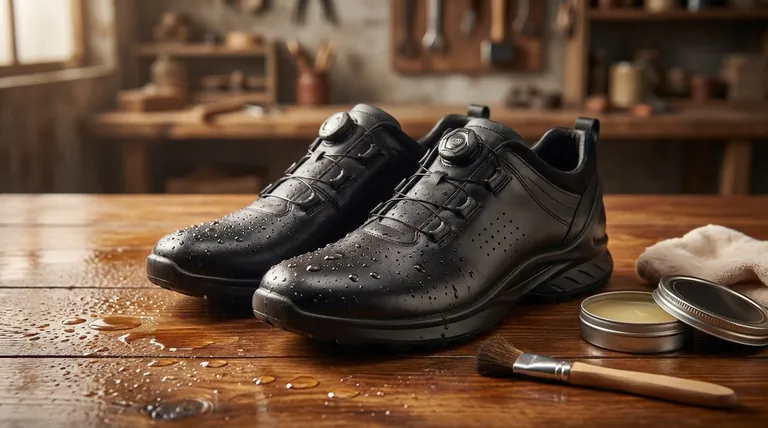
For smooth, full-grain leather shoes and boots, a high-quality wax polish or waterproofing cream offers superior protection. The wax penetrates the leather's pores, nourishing the material while creating a highly durable water-resistant seal.
This method typically provides longer-lasting protection than a spray and also conditions the leather, enhancing its appearance and longevity. Beeswax and mink oil are common natural ingredients in these products.
Physical Barriers (Galoshes)
For extreme wet conditions like heavy rain, deep puddles, or snow, no surface treatment is foolproof. In these situations, the only guaranteed way to keep your leather shoes dry is with a physical barrier.
Galoshes are rubber overshoes that you slip on over your dress shoes. While not a permanent treatment, they offer complete, temporary protection against the harshest elements.
Understanding the Trade-offs
Waterproofing is not a one-size-fits-all process. Every method involves a compromise between protection, appearance, and the long-term health of the leather.
Protection vs. Breathability
The more waterproof you make a shoe, the less breathable it becomes. Heavy waxes and creams provide excellent water resistance but can reduce the leather's natural ability to breathe. Sprays offer less robust protection but have a minimal impact on breathability.
The Risk of Discoloration
Many oils and waxes, particularly mink oil, can noticeably darken the color of the leather. This isn't necessarily a bad thing, but it's a critical consideration. Always test any new product on a small, inconspicuous area of the shoe first.
Why Avoid Silicone
Silicone creates a synthetic, plastic-like seal over the leather. While this is effective at blocking water in the short term, it completely suffocates the material. This prevents the leather from breathing and makes it impossible to clean or condition properly in the future, ultimately leading to premature drying and cracking.
Making the Right Choice for Your Shoes
Your choice should be guided by your shoe type and your environment.
- If you have suede or nubuck shoes: A non-silicone waterproofing spray is your only safe option to protect the delicate texture.
- If you have standard full-grain leather boots or dress shoes: A quality wax-based polish or cream offers the best balance of durable protection and leather conditioning.
- If you need maximum protection from harsh weather: Physical barriers like galoshes are the only truly waterproof solution.
Properly protecting your leather shoes from water is the single best step you can take to ensure they last for years.
Summary Table:
| Method | Best For | Key Benefit |
|---|---|---|
| Waterproofing Spray | Suede, Nubuck | Preserves texture, easy application |
| Wax-Based Polish/Cream | Full-Grain Leather | Durable protection, conditions leather |
| Physical Barriers (Galoshes) | Extreme Weather | Complete, temporary waterproofing |
Need to source high-quality, durable leather footwear? As a large-scale manufacturer, 3515 produces a comprehensive range of waterproof and weather-resistant shoes and boots for distributors, brand owners, and bulk clients. Let us help you find the perfect footwear solution for your market. Contact our team today to discuss your needs!
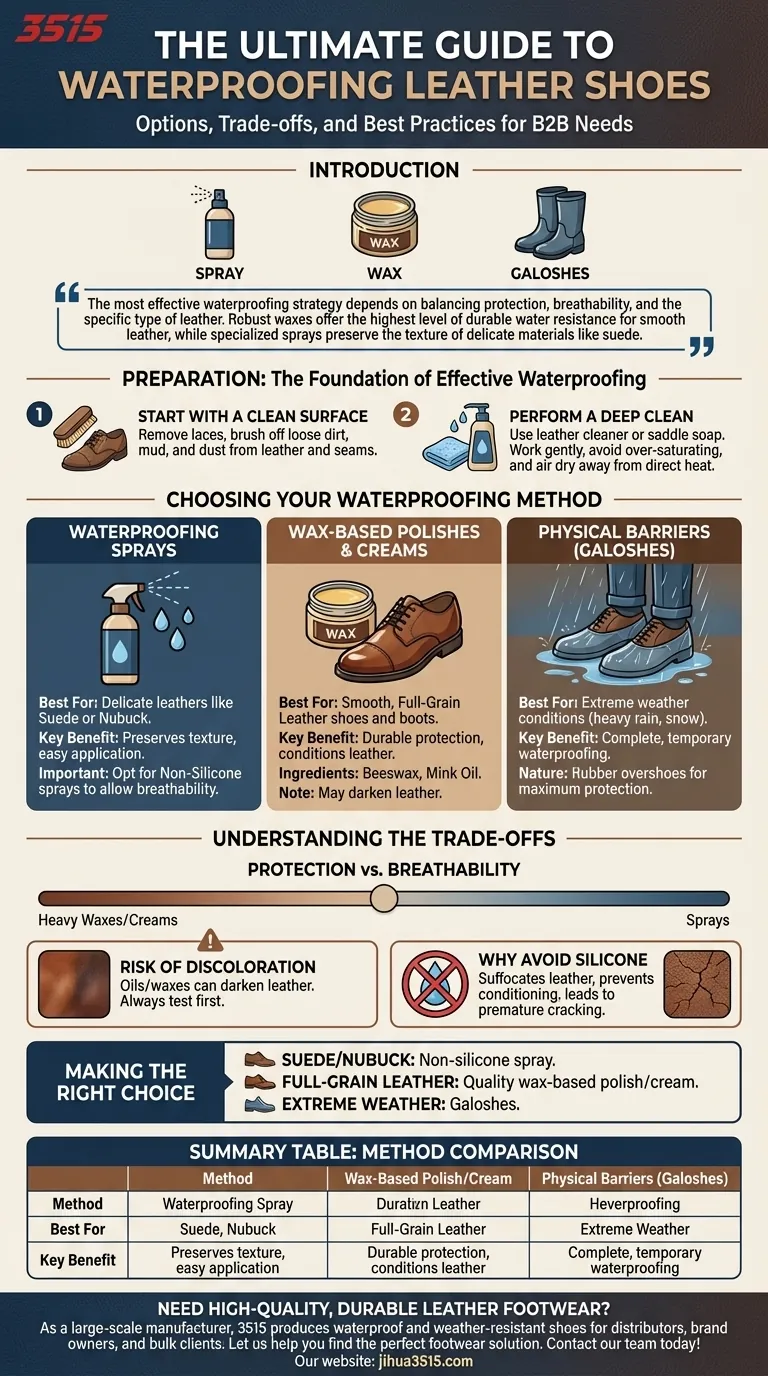
Visual Guide
Related Products
- Classic Leather Derby Dress Shoes Wholesale & Custom Manufacturing
- Factory Direct Wholesale Leather Comfort Shoes with Dial Closure
- Wholesale Comfort Leather Business Shoes with Dial Lacing System
- Custom Manufactured Air Cushion Leather Business Shoes for Wholesale
- Wholesale Breathable Perforated Leather Derby Shoes with Modern Comfort Sole
People Also Ask
- How often should leather dress shoes be cleaned and polished? A 3-Tier Care Guide for Longevity
- How can you remove salt stains from leather dress shoes? Save Your Shoes with a Simple Vinegar Solution
- What are the basic steps to clean leather dress shoes? A Guide to Preserving Your Investment
- How should you dry wet leather dress shoes? A Step-by-Step Guide to Save Your Investment
- What historical figure is associated with the Derby shoe? The Earl of Derby's Comfort Revolution