
At its core, a Western boot is a purpose-built tool. The primary types are the Classic Cowboy Boot, the Roper, the Stockman, and the Western Work Boot. Each variation adjusts key design elements like shaft height, heel shape, and sole material to optimize for specific tasks, from dedicated riding to all-day groundwork and heavy labor.
While style is a major factor, understanding the functional differences between boot types is the key to choosing the right one. The design isn't arbitrary; it's a direct response to the demands of riding, roping, and working on a ranch.
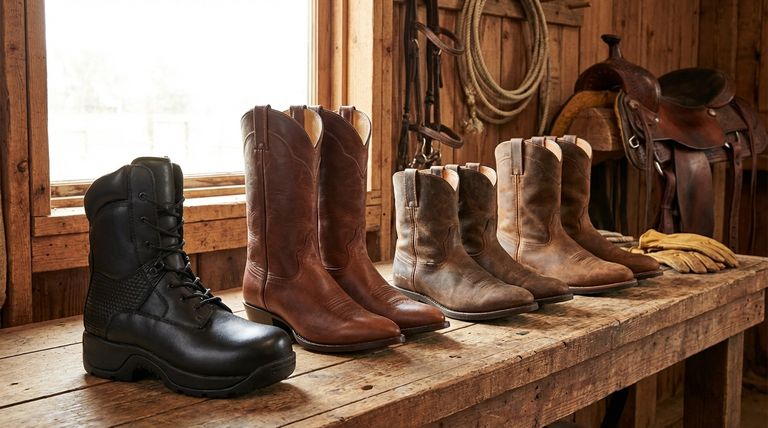
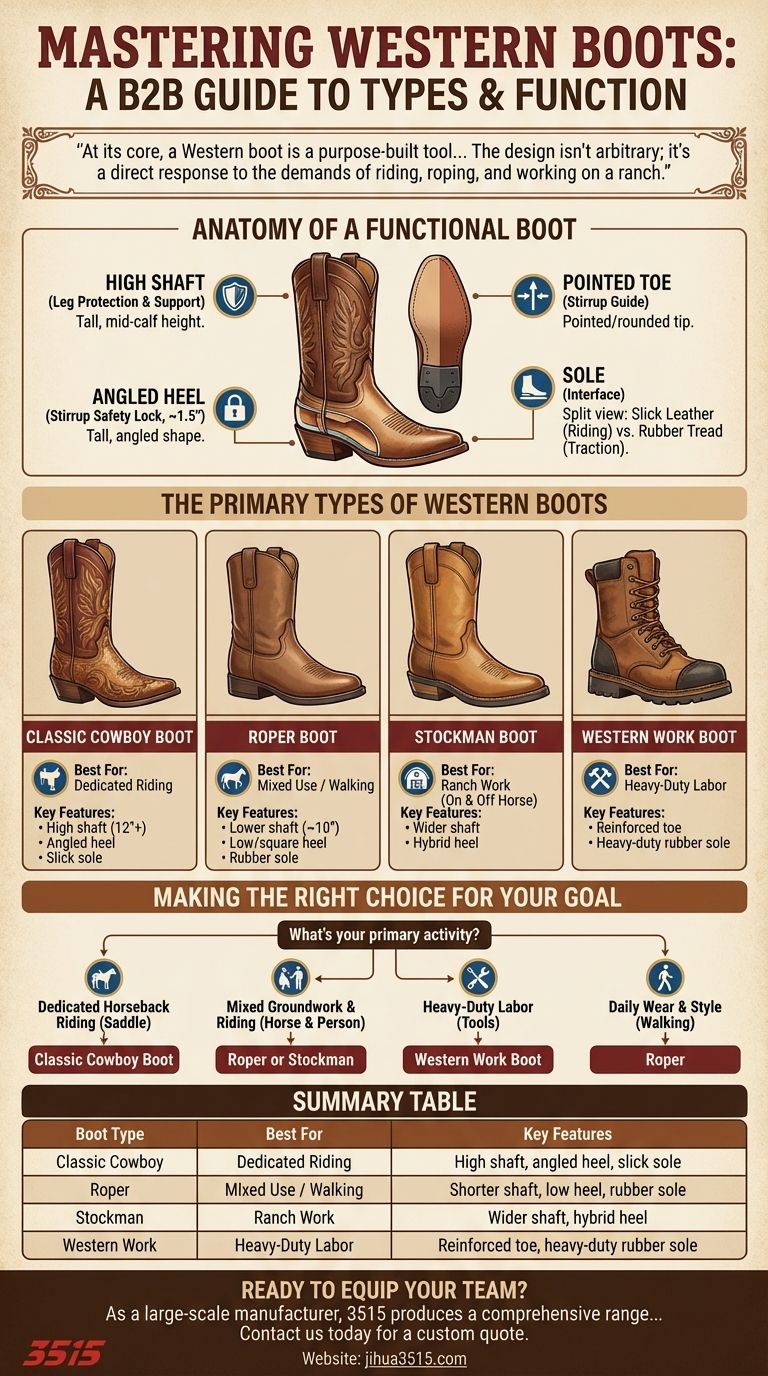
The Anatomy of a Functional Western Boot
Before comparing the different types, it's critical to understand why Western boots are shaped the way they are. Each component serves a distinct, practical purpose rooted in safety and efficiency for a rider.
The High Shaft: More Than Just Style
A tall boot shaft, typically reaching mid-calf, protects the rider's leg from brush, rope burns, and other hazards encountered on the trail or during ranch work. It also provides crucial ankle and lower leg support.
The Angled Heel: Your Stirrup Safety Lock
The tall, angled "cowboy heel," often around 1.5 inches, is the boot's most important safety feature for riding. It's designed to prevent the rider's foot from accidentally slipping all the way through the stirrup, which could be incredibly dangerous in a fall.
The Pointed Toe: A Tool for Function
Traditionally, the pointed or rounded toe of a Western boot isn't just for looks. It acts as a guide, helping a rider quickly and easily find the stirrup and slide their foot into place without looking down.
The Sole: The Interface with Your World
The sole dictates how the boot interacts with both the stirrup and the ground. A smooth, slick leather sole is ideal for riding, as it allows the foot to slide free from the stirrup easily. However, modern rubber soles provide far better traction for walking and working on the ground.
The Primary Types of Western Boots
With the core functions in mind, the differences between the major types become clear. Each one represents a specific combination of features tailored to a job.
The Classic Cowboy Boot
This is the original design, optimized purely for life in the saddle. It features a high shaft (12 inches or more), a tall and distinctly angled heel, and traditionally, a slick leather sole.
The Roper Boot
Developed for rodeo roping events where athletes must quickly dismount and run, the Roper is a hybrid boot. It has a much lower shaft (around 10 inches), a shorter, squared-off "roper" heel for walking stability, and often features a rubber sole for traction.
The Stockman Boot
The Stockman is a variation of the classic boot, designed for ranchers who spend significant time both on and off their horse. It often has a wider, deeper-cut shaft for more room and a hybrid heel that is taller than a Roper but lower and broader than a classic cowboy heel.
The Western Work Boot
This modern category prioritizes durability and safety above all else. These boots often feature reinforced or steel toes, heavy-duty rubber outsoles for maximum traction and oil resistance, and are built with tougher materials to withstand demanding work environments.
Understanding the Trade-offs
Choosing a Western boot involves balancing competing needs. No single boot is perfect for every situation, so you must understand the compromises inherent in each design.
Riding Safety vs. Walking Comfort
A slick leather sole is safest for riding but offers poor traction on wet or uneven ground. A rubber tread sole is excellent for walking and working but can increase the risk of a foot getting hung up in a stirrup during a fall.
Shaft Height: Protection vs. Flexibility
A tall, classic shaft offers maximum protection but can be restrictive and hot for groundwork. A shorter Roper shaft provides greater ankle flexibility and comfort for walking but exposes the leg to more hazards.
Heel Design: Stability in the Saddle vs. On the Ground
The tall, angled cowboy heel provides excellent security in the stirrup but can feel unstable for extensive walking. The short, flat roper heel is far more comfortable for groundwork but offers less security in the stirrup.
Making the Right Choice for Your Goal
Your primary activity should be the deciding factor. Match the boot's features to your most common tasks.
- If your primary focus is dedicated horseback riding: The Classic Cowboy Boot offers unparalleled safety and function in the saddle.
- If your primary focus is a mix of groundwork and occasional riding: The Roper or Stockman boot provides the best all-around versatility and comfort.
- If your primary focus is heavy-duty labor or construction: A dedicated Western Work Boot is the only choice for proper safety and durability.
- If your primary focus is daily wear, style, and comfort: The Roper is the most popular choice for its walkability and classic look.
By understanding the purpose behind each design element, you can confidently select the boot that works best for you.
Summary Table:
| Boot Type | Best For | Key Features |
|---|---|---|
| Classic Cowboy | Dedicated Riding | High shaft, angled heel, slick sole |
| Roper | Mixed Use / Walking | Shorter shaft, low heel, rubber sole |
| Stockman | Ranch Work (On & Off Horse) | Wider shaft, hybrid heel |
| Western Work | Heavy-Duty Labor | Reinforced toe, heavy-duty rubber sole |
Ready to Equip Your Team with the Perfect Western Boot?
As a large-scale manufacturer, 3515 produces a comprehensive range of durable and functional Western boots for distributors, brand owners, and bulk clients. Whether you need classic riding boots for safety or rugged work boots for demanding environments, our production capabilities ensure top quality and reliable supply.
Contact us today to discuss your specific needs and get a custom quote.
Visual Guide
Related Products
- Durable Goodyear Welt Leather Work Boots for Wholesale & Private Label
- Wholesale High-Traction Camo Boots - Custom Manufacturer for Brands
- High-Traction Suede Tactical Boots Wholesale & Custom Manufacturing
- Wholesale Waterproof Tactical Boots Custom Suede & High-Traction Soles
- Durable Military Combat Boots with Water Drainage for Wholesale & OEM
People Also Ask
- What is the difference between full-grain and top-grain leather? Premium Material Guide for Boot Manufacturers
- What are the advantages of leather as an upper material for work boots? Unmatched Durability & Custom Comfort
- Why is it important to waterproof leather work boots? Protect Your Investment and Performance
- How should new leather work boots be broken in? A Guide to Comfort and Durability
- What are the advantages of leather uppers in work boots? Unmatched Durability & Protection


















