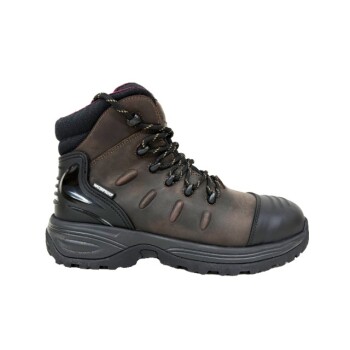
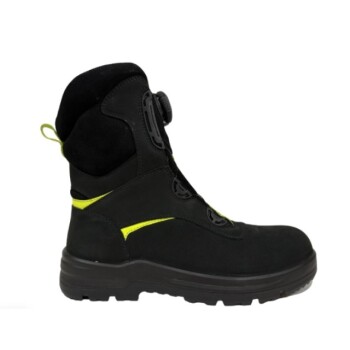
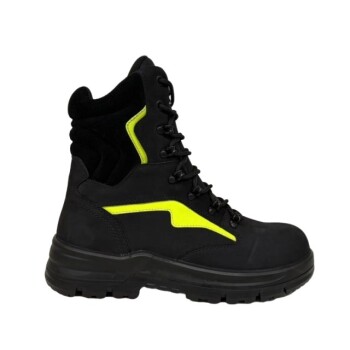
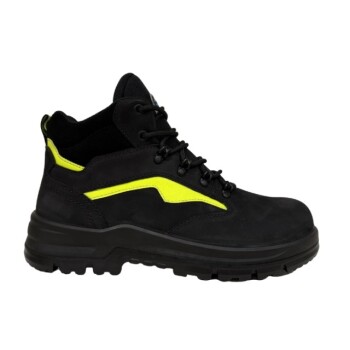
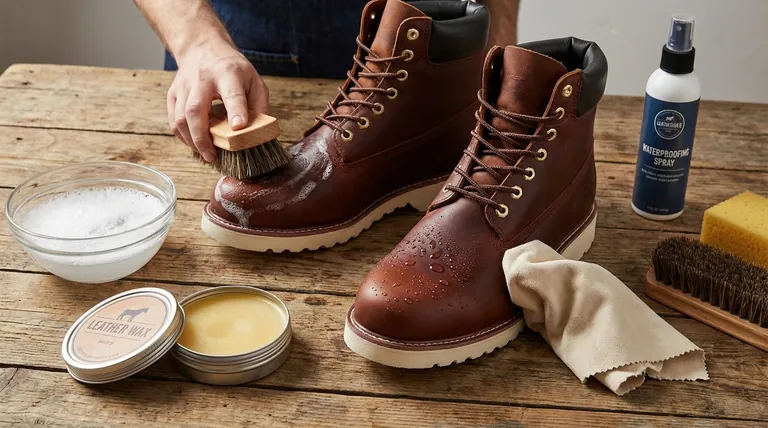
To properly maintain waterproof leather boots, you must follow a three-stage process. This involves first cleaning the boots thoroughly, then applying a conditioning agent to keep the leather supple, and finally reapplying a dedicated waterproofing product like a wax or spray to restore the outer water-repellent barrier.
The goal of boot maintenance is not just to add a waterproof layer, but to create a system where clean, healthy leather is prepared to accept and bond with a protective barrier, ensuring longevity and performance.
Understanding Your Boot's Defense System
Before treating your boots, it's crucial to understand how their waterproofing works. It's typically a multi-layered defense system that you are working to preserve.
The Role of the Leather
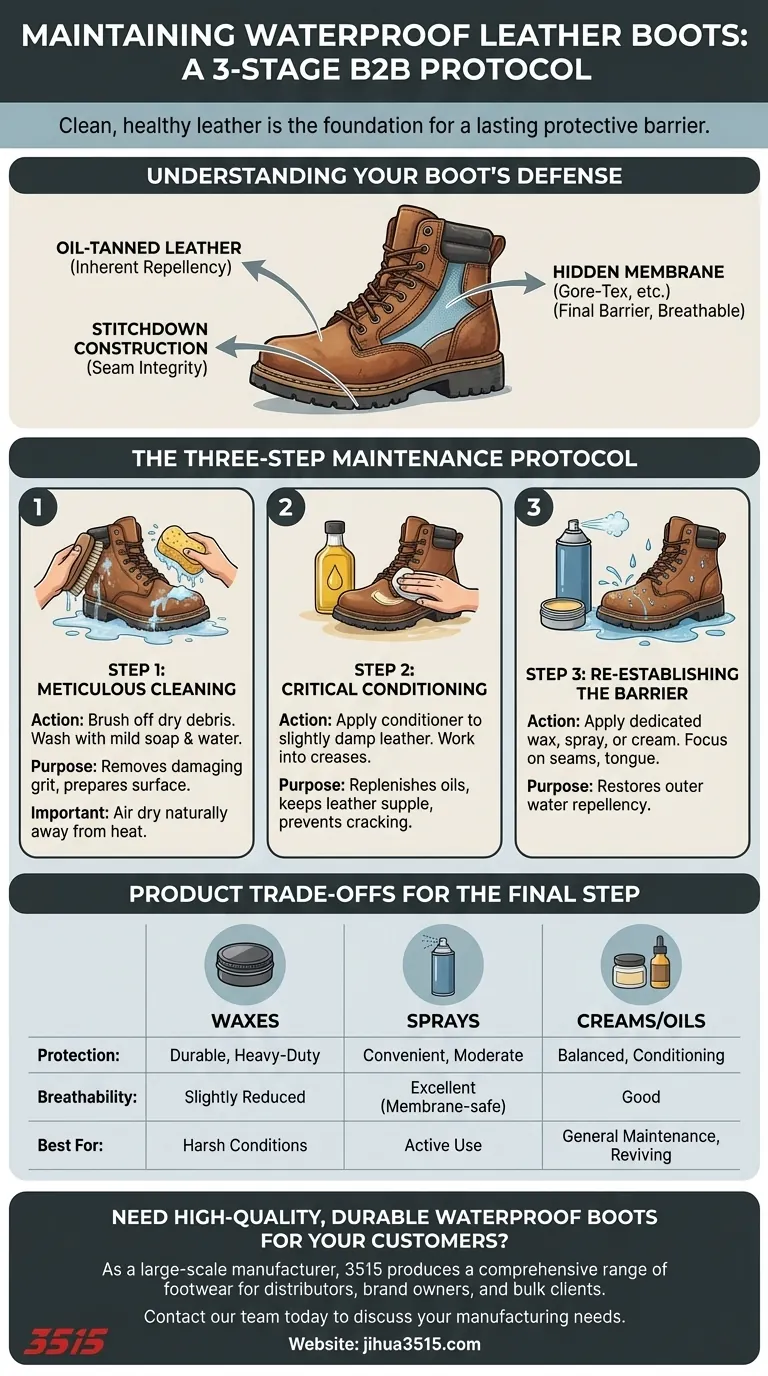
High-quality boots often use oil-tanned leather, which is infused with oils and waxes during the tanning process. This makes the leather itself inherently water-repellent.
The Importance of Construction
The way the boot is assembled, such as a Stitchdown construction, creates a more robust and water-resistant seam where the upper connects to the sole, minimizing a common point of water entry.
The Hidden Waterproof Membrane
Many modern boots feature a waterproof, breathable membrane, like Gore-Tex, built into the lining. This membrane acts as the final barrier, stopping water molecules from getting in while allowing sweat vapor to escape. Your maintenance routine protects the leather that, in turn, protects this membrane.
The Three-Step Maintenance Protocol
A consistent routine is the key to extending the life and performance of your boots. Each step prepares the boot for the next, creating a result that is more effective than any single step alone.
Step 1: Meticulous Cleaning
You cannot waterproof dirt. Applying products over grime traps abrasive particles against the leather and prevents the treatments from penetrating properly.
First, use a brush to remove all dried debris, mud, and grit.
Next, use a simple solution of mild soap and water to gently clean the entire surface of the boot. Rinse thoroughly with a damp cloth.
Crucially, you must let the boots dry naturally in a well-ventilated area. Never use a direct heat source like a radiator or campfire, as intense heat will crack and permanently damage the leather.
Step 2: Critical Conditioning
Wet-cleaning and general use can strip the leather of its natural oils, leading to stiffness and cracking. A conditioner replenishes these oils.
Apply a leather conditioning oil or cream after the boot is clean and mostly dry (still slightly damp is often ideal). This helps the conditioner absorb deeply.
Work the product into all creases, seams, and flex points to keep the leather supple and prevent it from breaking down over time.
Step 3: Re-establishing the Waterproof Barrier
Once the conditioner has been absorbed, the final step is to apply the external waterproof barrier.
Read the instructions on your chosen product. Apply the waterproofing treatment—be it wax, spray, or cream—evenly across all exterior leather surfaces.
Pay special attention to the tongue, eyelets, and all seams, as these are the most vulnerable points for leaks. Apply one or two thin coats for best results.
Allow the boots to dry and cure completely before wearing them in wet conditions.
Understanding the Product Trade-offs
The product you choose for the final waterproofing step involves a trade-off between maximum protection, breathability, and ease of use.
Waxes
Wax-based products offer the most durable and heavy-duty water protection. They create a thick physical barrier that excels in persistently wet and harsh conditions. However, they can slightly reduce the leather's breathability.
Sprays
Waterproofing sprays are the most convenient to apply and have the least impact on the boot's breathability. This makes them an excellent choice for boots with Gore-Tex membranes, where maintaining breathability is a top priority. Their durability is generally lower than wax.
Creams and Oils
These products offer a balance, providing both conditioning and water resistance in one step. They are excellent for general maintenance and for reviving leather that is starting to feel dry, but may not provide the same level of standalone waterproofing as a dedicated wax.
Making the Right Choice for Your Goal
Your maintenance strategy should align with how you use your boots.
- If your primary focus is maximum water repellency for harsh conditions: A dedicated wax-based product applied over conditioned leather provides the most robust barrier.
- If your primary focus is maintaining breathability for active use: A silicone or polymer-based spray is the best choice to protect the leather without clogging the pores of a waterproof membrane.
- If your primary focus is reviving older, dry leather: Begin with a dedicated conditioning oil to restore flexibility before applying a waterproofing cream or wax to protect it.
Consistent care transforms your boots from a simple purchase into a reliable, long-term investment in your comfort and protection.
Summary Table:
| Step | Key Action | Purpose |
|---|---|---|
| 1. Clean | Brush off debris, wash with mild soap, air dry. | Removes dirt and grit that can damage leather and block treatments. |
| 2. Condition | Apply leather conditioner to clean, slightly damp boots. | Replenishes natural oils to keep leather supple and prevent cracking. |
| 3. Waterproof | Apply a dedicated wax, spray, or cream to the exterior. | Restores the water-repellent barrier, focusing on seams and high-wear areas. |
Need high-quality, durable waterproof boots for your customers? As a large-scale manufacturer, 3515 produces a comprehensive range of footwear for distributors, brand owners, and bulk clients. Our production capabilities encompass all types of durable shoes and boots built to last. Let us help you equip your customers with reliable footwear. Contact our team today to discuss your manufacturing needs.
Visual Guide
Related Products
- Premium Oil Wax Leather Safety Boots for Bulk Purchase
- Wholesale Waterproof Tactical Boots Custom Suede & High-Traction Soles
- Premium Wholesale Waterproof Safety Boots High Performance Protection for Industrial Markets
- Durable Waterproof Rain Boots | Custom Manufacturer for Wholesale & Brands
- High Performance Fire-Retardant Waterproof Safety Boots
People Also Ask
- What materials are commonly used for outsoles in safety boots? A Guide to Durability, Grip, and Comfort
- How do safety boots reduce cutting hazards? Essential Protection for Your Workforce
- What are the common types of safety boots and their primary uses? A Guide to Industrial Footwear
- Which organizations develop safety standards for work boots? Ensure Compliance & Worker Safety
- What primary protective functions do professional safety boots provide in urban solid waste recovery and waste picking processes? Discover Dual-Layer Protection.