In short, the primary disadvantages of traditional cowboy boots are their lack of modern comfort features, low-traction soles, and a challenging break-in period. These boots were purpose-built for riding horses, and their functional drawbacks become apparent when used for prolonged walking or standing on modern surfaces.
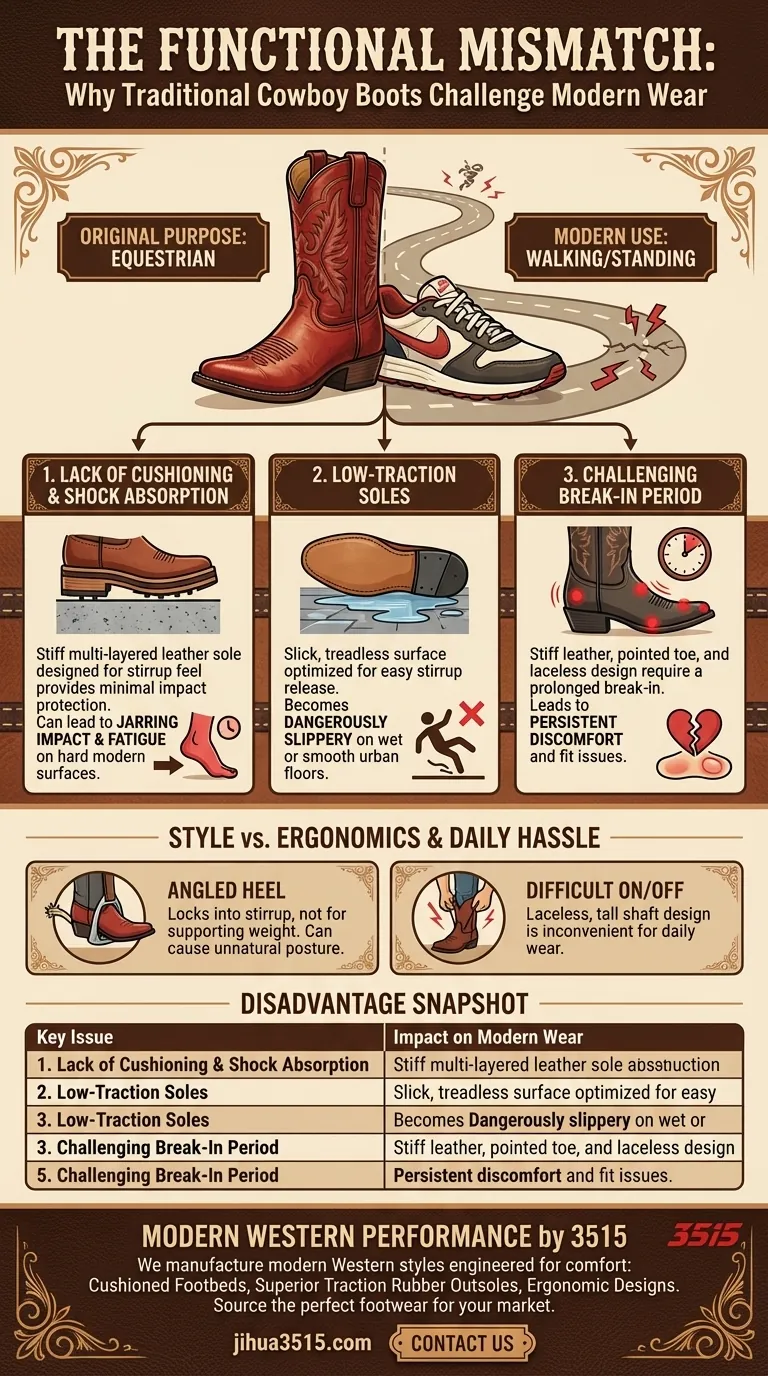
The core issue with cowboy boots is a mismatch between their original design and modern use. They are specialized equestrian equipment, and their very features—stiff leather, smooth soles, and angled heels—that excel in the stirrup become liabilities on the sidewalk.
The Functional Mismatch: From Stirrup to Sidewalk
The disadvantages of cowboy boots are not design flaws; they are features optimized for a specific task that is now uncommon for most wearers. Understanding their original purpose is key to understanding their limitations as everyday footwear.
Lack of Modern Cushioning and Shock Absorption
Traditional cowboy boots have a stiff, multi-layered leather sole. This construction provides durability and allows a rider to feel the stirrup underfoot.
However, this design offers very little cushioning or shock absorption. Unlike athletic shoes engineered with foam and air pockets, walking in cowboy boots on hard surfaces like concrete can be jarring and lead to fatigue.
The Problem with Traditional Soles
The classic cowboy boot sole is made of smooth leather. This slick surface is intentional, allowing a rider's foot to slide easily in and out of the stirrup to prevent being dangerously dragged if they fall.
This same feature makes them notoriously slippery on wet pavement, smooth floors, or ice. The lack of tread and grip is a significant practical and safety disadvantage for urban and all-weather wear.
The Challenge of Fit and Break-In
Cowboy boots have no laces, meaning the fit around your instep is critical for keeping them secure. This, combined with stiff leather and often pointed toe boxes, can make finding the right size difficult.
Nearly all high-quality leather boots require a break-in period, which can be uncomfortable. The stiff leather needs time to soften and mold to the shape of your foot. For those with wide feet, the traditionally narrow or pointed toe can cause persistent discomfort.
Understanding the Trade-offs
Choosing a cowboy boot involves balancing its iconic style against its functional limitations. Being aware of the inherent compromises is essential.
Style vs. Ergonomics
The sleek profile, angled heel, and tall shaft are central to the boot's aesthetic appeal. This silhouette, however, is not based on modern ergonomic principles for walking.
The angled heel is designed to lock into a stirrup, not to support your body weight during a long day on your feet. This can sometimes lead to an unnatural stride or posture.
Not an All-Purpose Boot
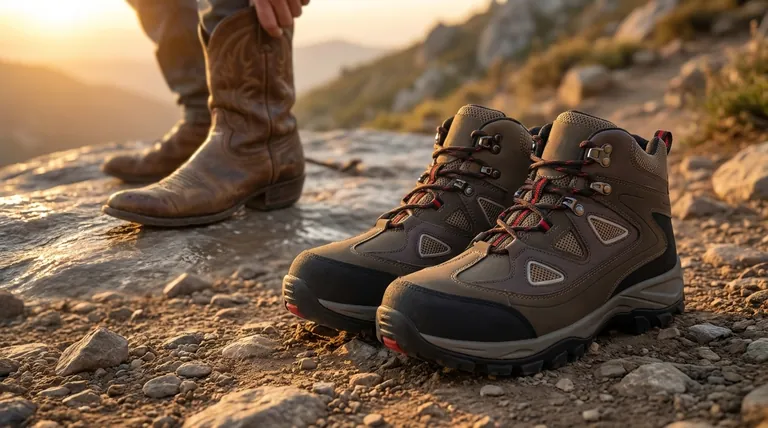
It is crucial to view the cowboy boot as a piece of specialized footwear. It is not a hiking boot, a running shoe, or a heavy-duty work boot (unless it is a modern hybrid).
Using a traditional boot for activities it wasn't designed for, like hiking or standing for an 8-hour shift, will inevitably lead to discomfort and premature wear.
The Effort of On and Off
The laceless, high-shaft design can make putting the boots on and taking them off a genuine challenge. This requires a specific technique of pulling from the bootstraps and can be an inconvenience for daily wear compared to a simple slip-on shoe or sneaker.
Making the Right Choice for Your Needs
To decide if cowboy boots are right for you, align the type of boot with your primary use case.
- If your primary focus is fashion: A classic leather-soled boot is an excellent choice, but be prepared for the break-in period and consider adding cushioned insoles for comfort.
- If your primary focus is occasional daily wear: Roper-style boots with their shorter shaft and lower, wider heel offer a more comfortable walking experience than traditional styles.
- If your primary focus is all-day work or walking: Seek out modern Western work boots that combine the cowboy boot style with practical features like rubber outsoles and cushioned footbeds.
Ultimately, the right boot is one whose design philosophy matches your daily reality.
Summary Table:
| Disadvantage | Key Issue | Impact on Modern Wear |
|---|---|---|
| Lack of Cushioning | Stiff leather sole designed for stirrup feel | Jarring impact and fatigue on hard surfaces |
| Low-Traction Soles | Smooth leather optimized for easy stirrup release | Slippery and unsafe on wet pavement or smooth floors |
| Challenging Break-In | Stiff leather, pointed toe, and laceless design | Uncomfortable fit and prolonged adjustment period |
| Ergonomic Mismatch | Angled heel for riding, not walking | Potential for unnatural stride or posture during prolonged use |
| Difficult On/Off | Tall shaft and lack of laces | Inconvenient for daily wear compared to slip-on shoes |
Looking for comfortable, durable footwear that combines style with modern performance? As a large-scale manufacturer, 3515 produces a comprehensive range of footwear for distributors, brand owners, and bulk clients. Our production capabilities encompass all types of shoes and boots, including Western styles engineered with cushioned footbeds, superior traction soles, and ergonomic designs for all-day comfort. Let us help you source or customize the perfect footwear for your market. Contact us today to discuss your needs!
Visual Guide
Related Products
- Wholesale High-Traction Camo Boots - Custom Manufacturer for Brands
- Durable Spiked Camouflage Boots Wholesale & Factory Production
- High-Traction Suede Tactical Boots Wholesale & Custom Manufacturing
- Wholesale Lightweight Tactical Boots Custom Manufacturer for Desert & Combat Use
- Wholesale Durable Mid-Cut Tactical Boots for Custom & Private Label Brands
People Also Ask
- What are the key features of the new line of camo boots? Built for Extreme Cold & Rugged Terrain
- Are camo boots necessary for hunting success? Prioritize Performance Over Pattern
- How does the Rank Score Test identify the primary causes of premature failure in tactical and work boots? Key Insights
- What is the technical logic behind using closed-eye testing for tactical boots? Unlocking Peak Footwear Stability
- What shoes to wear for a security job? Durable, Protective Footwear for Long Shifts