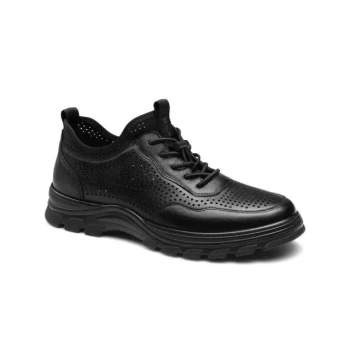
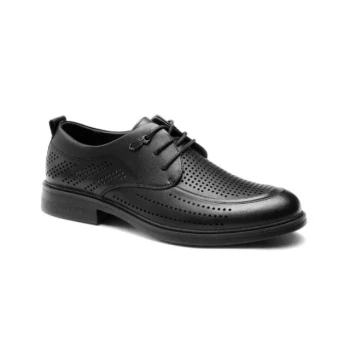
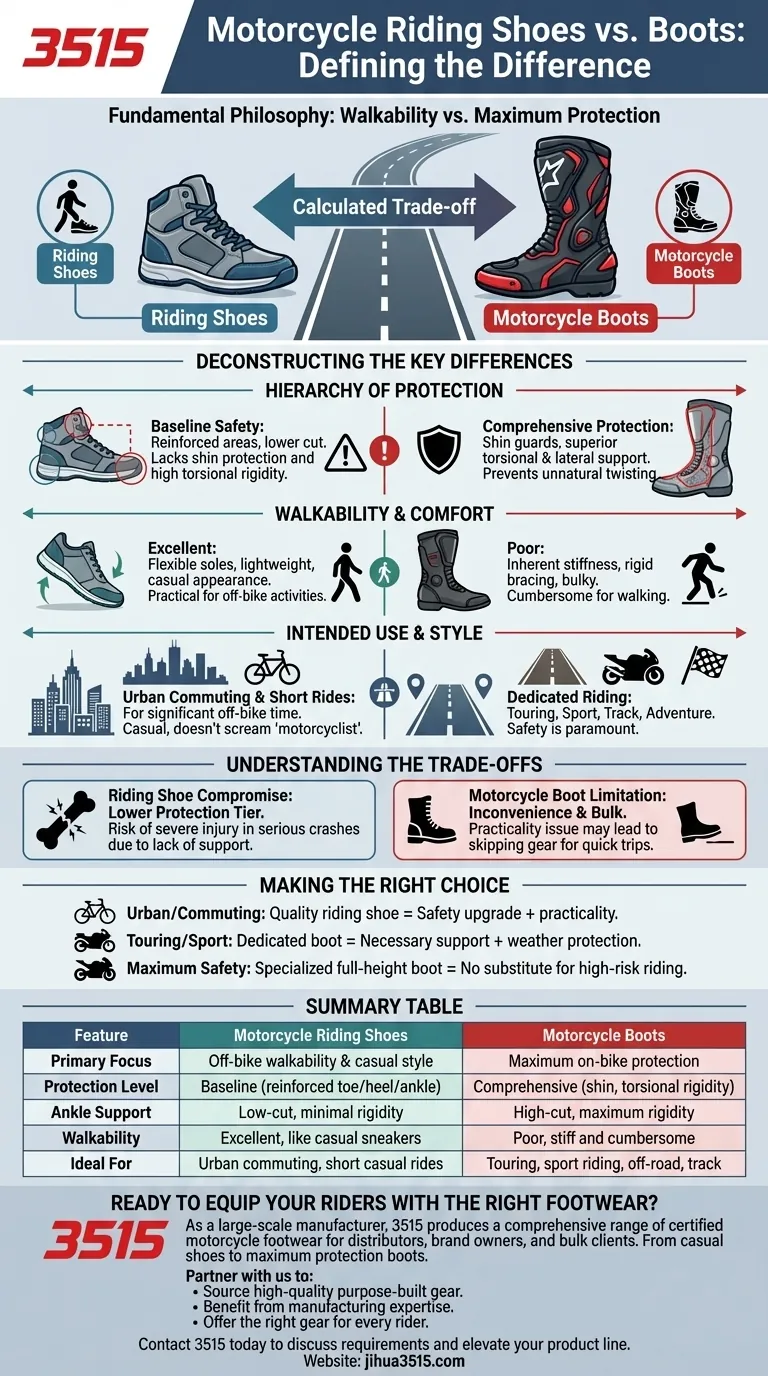
The fundamental difference between motorcycle riding shoes and boots lies in their core design philosophy. Riding shoes prioritize off-bike walkability and a casual appearance while offering baseline protection, whereas motorcycle boots are engineered for maximum on-bike protection, often at the expense of walking comfort.
The choice is not about which is universally "better," but which provides the appropriate level of protection for your specific riding style and risk. It is a calculated trade-off between on-bike safety and off-bike convenience.
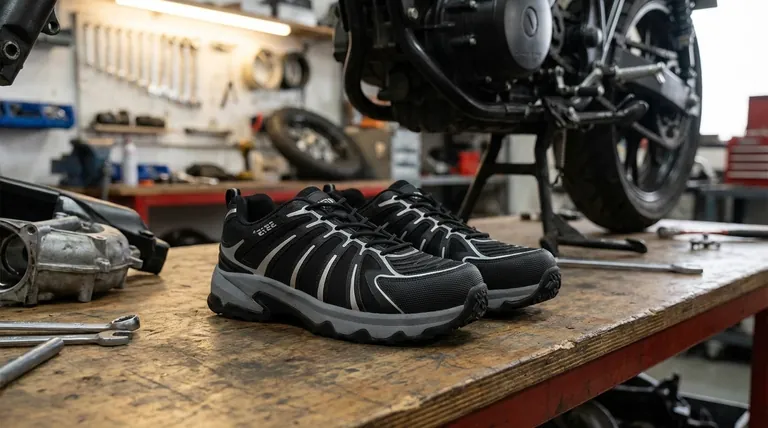
Deconstructing the Key Differences
To make an informed decision, you must understand how each type of footwear performs across three critical areas: protection, comfort, and intended use.
The Hierarchy of Protection
A boot's primary function is to protect your feet and ankles during a crash. This is the most significant point of differentiation.
Motorcycle boots offer the most comprehensive protection. They typically extend well above the ankle, providing shin protection against impacts from road debris or the bike itself.
Critically, they are engineered with superior torsional and lateral support. This structural rigidity prevents the ankle from twisting or bending in unnatural directions during a crash, which is a common cause of serious injury.
Riding shoes, by contrast, offer a foundational level of safety. They feature reinforced ankle, toe, and heel areas to protect against impacts and abrasion, but they stop at the ankle.
This lower cut means they lack shin protection and the structural rigidity to prevent severe ankle twisting, making them less suitable for high-risk riding scenarios.
Walkability and Off-Bike Comfort
This is where riding shoes have a clear advantage.
Riding shoes are designed with more flexible soles and lighter materials. Their resemblance to casual sneakers or high-tops makes them comfortable and practical for walking around your destination.
Motorcycle boots are inherently stiff. Their protective features, such as rigid ankle bracing and thick soles, make them cumbersome and often uncomfortable for anything more than a short walk.
Intended Use and Riding Style
The right choice is a direct reflection of the type of riding you do.
Riding shoes are ideal for urban commuting and casual, short-distance rides. They are built for scenarios where you spend significant time off the bike and need footwear that doesn't scream "motorcyclist."
Motorcycle boots are purpose-built for dedicated riding where safety is the paramount concern. This includes long-distance touring, aggressive sport or track riding, and adventure or off-road disciplines, each of which has a specialized boot type.
Understanding the Trade-offs
Choosing between shoes and boots is an exercise in risk management. You must be aware of what you are giving up with either choice.
The Compromise of Riding Shoes
The primary compromise of a riding shoe is protection. While vastly superior to regular footwear, they represent a lower tier of motorcycle safety.
The lack of torsional support means a crash that might be a minor event in a full boot could result in a severe sprain or fracture in a riding shoe.
Furthermore, some shoes may use lighter materials that offer less abrasion resistance than the heavy-duty leather and composites found in high-quality boots.
The Limitation of Full Boots
The main limitation of a full boot is inconvenience. Their bulk and stiffness can make them impractical for daily use.
This can create a dangerous secondary problem: a rider may be tempted to skip wearing their boots for a "quick trip," leaving them completely unprotected. A riding shoe you wear is always better than a boot you leave at home.
Making the Right Choice for Your Goal
Your decision should be a direct reflection of your riding habits and personal risk assessment. Analyze your needs, not just the product features.
- If your primary focus is urban commuting and off-bike convenience: A quality riding shoe offers a significant safety upgrade over regular sneakers while remaining practical for your destination.
- If your primary focus is long-distance touring or spirited riding: A dedicated touring or sport boot provides the necessary support, weather protection, and safety for extended hours in the saddle.
- If your primary focus is maximum safety for track or off-road riding: There is no substitute for a full-height, specialized boot with maximum rigidity and impact absorption.
Ultimately, the best choice is the certified protective gear you will consistently wear for every single ride.
Summary Table:
| Feature | Motorcycle Riding Shoes | Motorcycle Boots |
|---|---|---|
| Primary Focus | Off-bike walkability & casual style | Maximum on-bike protection |
| Protection Level | Baseline (reinforced toe/heel/ankle) | Comprehensive (shin protection, torsional rigidity) |
| Ankle Support | Low-cut, minimal rigidity | High-cut, maximum rigidity |
| Walkability | Excellent, like casual sneakers | Poor, stiff and cumbersome |
| Ideal For | Urban commuting, short casual rides | Touring, sport riding, off-road, track |
Ready to Equip Your Riders with the Right Footwear?
As a large-scale manufacturer, 3515 produces a comprehensive range of certified motorcycle footwear for distributors, brand owners, and bulk clients. Whether your customers need the casual safety of riding shoes or the maximum protection of full boots, our production capabilities cover all types of motorcycle footwear.
Partner with us to:
- Source high-quality, purpose-built motorcycle shoes and boots.
- Benefit from our extensive manufacturing expertise and reliable supply.
- Offer your customers the right gear for their specific riding style and safety needs.
Contact 3515 today to discuss your footwear requirements and elevate your product line.
Visual Guide
Related Products
- Wholesale Durable Camouflage Canvas Shoes with High-Traction Cleated Rubber Sole
- Wholesale Durable Camo Canvas Shoes with High-Traction Rubber Soles
- Durable Rubber Sole Outdoor Shoes Wholesale & Custom Manufacturing
- Wholesale Waterproof Tactical Boots Custom Suede & High-Traction Soles
- Wholesale Comfort Dress Shoes with Dial Closure for Custom Manufacturing
People Also Ask
- Why is the selection of high-strength fabric materials necessary in the production of canvas shoes and training shoes?
- What are the properties of canvas as a shoe material? A Guide to Lightweight Comfort & Style
- Can canvas shoes be worn in rainy conditions? The Truth About Water Resistance
- What are some examples of vulcanized shoes? Discover the Flexibility and Board Feel of Classic Sneakers
- What are the characteristics of canvas as a shoe material? A Guide to Lightweight, Breathable Footwear