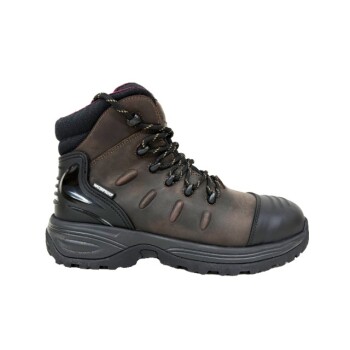
At their core, work boots are defined by three primary characteristics: specialized protection against job-specific hazards, enhanced durability to withstand demanding environments, and structural support for long-term comfort and stability. These are not simply rugged footwear; they are engineered pieces of personal protective equipment (PPE).
A true work boot is a purpose-built tool for your feet. Its value isn't just in its toughness, but in how its specific features—from the safety toe to the sole's material—are precisely matched to the unique risks and demands of your profession.
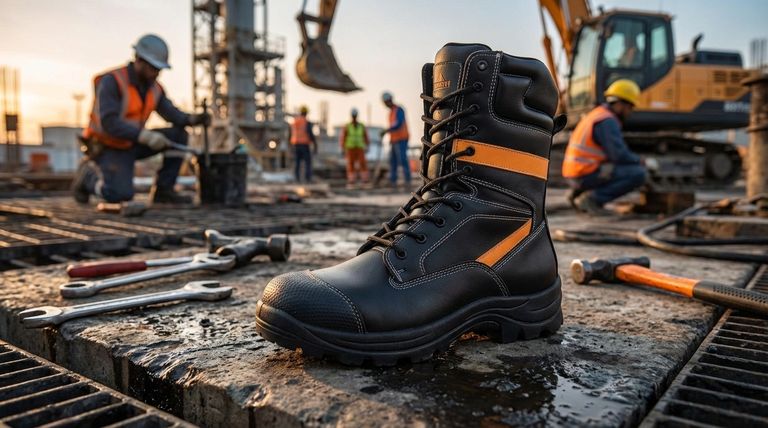
The Anatomy of a Work Boot: Core Components
To understand what makes a work boot effective, you must look at its individual components. Each part is designed to solve a specific problem, from impact protection to stability on uneven ground.
Protective Upper Construction
The "upper" is the part of the boot that covers the top of your foot and ankle. Work boots typically feature a high-cut design that extends above the ankle.
This height provides critical ankle support, reducing the risk of twists and sprains. It also shields the lower leg from abrasions and impacts. Materials like leather are common for their durability and moisture resistance, while linings are often made of moisture-wicking fabrics to keep feet dry.
The Foundation: Sole and Midsole
The sole is the boot's interface with the world. A quality work boot features a non-slip lug sole, which has deep, aggressive treads for superior traction on uneven, wet, or oily surfaces.
Beneath the sole, a puncture-resistant midsole may be included to protect against sharp objects like nails. Many designs also feature a reinforced arch or shank, providing the rigidity needed to safely stand on ladder rungs for extended periods.
Specialized Safety Features
This is where work boots are most clearly distinguished from regular footwear. They incorporate features certified to protect against specific, often life-threatening, hazards.
The most recognized feature is the safety toe, commonly made of steel but also available in lighter composite materials. For even greater protection, some boots include metatarsal guards to shield the top of the foot from crushing injuries. Finally, many are rated for Electrical Hazard (EH) resistance, insulating the wearer from live electrical currents.
Matching the Boot to the Job
The "best" work boot is entirely dependent on the environment in which it will be used. A boot designed for a mechanic has different priorities than one for a construction worker.
For Heavy Industrial & Construction Work
These roles demand maximum protection. Key features include certified steel toes, metatarsal guards, and puncture-resistant soles to defend against falling objects, heavy machinery, and job site debris.
For Mechanics and Indoor Trades
The primary hazard here is often slippery floors. Slip-resistant soles are non-negotiable. Because these professionals spend long hours on their feet, lightweight construction and cushioned midsoles for shock absorption become critical for reducing fatigue.
For Outdoor & Wet Conditions
When working outdoors, environmental protection is key. Waterproof materials like treated leather or PVC are essential. An aggressive lug sole provides the necessary traction for navigating mud, gravel, and uneven terrain.
A Note on Tactical Boots
Tactical boots, often used by law enforcement, are sometimes confused with work boots. They prioritize light weight and flexibility for agility and a wide range of motion. They typically sacrifice the heavy-duty impact and puncture protection found in true industrial work boots.
Understanding the Trade-offs
Selecting a work boot always involves balancing competing characteristics. Understanding these trade-offs is crucial for making an informed decision.
Protection vs. Weight
The highest levels of protection often come from the heaviest materials. Steel toes and thick soles offer maximum safety but can lead to significant fatigue over a long day. Composite safety toes are a lighter alternative, though they may not offer the same level of impact resistance in all situations.
Durability vs. Cost
High-quality, full-grain leather boots are exceptionally durable but represent a significant investment. Synthetic materials like PVC are less expensive and highly waterproof but may deteriorate much faster under heavy use.
Waterproofing vs. Breathability
A fully waterproof membrane is excellent for keeping water out, but it can also trap sweat and moisture inside, leading to discomfort. This is why effective moisture-wicking linings are just as important as the outer waterproof material.
How to Select the Right Work Boot
Use your primary daily hazards as a guide to focus your selection process.
- If your primary focus is protection from falling objects and punctures: Prioritize boots with certified steel or composite toes, metatarsal guards, and puncture-resistant midsoles.
- If your primary focus is working on slippery or uneven surfaces: Look for boots with aggressive lug patterns and a high slip-resistance rating specifically for oil or water.
- If your primary focus is all-day comfort and reduced fatigue: Consider lighter-weight designs with composite toes, cushioned midsoles, and ensure a proper, supportive fit.
- If your primary focus is protection from electrical currents: Ensure the boot has a specific Electrical Hazard (EH) rating and is in good condition, free from punctures.
Choosing the right work boot is a critical investment in your daily safety, comfort, and performance on the job.
Summary Table:
| Key Characteristic | Key Features | Ideal For |
|---|---|---|
| Protection | Safety toes, metatarsal guards, puncture-resistant soles | Heavy industrial, construction |
| Durability | Full-grain leather, reinforced soles, rugged construction | Demanding environments, long-term use |
| Support & Comfort | Ankle support, cushioned midsoles, arch reinforcement | All-day wear, reducing fatigue |
| Traction & Stability | Non-slip lug soles, slip-resistant ratings | Wet, oily, or uneven surfaces |
As a leading large-scale manufacturer, 3515 produces a comprehensive range of safety footwear for distributors, brand owners, and bulk clients. Our expertise ensures your workers get the precise protection, durability, and comfort they need. Whether you require certified steel toes, waterproof construction, or lightweight designs, we deliver.
Ready to equip your workforce with reliable, high-performance work boots? Contact us today to discuss your specific requirements and benefit from our full production capabilities.
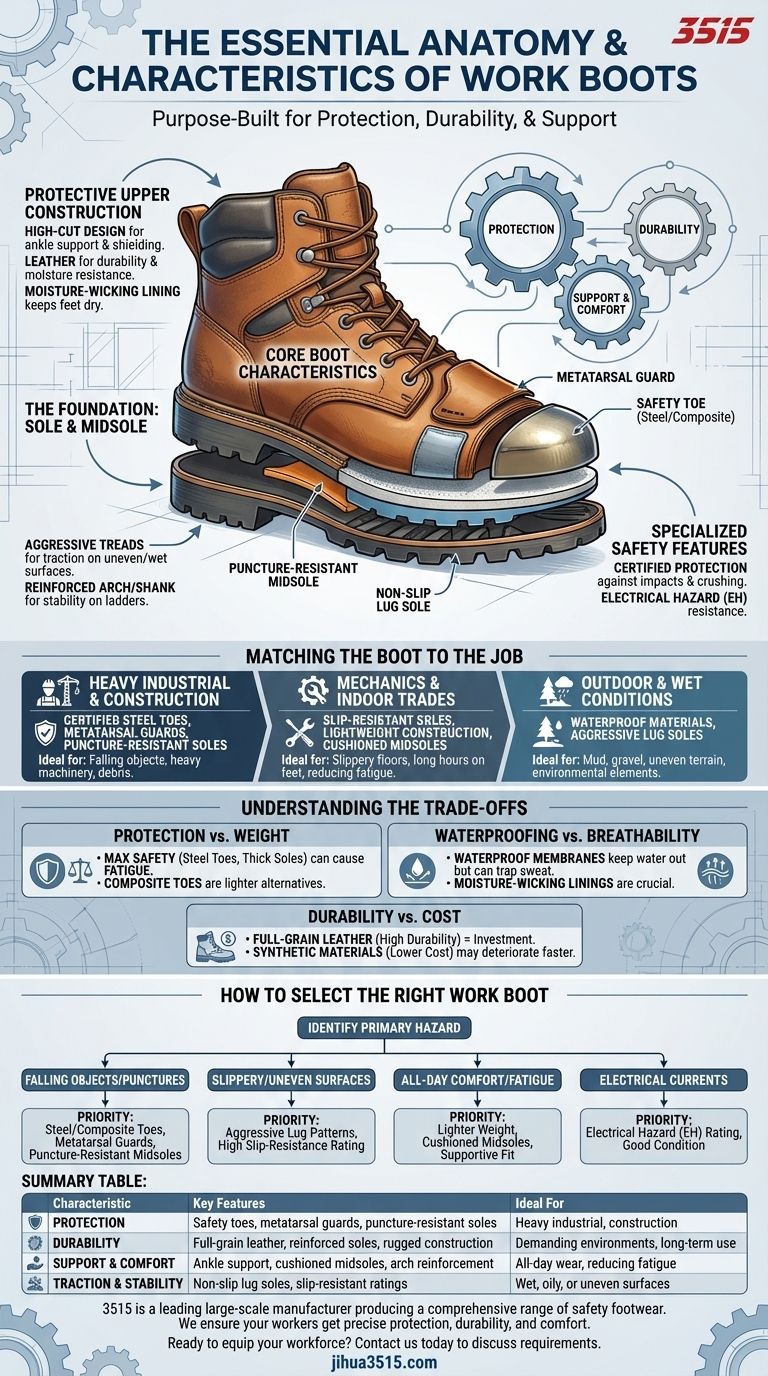
Visual Guide
Related Products
- Durable Leather Work Boots for Wholesale & Custom Manufacturing
- Durable Leather Work Boots for Wholesale & Custom OEM Manufacturing
- Durable Leather Work Boots Wholesale Manufacturer & Custom Factory
- Durable Leather Moc Toe Work Boots for Wholesale & Custom Manufacturing
- Wholesale Leather Work Boots with Customizable Wedge Sole for Brands
People Also Ask
- What is the difference between full-grain and top-grain leather? Premium Material Guide for Boot Manufacturers
- What are the common workplace hazards that can be mitigated with the right work boots? Protect Your Workforce
- What are the common foot issues workers face due to uncomfortable work boots? Prevent Pain & Deformities
- What are the advantages of leather versus synthetic work boots? A Guide to Choosing the Right Material
- What are the key components of modern work boots? Engineered for Ultimate Durability and Comfort