
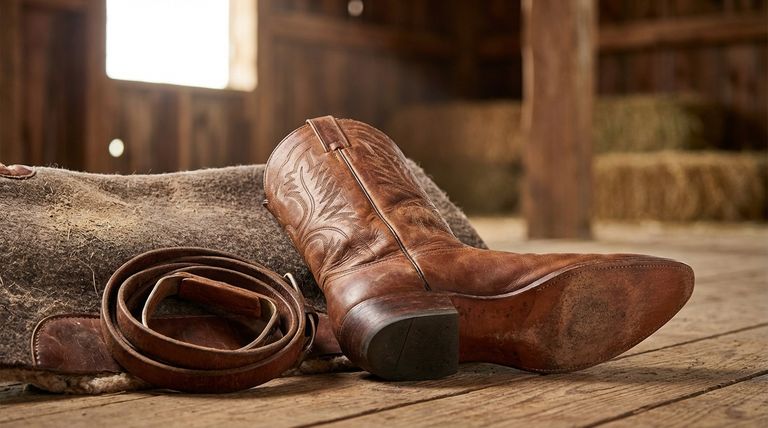
Traditional Western boots represent a prime example of form following function, engineered specifically for the demands of life in the saddle. Their defining characteristics include a tall shaft to protect the shins, a smooth leather sole for fluid stirrup movement, and a distinctively angled, high heel designed to lock the foot securely in place while riding.
Core Insight: While modern variations prioritize walking comfort, the architecture of a traditional Western boot is strictly dictated by safety and control within the stirrup, making it fundamentally a piece of riding equipment rather than general-purpose footwear.
The Anatomy of the Riding Boot
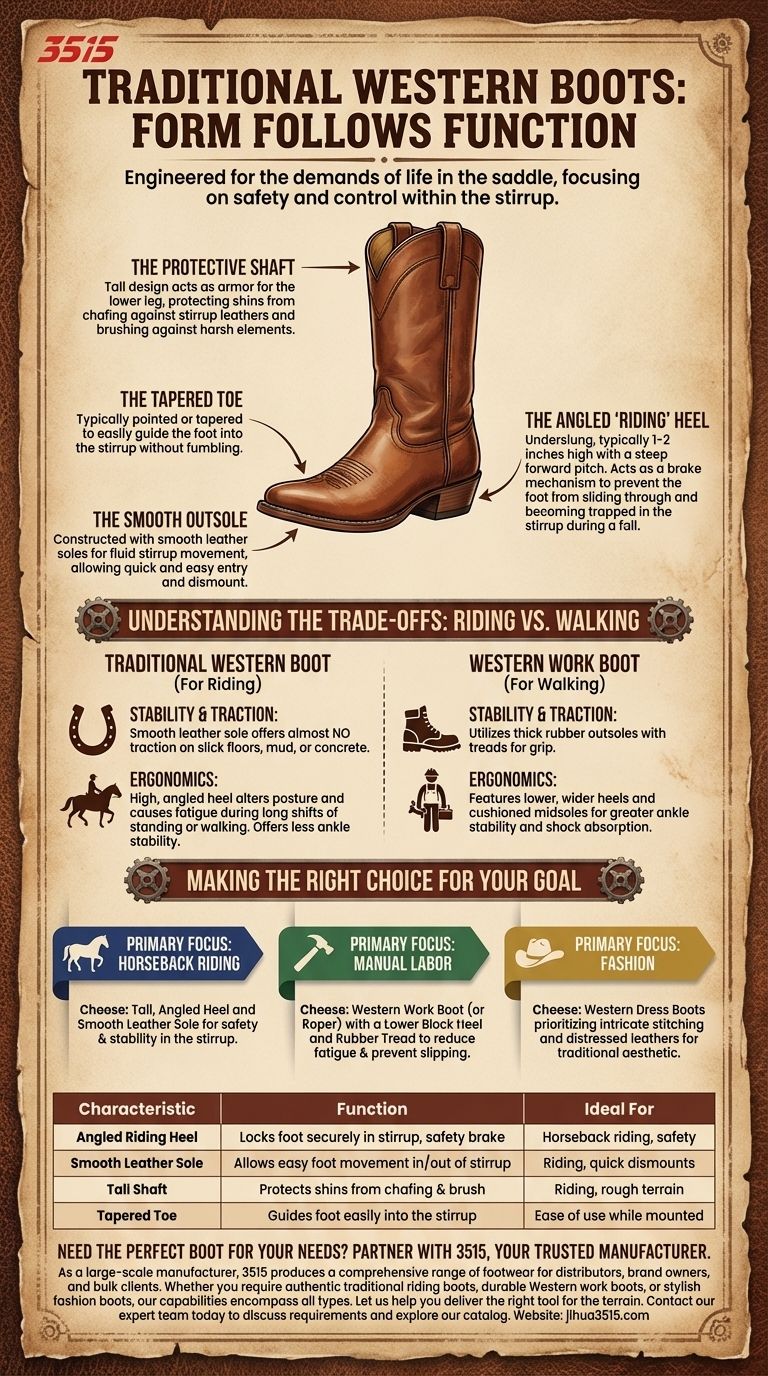
The Angled "Riding" Heel
The most recognizable feature of a traditional boot is the underslung or angled heel. Typically at least one inch high—and often reaching two inches—this heel features a steep forward pitch.
This design is not aesthetic; it acts as a brake mechanism. The angle and height catch the bottom of the stirrup, preventing the rider's foot from sliding all the way through and becoming trapped during a fall.
The Smooth Outsole
Traditional boots are constructed with smooth leather soles. Unlike modern work boots that require traction, a rider needs a sleek surface.
This allows the foot to slide easily in and out of the stirrup. A rubber or treaded sole creates friction, which could be dangerous if a rider needs to dismount quickly.
The Protective Shaft
The upper part of the boot, known as the shaft, is intentionally tall. This serves as armor for the lower leg.
It protects the rider’s shins from chafing against the stirrup leathers and offers a barrier against brush, thorns, and harsh elements encountered while working cattle or riding through rough terrain.
The Toe Shape
While toe shapes can vary based on fashion, the traditional cowboy boot typically features a pointed or tapered toe.
Functionally, a tapered toe makes it easier to guide the foot into the stirrup without fumbling, particularly when the horse is moving.
Understanding the Trade-offs: Riding vs. Walking
It is critical to distinguish between a Traditional Western Boot and a Western Work Boot. The features that make the traditional boot perfect for riding often make it poor for walking.
Stability and Traction
The smooth leather sole of a traditional boot offers almost no traction on slick floors, mud, or concrete. Conversely, Western work boots utilize thick rubber outsoles with treads for grip.
Ergonomics for Long Shifts
The high, angled riding heel can alter your posture and cause fatigue if you are standing or walking all day.
If your primary need is ground work, traditional boots provide less ankle stability and shock absorption compared to roper-style or rancher boots, which feature lower, wider heels and cushioned midsoles.
Making the Right Choice for Your Goal
To select the correct boot, you must define the environment in which you will wear it.
- If your primary focus is Horseback Riding: Choose a traditional boot with a tall, angled heel and smooth leather sole to ensure safety and stability in the stirrup.
- If your primary focus is Manual Labor: Opt for a Western work boot (or Roper) with a lower block heel and rubber tread to reduce fatigue and prevent slipping.
- If your primary focus is Fashion: Look for Western dress boots that prioritize intricate stitching and distressed leathers, as these offer the traditional aesthetic without necessarily requiring heavy-duty construction.
Select the tool that fits the terrain, not just the aesthetic.
Summary Table:
| Characteristic | Function | Ideal For |
|---|---|---|
| Angled Riding Heel | Locks foot securely in the stirrup, acts as a safety brake | Horseback riding, safety |
| Smooth Leather Sole | Allows easy foot movement in and out of the stirrup | Riding, quick dismounts |
| Tall Shaft | Protects shins from chafing and brush | Riding, rough terrain |
| Tapered Toe | Guides foot easily into the stirrup | Ease of use while mounted |
Need the Perfect Boot for Your Needs? Partner with 3515, Your Trusted Manufacturer.
As a large-scale manufacturer, 3515 produces a comprehensive range of footwear for distributors, brand owners, and bulk clients. Whether you require authentic traditional riding boots built for safety and performance, durable Western work boots for manual labor, or stylish fashion boots that capture the Western aesthetic, our production capabilities encompass all types of shoes and boots.
Let us help you deliver the right tool for the terrain. Contact our expert team today to discuss your specific requirements and explore our extensive catalog.
Visual Guide
Related Products
- Durable Goodyear Welt Leather Work Boots for Wholesale & Private Label
- High-Traction Suede Tactical Boots Wholesale & Custom Manufacturing
- Durable Leather Tactical Boots Wholesale & Custom Manufacturing for Brands
- Durable High-Ankle Tactical Boots for Wholesale & Custom Manufacturing
- Wholesale Safety Boots Manufacturer for Custom & Private Label Orders
People Also Ask
- What is the difference between full-grain and top-grain leather? Premium Material Guide for Boot Manufacturers
- What are the advantages of leather as an upper material for work boots? Unmatched Durability & Custom Comfort
- Why is it important to waterproof leather work boots? Protect Your Investment and Performance
- How should new leather work boots be broken in? A Guide to Comfort and Durability
- What are the advantages of leather uppers in work boots? Unmatched Durability & Protection
















