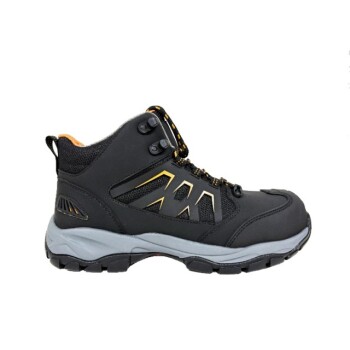
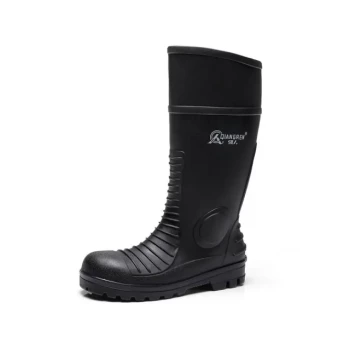
At their core, soft-toe boots are defined by what they lack: a reinforced, protective toe cap. This deliberate omission makes them significantly lighter, more flexible, and more comfortable than their safety-toe counterparts, designed for environments where the risk of foot impact from falling objects is minimal.
The primary trade-off with soft-toe boots is sacrificing certified impact protection for significant gains in flexibility, weight reduction, and all-day comfort, making them ideal for low-risk work and general wear.
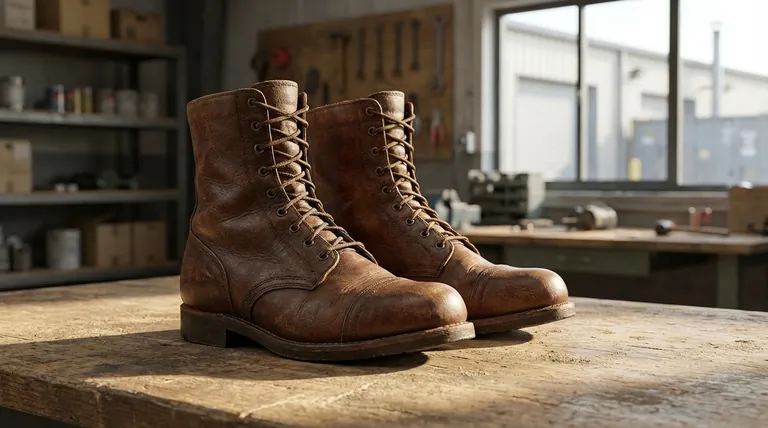
The Defining Features of Soft-Toe Footwear
While the absence of a safety toe is the main characteristic, it leads to several other key attributes that define the category. These boots prioritize mobility and reduced fatigue over outright hazard protection.
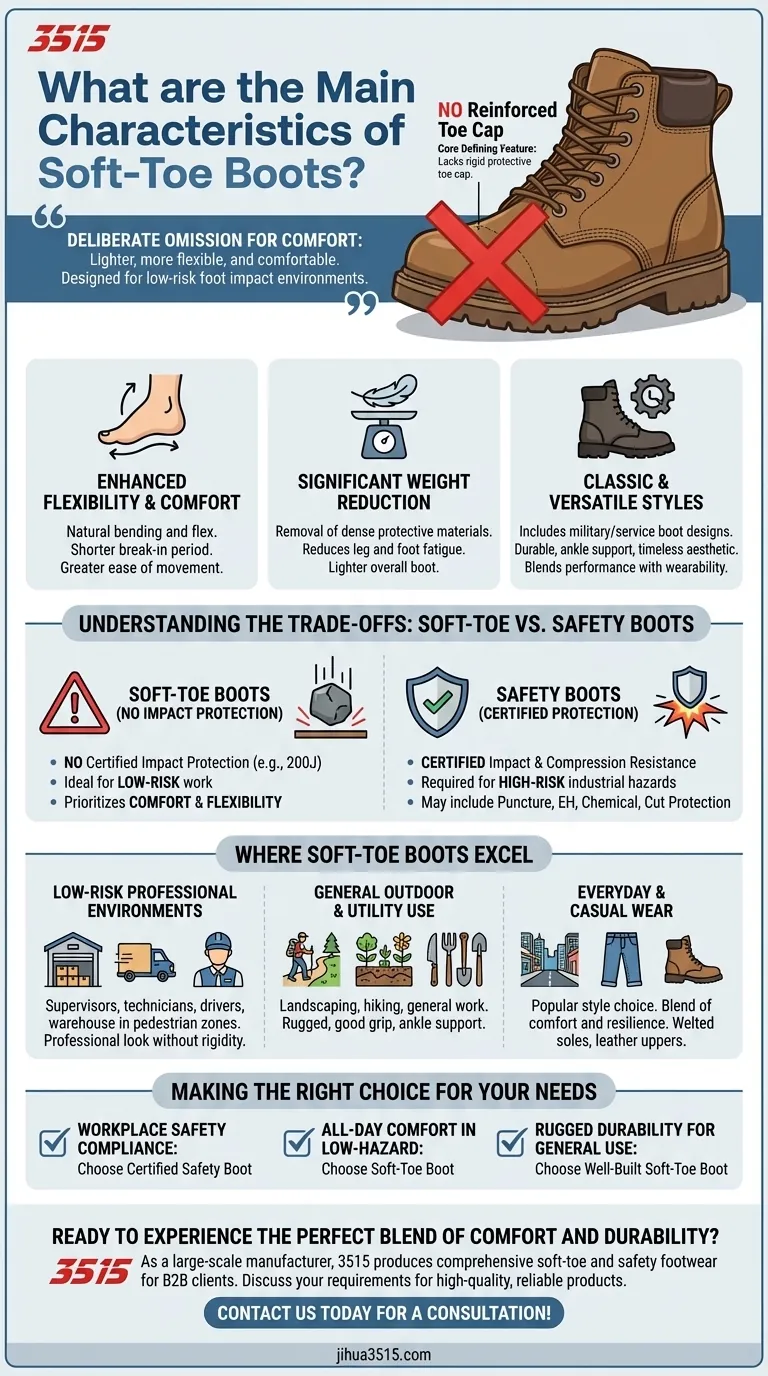
Enhanced Flexibility and Comfort
Without a rigid steel or composite cap in the toe box, the boot can bend and flex more naturally with your foot. This leads to greater ease of movement and a much shorter break-in period.
Significant Weight Reduction
The materials used for protective toe caps are dense and add considerable weight to a boot. Removing them makes the entire boot lighter, which reduces strain and fatigue over a long day of walking or standing.
Classic and Versatile Styles
Many popular boot designs, such as military-style service boots or army boots, are soft-toed. They are prized for their durability, ankle support, and timeless aesthetic, blending high-performance construction with everyday wearability.
Understanding the Trade-offs: Soft-Toe vs. Safety Boots
Choosing a soft-toe boot is a conscious decision to prioritize comfort over protection from specific industrial hazards. It's critical to understand what you are giving up.
No Certified Impact Protection
This is the most important distinction. Safety boots are rated to withstand a specific impact, such as a 200-joule force. Soft-toe boots offer zero certified protection against crushing or impact from heavy objects.
Lack of Specialized Hazard Resistance
A true safety boot often includes a suite of protective features that soft-toe boots typically lack. These can include:
- Puncture-resistant midsoles to protect from sharp objects underfoot.
- Electrical Hazard (EH) ratings.
- Moisture or chemical barriers, as seen in EMS boots.
- Extreme cut protection, required for forestry boots.
The Importance of a Risk Assessment
The choice is not about which boot is "better," but which is appropriate for the environment. If your job site has any risk of falling tools, equipment, or materials, a certified safety-toe boot is non-negotiable.
Where Soft-Toe Boots Excel
When impact hazards are not a factor, the benefits of a soft-toe boot make it the superior choice for a wide range of applications.
Low-Risk Professional Environments
Supervisors, technicians, delivery drivers, and warehouse workers in pedestrian-only zones often choose soft-toe boots. They provide the professional look and durability of a work boot without the unnecessary weight and rigidity.
General Outdoor and Utility Use
For activities like landscaping, hiking, or general work around the house, a rugged, military-style soft-toe boot offers excellent grip, ankle support, and lasting durability.
Everyday and Casual Wear
The classic construction of many soft-toe boots, such as the welted soles and leather uppers of a service boot, has made them a popular style choice for their blend of comfort and resilience.
Making the Right Choice for Your Needs
Select your footwear based on a clear understanding of your daily environment and its potential hazards.
- If your primary focus is workplace safety compliance: You must choose a certified safety boot with a protective toe cap and any other features required by your job site's risk assessment.
- If your primary focus is all-day comfort in a low-hazard environment: A soft-toe boot is an excellent choice, offering superior flexibility and reduced weight for less foot fatigue.
- If your primary focus is rugged durability for outdoor or general use: A well-built soft-toe boot in a service or military style provides excellent support and longevity without the rigidity of a safety toe.
Ultimately, understanding this fundamental distinction empowers you to select footwear that perfectly matches your environment's demands with your personal need for comfort.
Summary Table:
| Key Characteristic | Description | Benefit |
|---|---|---|
| No Protective Toe Cap | Lacks a rigid steel or composite safety toe. | Significant weight reduction and enhanced flexibility. |
| Enhanced Flexibility | Toe box bends naturally with the foot. | Shorter break-in period and greater ease of movement. |
| Lightweight Construction | Removal of dense protective materials. | Reduces leg and foot fatigue over long periods. |
| Versatile, Classic Styles | Often includes military or service boot designs. | Blends durability and ankle support with everyday aesthetics. |
Ready to Experience the Perfect Blend of Comfort and Durability?
As a large-scale manufacturer, 3515 produces a comprehensive range of soft-toe and safety footwear for distributors, brand owners, and bulk clients. Our production capabilities encompass all types of boots, ensuring you get the perfect fit for your market's needs—whether it's lightweight comfort for low-risk environments or certified protection for industrial settings.
Let's discuss your footwear requirements and how we can deliver high-quality, reliable products for your business.
Contact us today for a consultation!
Visual Guide
Related Products
- Durable Leather Moc Toe Work Boots for Wholesale & Custom Manufacturing
- Wholesale Durable Safety Boots Manufacturer Customizable Steel Toe Work Boots
- Wholesale Customizable Safety Boots Durable & Protective Footwear Manufacturing
- Puncture-Resistant Velcro Safety Boots for Wholesale & Custom Manufacturing
- Wholesale Durable Breathable Safety Boots Custom OEM Manufacturer
People Also Ask
- What are moc toe work boots designed for? Superior Comfort and Mobility for Tradespeople
- What are the key features to look for when purchasing moc toe boots? A Guide to Durability & Fit
- How did moc toe boots originate? A Legacy of Workwear Durability and Style
- What clothing items complement the Outdoorsman/Heritage Look with moc toe boots? Build a Timeless, Rugged Wardrobe
- What types of outfits can moc toe boots be worn with? Versatile Style Guide