
The primary benefits of Goodyear welt construction are its exceptional durability, the ability to be resoled multiple times, and enhanced water resistance. This traditional shoemaking method creates footwear known for its longevity and long-term value, as the robust construction allows worn-out soles to be replaced without compromising the shoe's upper structure.
A Goodyear welt fundamentally separates a shoe into two serviceable parts: the upper and the sole. This separation is the key, allowing for repeated repairs and creating a durable, water-resistant buffer that defines high-quality, long-lasting footwear.
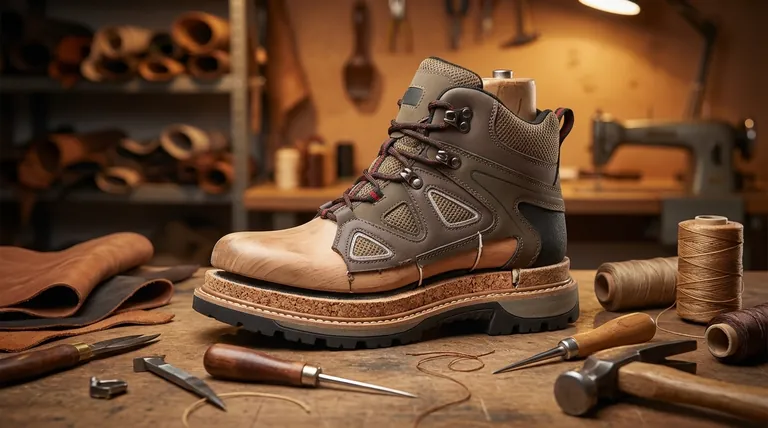
How Goodyear Welt Construction Works
To understand the benefits, it's essential to understand the basic mechanics. This method avoids stitching the shoe's upper directly to the outsole, which is the key to its advantages.
The Two-Level Stitch
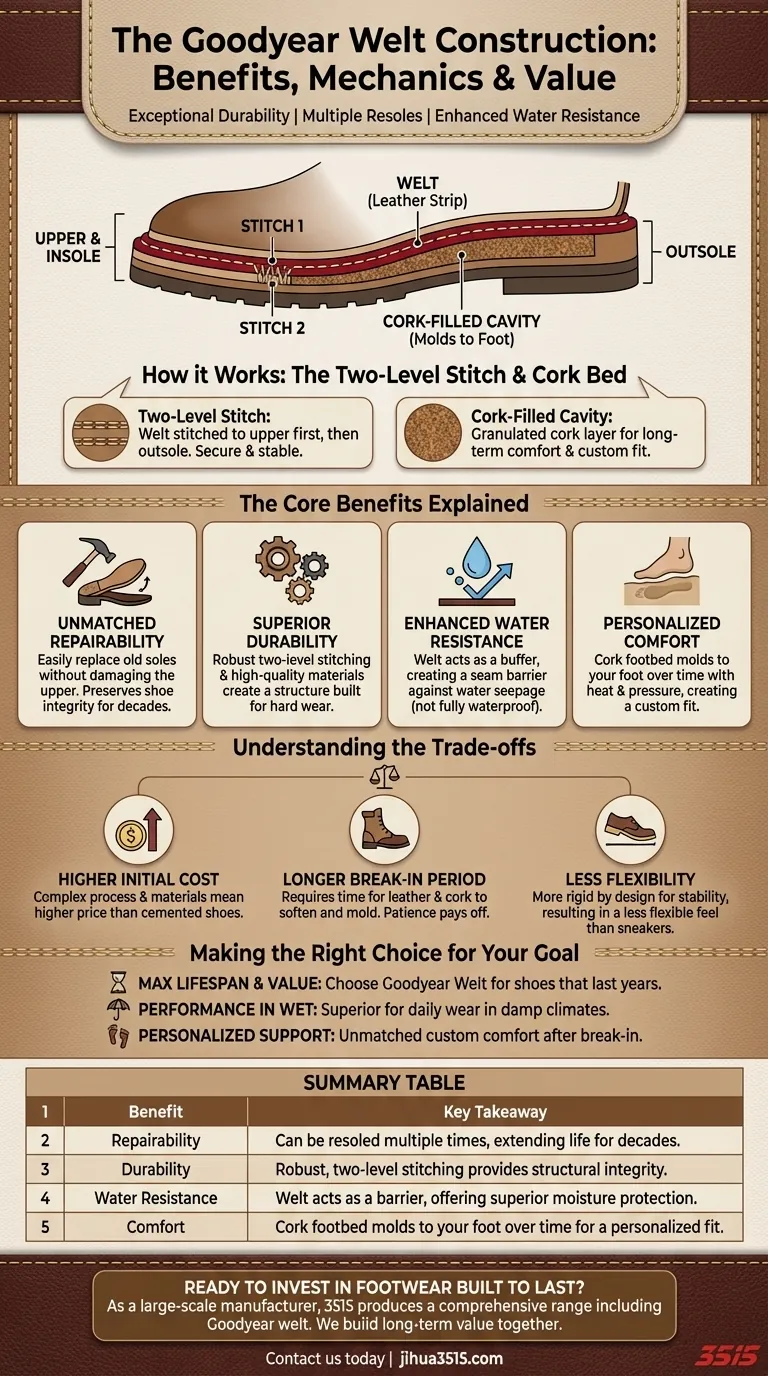
Goodyear welting uses a strip of material, typically leather, called the welt. This welt is first stitched to the shoe's upper and insole. In a separate step, this same welt is then stitched to the outsole. This two-level stitch creates a secure and stable bond.
The Cork-Filled Cavity
This construction method creates a cavity between the insole and the outsole. This space is filled with a layer of granulated cork. This seemingly minor detail is critical for the shoe's long-term comfort.
The Core Benefits Explained
Each benefit of a Goodyear welt is a direct result of its unique construction process.
Unmatched Repairability
This is the most significant advantage. Because the outsole is stitched to the welt and not the upper, a cobbler can easily remove the old stitching and sole. A new sole can then be attached without creating new holes in the shoe's upper, preserving its integrity. This allows a single pair of high-quality shoes to last for decades.
Superior Durability
The combination of the two-level stitching, the welt itself, and the high-quality materials typically used for this process results in an incredibly robust shoe. The construction provides excellent structural integrity and is built to withstand years of hard wear.
Enhanced Water Resistance
The welt acts as a physical barrier between the ground and the shoe's upper. It creates a small buffer around the seam, making it much more difficult for water to seep into the shoe from below. While not fully waterproof, it offers significantly more protection than simpler construction methods.
Personalized Comfort Over Time
The cork footbed is the secret to a Goodyear welted shoe's signature comfort. As you wear the shoe, your body heat and the pressure of your foot slowly compress and mold the cork. Over time, this creates a custom impression of your foot, resulting in a personalized fit and excellent support that is unique to you.
Understanding the Trade-offs
No construction method is perfect for every situation. Objectivity requires acknowledging the potential downsides.
Higher Initial Cost
Goodyear welting is a more complex, labor-intensive, and material-heavy process. This is reflected in a higher upfront purchase price compared to shoes with cemented or Blake-stitched soles.
A Longer Break-in Period
The layered construction and firm cork footbed make the shoes feel stiff out of the box. They require a break-in period for the leather to soften and the cork to mold to your foot. This initial stiffness is the price paid for long-term custom comfort.
Less Flexibility
By design, this construction is more rigid than others. While this provides excellent stability and support, it results in a less flexible shoe. For users who prioritize a lightweight, sneaker-like feel, this can be a drawback.
Making the Right Choice for Your Goal
Deciding if a Goodyear welt is right for you depends entirely on your priorities.
- If your primary focus is maximum lifespan and long-term value: Goodyear welting is the definitive choice, as the ability to resole the shoe ensures it can last for many years.
- If your primary focus is performance in wet environments: The enhanced water resistance makes it a superior option for daily wear in damp climates.
- If your primary focus is personalized support and comfort: The moldable cork footbed offers a level of custom fit that is unmatched once the shoe is broken in.
Ultimately, choosing Goodyear welted footwear is an investment in craftsmanship that rewards you with unparalleled durability and a fit that becomes uniquely your own.
Summary Table:
| Benefit | Key Takeaway |
|---|---|
| Repairability | Can be resoled multiple times, extending shoe life for decades. |
| Durability | Robust, two-level stitching provides exceptional structural integrity. |
| Water Resistance | The welt acts as a barrier, offering superior protection from moisture. |
| Comfort | Cork footbed molds to your foot over time for a personalized fit. |
Ready to invest in footwear built to last?
As a large-scale manufacturer, 3515 produces a comprehensive range of durable footwear for distributors, brand owners, and bulk clients. Our production capabilities encompass all types of shoes and boots, including the superior Goodyear welt construction. We can help you provide your customers with the long-term value and exceptional quality they demand.
Contact us today to discuss your manufacturing needs and discover how we can build lasting value together.
Visual Guide
Related Products
- Durable Goodyear Welt Leather Work Boots for Wholesale & Private Label
- Wholesale Durable Leather Work Boots | 8-Inch Goodyear Welt Manufacturer
- Durable Leather Work Boots Wholesale Manufacturer & Custom Factory
- Wholesale Durable & Breathable Training Shoes for Custom Brands
- Premium Lightweight Safety Shoes for Wholesale & Bulk Orders
People Also Ask
- What is the difference between full-grain and top-grain leather? Premium Material Guide for Boot Manufacturers
- What are the advantages of leather as an upper material for work boots? Unmatched Durability & Custom Comfort
- Why is it important to waterproof leather work boots? Protect Your Investment and Performance
- How should new leather work boots be broken in? A Guide to Comfort and Durability
- What are the advantages of leather uppers in work boots? Unmatched Durability & Protection














