
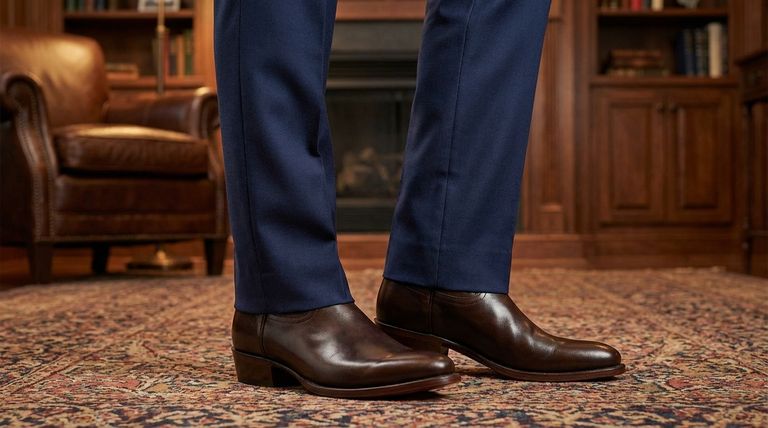
Yes, you can absolutely wear cowboy boots with a suit. This combination has been successfully worn by presidents, professionals, and wedding guests alike, adding a touch of refined, confident flair. The key is to treat the boot like a dress shoe by adhering to five core principles: toe shape, material, sole, color, and pant length.
The fundamental rule is to ensure the boot's formality matches or elevates the suit. You are not dressing the suit down; you are selecting a specific type of dress boot that complements formalwear.
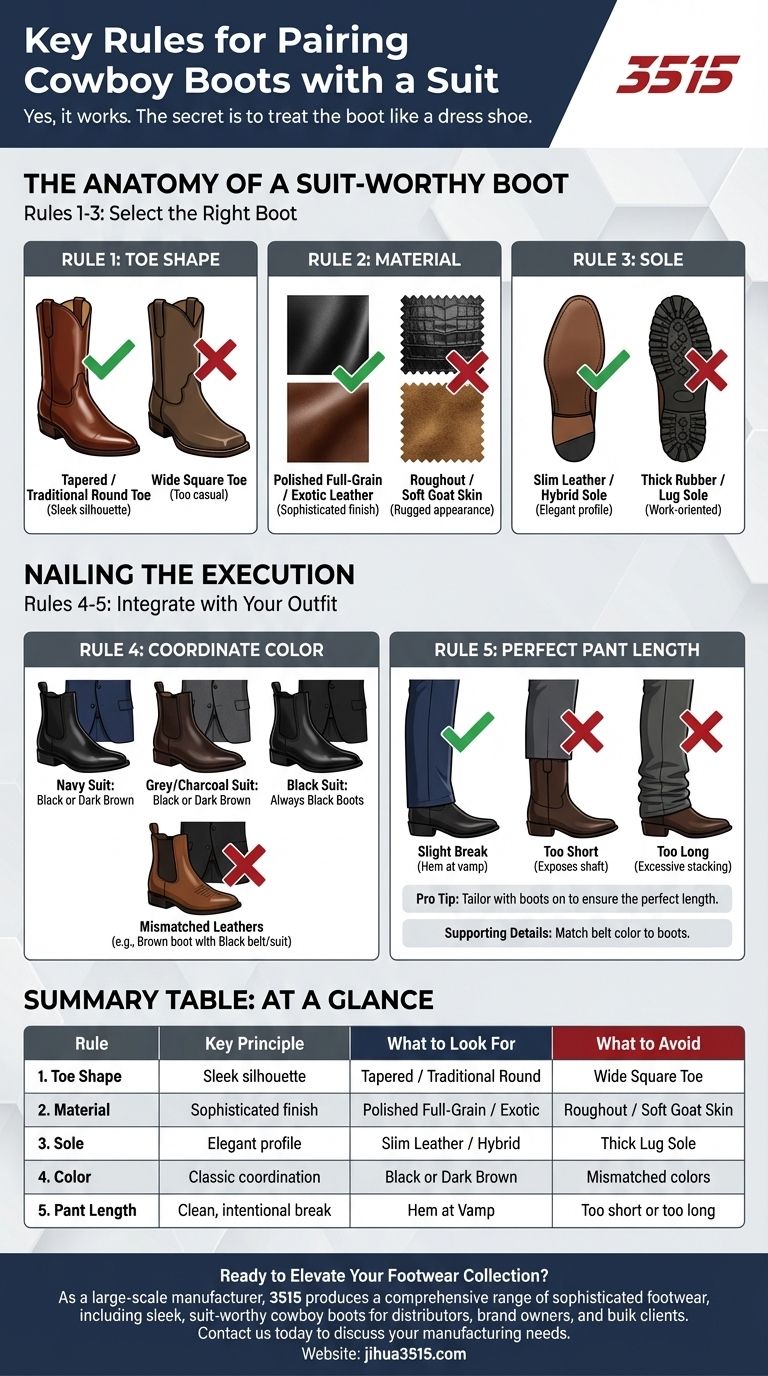
The Anatomy of a Suit-Worthy Boot
To successfully pair boots with a suit, the boot itself must meet certain criteria. A casual, rugged work boot will clash with fine tailoring, so careful selection is paramount.
Rule 1: Prioritize a Tapered Toe Shape
For a professional or formal look, the shape of the toe is critical. It sets the entire tone of the boot.
Opt for boots with a tapered or traditional round toe. These shapes are sleeker and more closely mimic the silhouette of a traditional dress shoe, creating a cohesive appearance.
Avoid wide square-toe boots. This style is inherently more casual and associated with modern ropers or work boots, which visually conflicts with the sharp lines of a suit.
Rule 2: Select a Polished, High-Quality Material
The boot's material must convey sophistication. Not all leathers are created equal when it comes to formalwear.
Choose boots made from rich, polished, full-grain leather. Exotic leathers like alligator, lizard, or ostrich are also excellent choices for adding texture and a premium feel.
Steer clear of roughout leather or soft goat skin. These materials have a more rugged, casual appearance and lack the refined finish necessary to complement a suit.
Rule 3: Inspect the Sole
While not always top of mind, the sole has a significant impact on the boot's formality.
A suit-worthy boot should have a slim leather or hybrid sole, similar to a high-quality dress shoe. A thin, understated rubber sole can also work if it maintains a sleek profile.
Avoid boots with thick, heavy-duty rubber or lug soles. These are designed for work and durability, not elegance, and will make the entire outfit look bottom-heavy and disjointed.
Nailing the Execution
Once you have the right boot, the final step is ensuring it integrates perfectly with the rest of your outfit, particularly your trousers.
Rule 4: Coordinate the Color
Color coordination follows the same logic as pairing any other dress shoe with a suit.
For navy, charcoal, or grey suits, black or dark brown boots are classic, reliable choices. Brown boots can offer a slightly more relaxed but still sophisticated look with navy or grey suits.
When wearing a black suit, always stick with black boots for a seamless, formal appearance.
Rule 5: Perfect the Pant Length
This is arguably the most important rule for achieving a clean, intentional look. The way your pants fall on the boot is a dead giveaway of a well-thought-out ensemble.
Your trousers should be tailored for a slight break, with the hem hitting the top of the vamp (the part of the boot that covers your foot). This creates an unbroken line from your leg to your foot.
For a perfect fit, wear your boots when you visit the tailor. Have them hem your unhemmed pants to the exact, correct length for the boots you intend to wear.
The Supporting Details: Belt and Care
Finally, remember that accessories complete the look.
Always match the color of your belt to your boots. A polished black boot requires a polished black leather belt. This small detail unifies the entire outfit.
Common Pitfalls to Avoid
Mistakes in this style combination can be conspicuous. Avoiding a few common errors will ensure your look is sharp and not sloppy.
The Casual Boot Mistake
The most frequent error is choosing a boot that is simply too casual. A scuffed, square-toed, roughout leather boot you'd wear for ranch work will never look right with fine tailoring.
The Wrong Pant Break
Trousers that are too short will expose the boot shaft, which looks awkward and disrupts the suit's silhouette. Conversely, pants that are too long will "stack" excessively on top of the boot, looking messy and unkempt.
Mismatched Leathers
Wearing black boots with a brown belt (or vice versa) is a classic style misstep. The clash is jarring and undermines the intentionality of your look.
How to Apply This to Your Occasion
Your final choice depends on the environment and the statement you want to make.
- If your primary focus is a professional or conservative setting: Stick to classic, polished black or dark brown leather boots with a tapered toe and pair them with a perfectly tailored navy or charcoal suit.
- If your primary focus is a wedding or stylish social event: This is an opportunity to use a high-quality exotic leather, like ostrich or alligator, to add a sophisticated, personal touch to your formalwear.
Ultimately, wearing cowboy boots with a suit is a declaration of confidence, accomplished through careful attention to detail.
Summary Table:
| Rule | Key Principle | What to Look For | What to Avoid |
|---|---|---|---|
| 1. Toe Shape | Sleek, dress-shoe-like silhouette | Tapered or traditional round toe | Wide square toe |
| 2. Material | Polished, sophisticated finish | Full-grain or exotic leather (e.g., alligator) | Roughout or soft goat skin |
| 3. Sole | Thin, elegant profile | Slim leather or hybrid sole | Thick, heavy-duty lug sole |
| 4. Color | Classic coordination with the suit | Black or dark brown boots | Mismatched colors (e.g., brown with black suit) |
| 5. Pant Length | Clean, intentional break | Hem hitting the top of the boot's vamp | Pants too short or too long, causing stacking |
Ready to Elevate Your Footwear Collection?
As a large-scale manufacturer, 3515 produces a comprehensive range of sophisticated footwear perfect for distributors, brand owners, and bulk clients. Our production capabilities encompass all types of high-quality boots, including the sleek, suit-worthy styles detailed in this article.
Let us help you source or create the perfect boots to meet your customers' demand for versatile, elegant footwear.
Contact us today to discuss your manufacturing needs and explore our extensive catalog.
Visual Guide
Related Products
- High-Traction Suede Tactical Boots Wholesale & Custom Manufacturing
- Wholesale High-Traction Camo Boots - Custom Manufacturer for Brands
- Wholesale Lightweight Tactical Boots Custom Manufacturer for Desert & Combat Use
- Durable Leather Tactical Boots Wholesale & Custom Manufacturing for Brands
- Wholesale Durable Mid-Cut Tactical Boots for Custom & Private Label Brands
People Also Ask
- Why is sequential analysis utilized to evaluate tactical boots? Master Dynamic Boot Development and Ergonomic Performance
- How does the material of tactical boots affect their performance? Choose the Right Material for Your Mission
- How do tactical boots differ from regular boots? Performance, Durability & Design Explained
- How do military uniforms and tactical boots impact the prediction of thermal risk? Essential Safety Insights
- What are the benefits of integrating FES and sEMG into tactical boots? Safety, Reliability & Field-Ready Performance


















