At its core, a work boot's interior consists of three key structural components. These are the insole, which provides initial cushioning for your foot; the midsole, which serves as the primary layer of shock absorption and support; and the shank, a rigid piece that supports the arch and adds structural integrity.
A work boot's interior is more than just padding for comfort. It is an engineered support system designed to absorb impact, provide stability, and protect your foot from the specific stresses of your work environment.
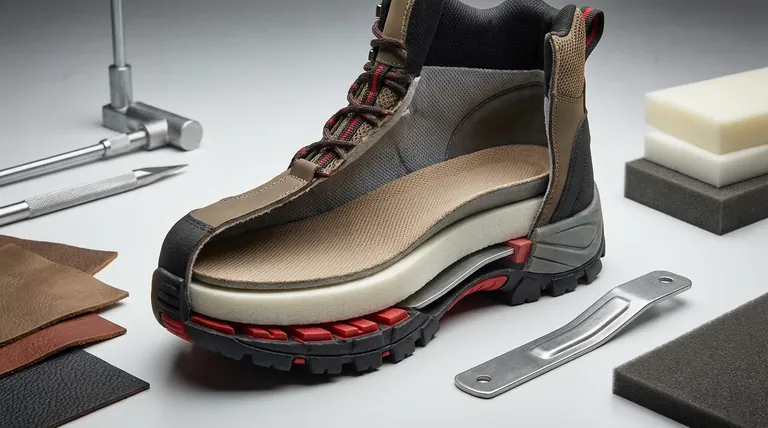
Deconstructing the Boot's Interior Support System
To truly understand a work boot, you must look past the rugged exterior. The interior components are what determine its comfort, support, and long-term performance under load.
The Insole: Your First Layer of Comfort
The insole, or footbed, is the part your foot directly contacts. Its primary job is to provide cushioning and immediate comfort.
Many quality work boots feature removable insoles, allowing you to use custom orthotics or replace a worn-out footbed. Some are also designed with moisture-wicking and odor-control properties.
The Midsole: The Unseen Shock Absorber
Sandwiched between the insole and the outsole, the midsole is the boot's primary engine for shock absorption and support.
This crucial layer is often made from materials like EVA (ethylene vinyl acetate) or polyurethane (PU). It dissipates the force from walking on hard surfaces, reducing fatigue in your feet, legs, and back.
The Shank: The Backbone of the Boot
The shank is a rigid piece of steel, fiberglass, or nylon embedded between the midsole and outsole, directly under the arch of your foot.
Its purpose is twofold: it provides crucial arch support to prevent foot strain, and it adds torsional rigidity to the boot, preventing it from twisting on uneven ground. This structural integrity is vital for stability and protection.
The Lining: The Climate Control System
While not a structural support, the interior lining is critical for all-day comfort. It manages the climate inside your boot.
Good linings are made from breathable, moisture-wicking materials to keep your feet dry. In boots designed for cold weather, the lining will also include insulation.
How the Interior and Exterior Work in Concert
The interior components do not work in isolation. They are part of a complete system that includes the boot's exterior to provide comprehensive protection and performance.
A Unified System of Protection
The boot's interior support system is the foundation for its external protective features. A strong shank can help prevent punctures from below, working alongside an exterior steel toe that protects from impacts from above.
The Foundation for Stability
The rigid structure provided by the shank and midsole creates a stable platform. This allows the exterior outsole to maintain maximum contact with the ground, ensuring reliable traction and preventing slips.
Understanding the Trade-offs
Choosing the right boot involves balancing competing characteristics. The construction of the interior plays a major role in these compromises.
Flexibility vs. Rigidity
A boot with a substantial steel shank will offer superior arch support and protection but will be much more rigid and less flexible than a boot without one. This can be a drawback for jobs that require frequent kneeling or crouching.
Cushioning vs. Ground Feel
A thick, heavily cushioned midsole excels at absorbing shock on concrete floors. However, it can reduce your "ground feel," making it less ideal for navigating highly uneven or unpredictable terrain where sensing the surface is important.
Removable vs. Integrated Insoles
Removable insoles offer excellent versatility, allowing you to customize the fit and support with aftermarket or orthotic options. Integrated insoles, however, are specifically designed to work with the boot's entire support system, which can sometimes provide a more cohesive feel.
Making the Right Choice for Your Goal
Your specific job and foot type should dictate the interior construction you prioritize.
- If your primary focus is all-day comfort on hard surfaces: Look for a boot with a thick, shock-absorbing midsole and a high-quality, cushioned insole.
- If your primary focus is stability on ladders or uneven terrain: Prioritize a boot with a rigid shank to provide arch support and prevent the boot from flexing.
- If your primary focus is protection from puncture hazards: Ensure the boot has a steel or composite shank designed for puncture resistance.
Understanding a work boot's interior empowers you to choose a specialized tool, not just a piece of footwear.
Summary Table:
| Component | Primary Function | Key Benefit |
|---|---|---|
| Insole | First layer of cushioning | Immediate comfort & moisture control |
| Midsole | Primary shock absorption | Reduces fatigue in feet, legs, and back |
| Shank | Arch support & structural integrity | Provides stability on uneven ground |
Ready to source work boots engineered for superior interior support?
As a large-scale manufacturer, 3515 produces a comprehensive range of footwear for distributors, brand owners, and bulk clients. Our production capabilities encompass all types of safety and work boots, with a focus on the precise engineering of interior components like shanks and midsoles for maximum comfort and protection.
Let us help you provide your customers with the right tool for the job. Contact our experts today to discuss your specific needs.
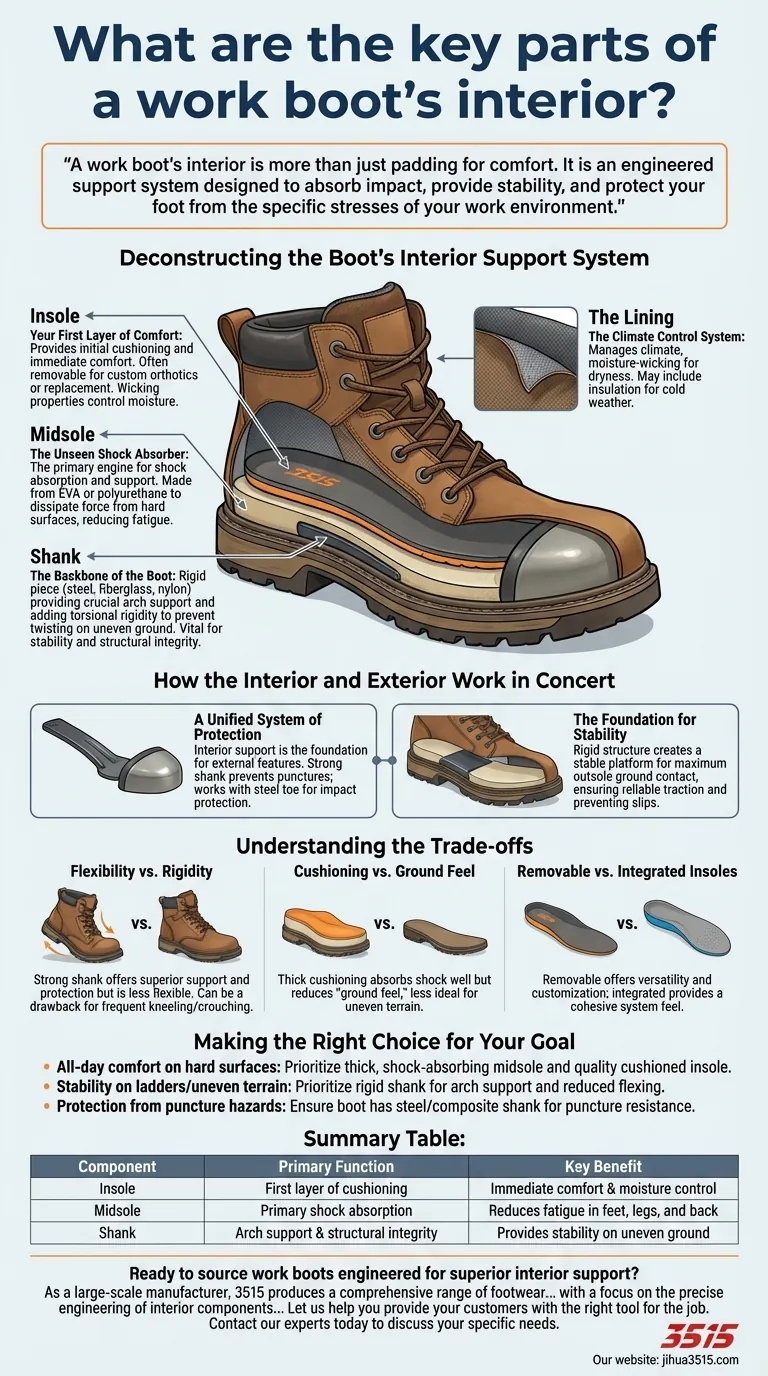
Visual Guide
Related Products
- Durable Leather Work Boots for Wholesale & Custom Manufacturing
- Durable Leather Work Boots for Wholesale & Custom OEM Manufacturing
- Durable Leather Work Boots Wholesale Manufacturer & Custom Factory
- Durable Leather Moc Toe Work Boots for Wholesale & Custom Manufacturing
- Wholesale Durable 6-Inch Work Boots | Custom & Private Label Manufacturer
People Also Ask
- What is the difference between full-grain and top-grain leather? Premium Material Guide for Boot Manufacturers
- What are the common workplace hazards that can be mitigated with the right work boots? Protect Your Workforce
- What are the common foot issues workers face due to uncomfortable work boots? Prevent Pain & Deformities
- What are the advantages of leather versus synthetic work boots? A Guide to Choosing the Right Material
- What are the key components of modern work boots? Engineered for Ultimate Durability and Comfort