
The key features to look for in motorcycle riding boots are a combination of comprehensive protection, a secure fit, and functional comfort. A proper boot is built with abrasion-resistant materials, includes armor to guard against impact and crushing forces, and features a stiff, non-slip sole to provide stability both on and off the bike. These elements work together to form a critical piece of safety equipment.
Your footwear is your primary defense against abrasion, impact, and twisting injuries in an accident. The goal is to select a boot that offers non-negotiable protection features while still providing the comfort and usability your specific type of riding demands.
The Core Pillars of Protection
A motorcycle boot's most important job is to protect your feet and ankles. Regular shoes and work boots are not designed to withstand the unique forces of a motorcycle crash.
Abrasion Resistance
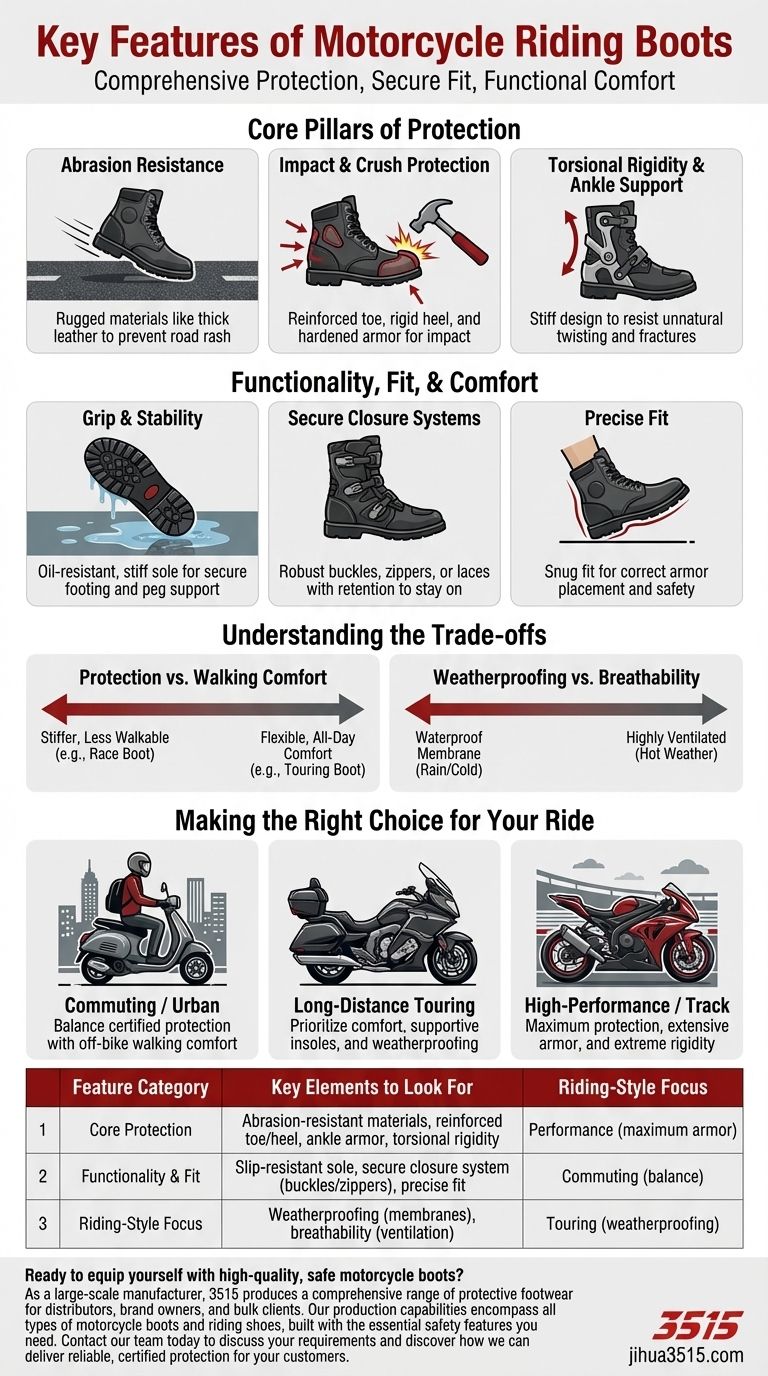
In any slide, your boots will be one of the first points of contact with the pavement. They must be made from rugged materials like thick leather or specialized abrasion-resistant textiles that won't tear apart. This is your first line of defense against severe road rash.
Impact and Crush Protection
Your feet are vulnerable to being hit by road debris or crushed under the weight of the motorcycle. True riding boots incorporate armor and reinforcement in critical areas. Look for a reinforced toe box and a rigid heel counter to protect against crushing, as well as hardened armor or shock-absorbing pads over the ankle bones.
Torsional Rigidity and Ankle Support
One of the most common riding injuries is a twisted or broken ankle. A good motorcycle boot is designed to be torsionally stiff, meaning it resists unnatural twisting and side-to-side flexing. While a work boot might protect your ankle from a falling object, it offers almost no protection against the twisting forces common in a crash.
Functionality, Fit, and Comfort
Protection is useless if the boot is so uncomfortable or impractical that you choose not to wear it. The best boots integrate their safety features with designs that work for the rider.
The Sole: Grip and Stability
The sole of a motorcycle boot must be made from a slip-resistant and oil-resistant material. This ensures you have a secure footing when you put a foot down at a stoplight, even on slick surfaces. The sole should also be stiff to support the weight of the bike when stopped and reduce fatigue by distributing pressure on the footpegs.
Secure Closure Systems
Your boot must stay on your foot during a crash. Look for robust closure systems like buckles, zippers, or heavy-duty laces. If a boot has laces, it should also have a retention system (like a Velcro strap) to ensure the loops can't get caught on your bike's controls.
The Importance of a Precise Fit
For the protective features to work correctly, the boot must fit snugly without being painfully tight. A boot that is too loose can shift, causing the armor to be in the wrong place during an impact, or it could even come off entirely.
Understanding the Trade-offs
Choosing a boot always involves balancing competing priorities. Understanding these compromises is key to finding the right pair for you.
Protection vs. Walking Comfort
Generally, the more protective a boot is, the stiffer and less comfortable it will be for walking. A track-focused race boot offers maximum protection but is very awkward to walk in. A touring or urban boot sacrifices some rigidity for all-day comfort and off-bike walkability.
Weatherproofing vs. Breathability
A boot with a waterproof membrane (like Gore-Tex) is excellent for riding in the rain and cold, but it will be less breathable in hot weather. Conversely, a highly ventilated boot with mesh panels will keep you cool in the summer but will offer no protection from water.
Style vs. Substance
Many companies now offer "riding shoes" that look like casual sneakers. While some offer genuine protection with reinforced toes and ankle pucks, many are little more than fashion items. Always verify that a stylish boot contains real safety features like a rigid sole and certified ankle protection.
Making the Right Choice for Your Ride
Your ideal boot depends entirely on how and where you ride.
- If your primary focus is daily commuting or urban riding: Prioritize a balance of certified protection and walking comfort, as you'll likely be on your feet before and after your ride.
- If your primary focus is long-distance touring: Comfort and weatherproofing are paramount. Look for supportive insoles and a waterproof, breathable membrane.
- If your primary focus is high-performance or track riding: Maximum protection is non-negotiable. Choose tall boots with extensive armor, sliders, and extreme torsional rigidity.
Ultimately, the best boot is the one that provides certified protection you will be comfortable wearing on every single ride.
Summary Table:
| Feature Category | Key Elements to Look For |
|---|---|
| Core Protection | Abrasion-resistant materials, reinforced toe/heel, ankle armor, torsional rigidity |
| Functionality & Fit | Slip-resistant sole, secure closure system (buckles/zippers), precise fit |
| Riding-Style Focus | Commuting (balance), Touring (weatherproofing), Performance (maximum armor) |
Ready to equip yourself with high-quality, safe motorcycle boots?
As a large-scale manufacturer, 3515 produces a comprehensive range of protective footwear for distributors, brand owners, and bulk clients. Our production capabilities encompass all types of motorcycle boots and riding shoes, built with the essential safety features you need.
Contact our team today to discuss your requirements and discover how we can deliver reliable, certified protection for your customers.
Visual Guide
Related Products
- Heavy-Duty Waterproof Nubuck Safety Boots Safety Shoes for Bulk Supply
- Durable Goodyear Welt Leather Work Boots for Wholesale & Private Label
- Wholesale Tactical Boots High-Traction & Reflective for Bulk & Brand Orders
- Premium Wholesale Tactical Style Safety Shoes Boots with Quick Lacing
- Wholesale Waterproof Tactical Boots Custom Suede & High-Traction Soles
People Also Ask
- What primary protective functions do professional safety boots provide in urban solid waste recovery and waste picking processes? Discover Dual-Layer Protection.
- How do safety boots reduce cutting hazards? Essential Protection for Your Workforce
- Which organizations develop safety standards for work boots? Ensure Compliance & Worker Safety
- What are the common types of safety boots and their primary uses? A Guide to Industrial Footwear
- Why is ankle and arch support important in safety footwear? Prevent Injury & Fatigue



















