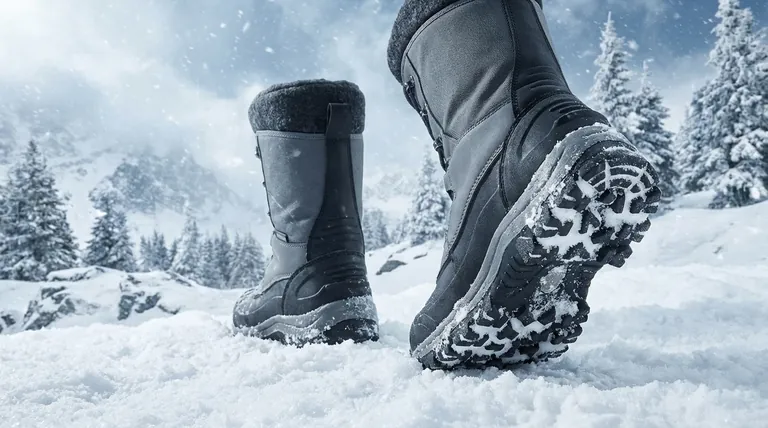
The key features of snow boots are a purpose-built system of waterproofing, insulation, and aggressive traction designed to function in deep snow and on icy surfaces. They are defined by their waterproof uppers, insulated linings, high-traction outsoles with deep treads, and a taller shaft height to keep snow out.
A true snow boot is specialized footwear engineered for the most severe winter weather. It intentionally sacrifices the lightweight, breathable feel of a general winter boot to deliver uncompromising protection against wetness, extreme cold, and slippery conditions.
The Anatomy of a True Snow Boot
Understanding a snow boot means looking at its individual components and how they work together to create a protective barrier against the elements. Each feature serves a critical function in keeping you warm, dry, and stable.
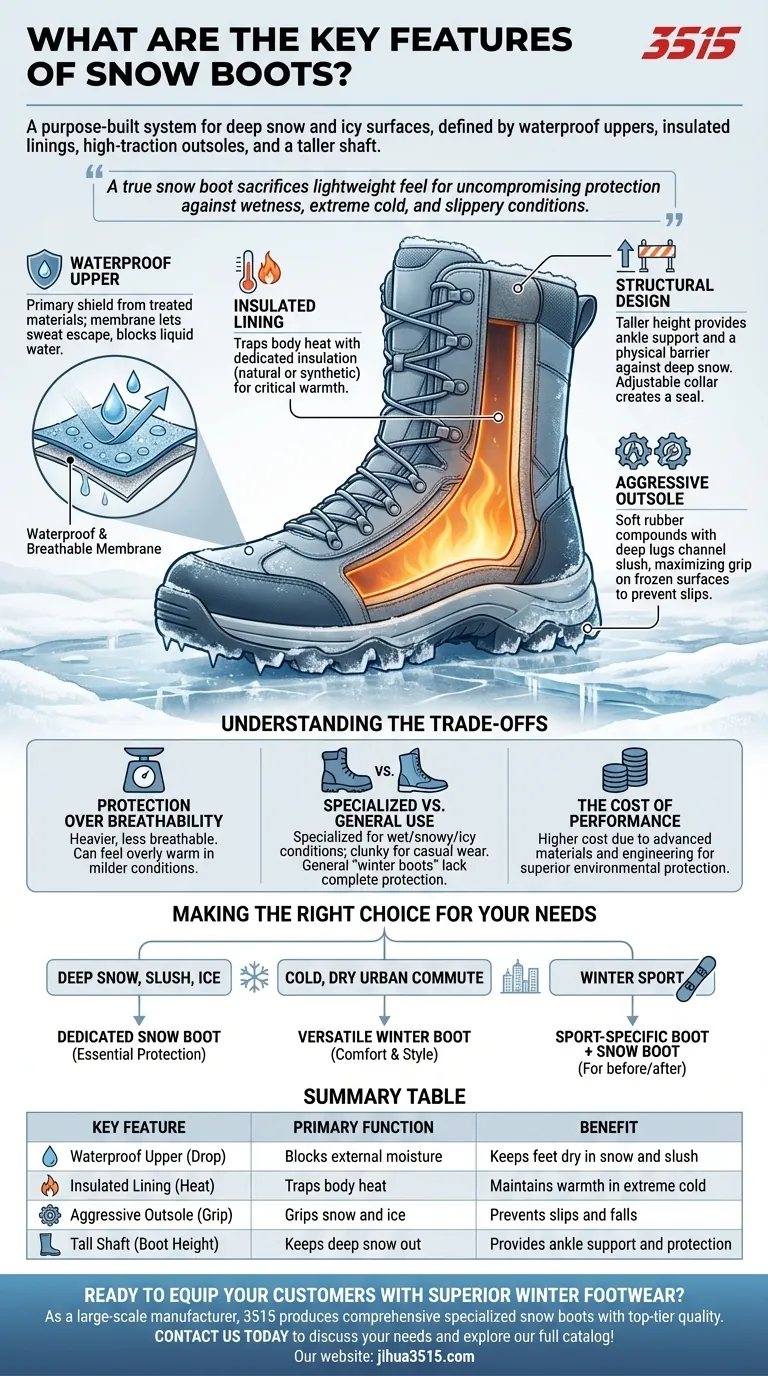
The Waterproof Upper: Your First Line of Defense
The boot's upper section is your primary shield. It is typically made from robust, waterproof materials like treated leather, nylon, or rubber.
Many high-quality snow boots also incorporate a waterproof and breathable membrane. This inner layer allows sweat vapor to escape while blocking liquid water from entering, which is critical for keeping your feet dry from both the inside and out.
The Insulated Lining: Retaining Critical Warmth
Unlike regular boots, snow boots contain a dedicated layer of insulation. This can range from natural materials like shearling to advanced synthetic fills.
The goal of this lining is to trap your body heat, creating a warm pocket of air around your foot to protect against freezing temperatures. The level of insulation determines the boot's temperature rating.
The Outsole: Your Connection to Icy Ground
The outsole is arguably the most critical safety feature. Snow boot outsoles are made from soft rubber compounds that remain flexible in the cold, allowing them to grip frozen surfaces.
They feature a pattern of deep, aggressive treads or lugs. This design bites into snow and channels slush away, maximizing the surface area in contact with the ground to prevent slips and falls on ice.
Structural Design: Height and Support
Snow boots are almost always taller than standard boots, extending up over the ankle to the mid-calf. This height serves two purposes: providing ankle support on uneven, snowy terrain and creating a physical barrier to prevent deep snow from getting inside.
Many models also feature an adjustable collar at the top, allowing you to create a tight seal against your leg to keep snow and cold air out completely.
Understanding the Trade-offs
Choosing a snow boot means accepting a set of specific design priorities. Their focus on extreme protection comes with inherent compromises that make them unsuitable for every situation.
Protection Over Breathability
The robust waterproofing that makes snow boots so effective also makes them heavier and less breathable than other footwear. In milder or drier cold conditions, this can lead to your feet feeling overly warm or sweaty.
Specialized vs. General Use
A snow boot is a specialized tool, much like a snowboard boot is built only for snowboarding. They excel in wet, snowy, or icy conditions but can feel clunky and cumbersome for casual wear or city commuting on clear, cold days.
A general-purpose "winter boot" may offer some warmth and grip, but it lacks the complete waterproofing and deep traction of a true snow boot. It's a compromise for versatility over peak performance in harsh weather.
The Cost of Performance
The combination of advanced waterproof materials, significant insulation, and highly engineered outsoles means snow boots are often more expensive than general-use winter boots. You are paying for a higher level of environmental protection.
Making the Right Choice for Your Needs
Selecting the correct boot is about honestly assessing the conditions you will face most often.
- If your primary focus is navigating deep snow, slush, and icy sidewalks: A dedicated snow boot is the only appropriate choice; its protective features are non-negotiable.
- If your primary focus is commuting in cold but mostly dry urban environments: A lighter, more versatile winter boot may provide sufficient warmth with better comfort and style.
- If your primary focus is a winter sport like snowboarding: You must use the sport-specific boot and change into snow boots before or after the activity for warmth and safety.
Choosing the right boot means matching its specific design to the reality of your winter environment.
Summary Table:
| Key Feature | Primary Function | Benefit |
|---|---|---|
| Waterproof Upper | Blocks external moisture | Keeps feet dry in snow and slush |
| Insulated Lining | Traps body heat | Maintains warmth in extreme cold |
| Aggressive Outsole | Grips snow and ice | Prevents slips and falls |
| Tall Shaft | Keeps deep snow out | Provides ankle support and protection |
Ready to equip your customers with superior winter footwear?
As a large-scale manufacturer, 3515 produces a comprehensive range of specialized snow boots for distributors, brand owners, and bulk clients. Our production capabilities ensure top-tier quality with features like waterproof membranes, advanced insulation, and high-traction outsoles—all designed to deliver unmatched protection and value.
Contact us today to discuss your snow boot needs and explore our full catalog!
Visual Guide
Related Products
- Premium Insulated Safety Boots and Shoes for Wholesale & Bulk Orders
- Durable Waterproof Rain Boots | Custom Manufacturer for Wholesale & Brands
- Factory Direct Wholesale Rain Boots Durable Waterproof & Fully Customizable
- Wholesale Waterproof Tactical Boots Custom Suede & High-Traction Soles
- Wholesale Lightweight Tactical Boots Custom Manufacturer for Desert & Combat Use
People Also Ask
- What are the recommended insulation ratings for mild winter conditions? A Guide for Active & Stationary Workers
- How does insulation thickness correlate with temperature ranges? A Guide to Choosing the Right Warmth
- What insulation level is needed for severe cold and stationary work? 1200g or Higher is Essential
- What safety advantages do insulated boots offer beyond warmth? Dielectric Protection & Superior Grip
- How does fleece lining contribute to the warmth of insulated boots? Trapping Air for Superior Cold Protection