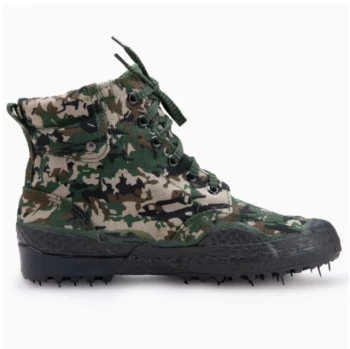
In short, classic jungle boots are defined by their unique sole, rapid drainage, and durable, quick-drying construction. They were engineered for hot, wet, and muddy environments where keeping feet dry was impossible, so the design prioritizes shedding water and providing grip over preventing water entry.
The core design philosophy of a jungle boot is not to keep water out, but to let it out as quickly as possible. This approach prevents trench foot and maintains mobility in consistently wet, tropical conditions.

The Engineering Behind the Jungle Boot
To understand the jungle boot, you must first understand the problem it solves: constant moisture. In a jungle, waterproof boots become counterproductive. Once water gets in—over the top, through a leak, or from sweat—it stays in, creating a perfect environment for fungal infections and trench foot.
The jungle boot takes the opposite approach. It accepts that feet will get wet and focuses entirely on drying them out as fast as military operations will allow.
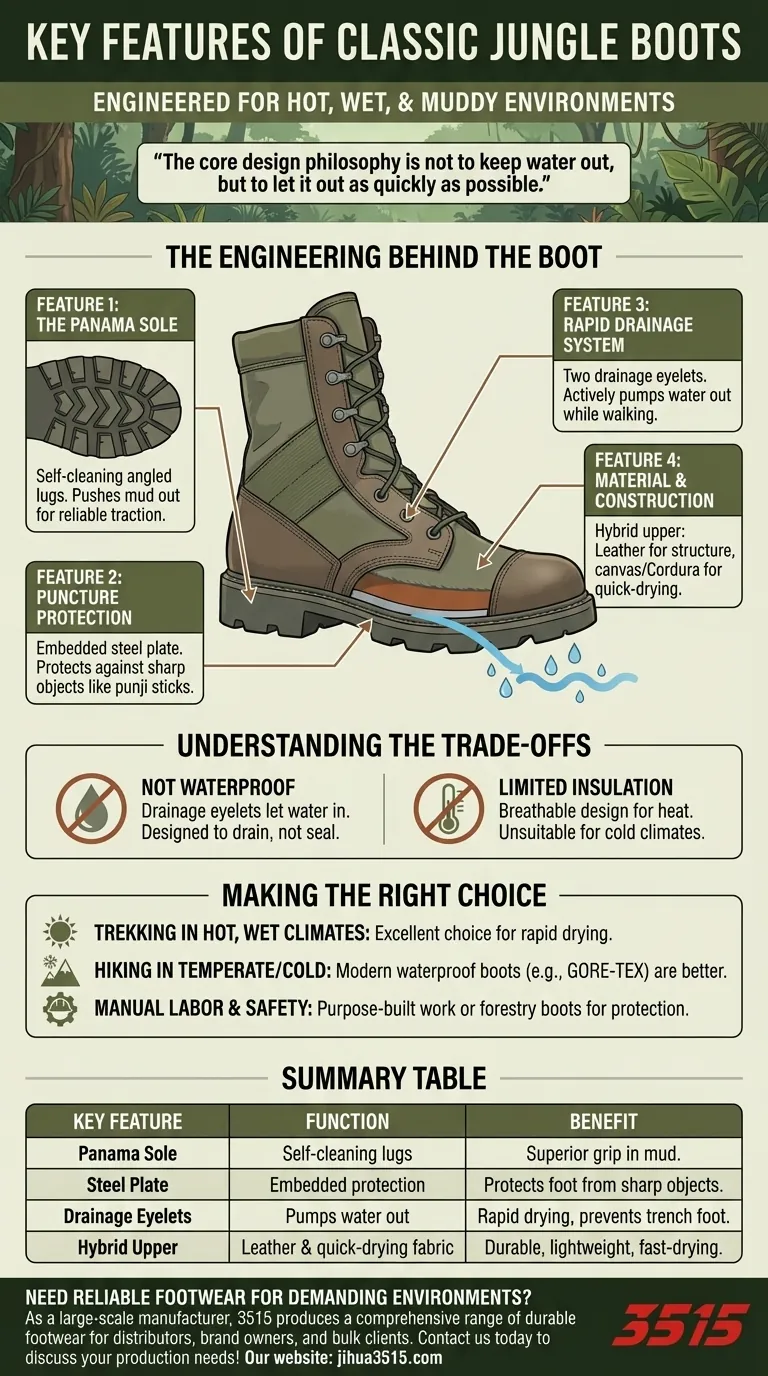
Feature 1: The Panama Sole
The most iconic feature is the Panama sole. Its design is a direct response to the thick, slippery mud of jungle floors.
The sole features wide, angled lugs that are self-cleaning. As you walk and the sole flexes, mud is actively pushed out from the channels, ensuring the lugs can continue to bite into the terrain for reliable traction.
Feature 2: Puncture Protection
Embedded within the Panama sole is a steel plate. This is a critical safety feature born from the experiences of soldiers during the Vietnam War.
The plate is designed to protect the foot from being pierced by sharp objects hidden in the mud or undergrowth, such as punji sticks, sharp rocks, or debris.
Feature 3: Rapid Drainage System
Perhaps the most crucial feature for a jungle environment is the drainage system. Classic jungle boots have two drainage eyelets on the instep, near the bottom of the boot.
These are not for ventilation. When a soldier walks out of a river or puddle, the simple act of walking flexes the boot, actively pumping water out through these holes. This significantly accelerates the drying process once on semi-dry land.
Feature 4: Material and Construction
The upper part of the boot combines leather with fabric panels, typically made of canvas or Cordura nylon.
The leather provides structure and durability around the heel and toe, while the fabric panels are lightweight and, most importantly, quick-drying. This hybrid construction avoids the waterlogging that would occur with an all-leather boot.
Understanding the Trade-offs
The jungle boot is a highly specialized piece of equipment. Its strengths in one environment become significant weaknesses in another.
Not Waterproof
The most obvious trade-off is the complete lack of waterproofing. The drainage eyelets that are so effective in a jungle will readily let water in from even shallow puddles in a temperate climate. They are designed to drain, not to seal.
Limited Insulation
Jungle boots offer virtually no insulation. Their breathable, quick-drying design is intended for hot and humid climates. Using them in cold or even cool conditions will lead to uncomfortably cold feet very quickly.
Comparison to Other Boots
It's helpful to contrast them with other specialized boots. For instance, forestry boots often use GORE-TEX waterproofing, have steel toes for impact protection, and feature cut-resistant materials. Their goal is to keep feet completely dry and safe from workplace hazards, a different mission from the jungle boot's "embrace the wet" philosophy.
Making the Right Choice for Your Goal
Selecting a jungle boot depends entirely on whether its specific design philosophy aligns with your intended environment.
- If your primary focus is trekking in hot, wet, and humid climates: The classic jungle boot is an excellent choice, as it will drain and dry far faster than any waterproof alternative.
- If your primary focus is hiking in temperate or cold environments: A modern waterproof hiking boot with a membrane like GORE-TEX is a much more suitable and comfortable option.
- If your primary focus is manual labor or worksite safety: A purpose-built work boot or forestry boot with certified toe and puncture protection offers superior safety features.
Ultimately, the classic jungle boot is a masterclass in purpose-driven design, perfectly engineered for one of the world's most demanding environments.
Summary Table:
| Key Feature | Function | Benefit |
|---|---|---|
| Panama Sole | Self-cleaning lugs for mud traction. | Superior grip in slippery, muddy terrain. |
| Steel Plate | Embedded puncture protection. | Protects foot from sharp objects. |
| Drainage Eyelets | Actively pumps water out. | Rapid drying, prevents trench foot. |
| Hybrid Upper | Leather and quick-drying fabric. | Durable, lightweight, and fast-drying. |
Need reliable footwear for demanding environments?
As a large-scale manufacturer, 3515 produces a comprehensive range of durable footwear for distributors, brand owners, and bulk clients. Our production capabilities encompass all types of specialized boots, including designs inspired by the functional principles of classic jungle boots. We can help you develop or source the perfect footwear for your market.
Contact us today to discuss your production needs!
Visual Guide
Related Products
- Durable Spiked Camouflage Boots Wholesale & Factory Production
- Wholesale Lightweight Tactical Boots Custom Manufacturer for Desert & Combat Use
- Wholesale High-Traction Camo Boots - Custom Manufacturer for Brands
- Durable Leather High-Ankle Tactical Boots for Wholesale & Custom Manufacturing
- Durable High-Ankle Tactical Boots Wholesale Manufacturer for Custom & Bulk Orders
People Also Ask
- How does boot height affect waterproofing? Choose the Right Height for Ultimate Protection
- What are the best types of shoes for different gardening conditions? Find Your Perfect Match.
- What role does camouflage play in hunting boots? It's More Than Just a Pattern
- What should you look for to ensure boots are fully waterproof? The Essential 2-Part System
- How does boot construction affect waterproofing? The Science Behind Truly Dry Feet