
The defining features of a classic desert boot are its simple, functional design elements. These boots are always ankle-high and are characterized by suede or soft leather uppers, an open lacing system with two or three pairs of eyelets, and, most critically, a distinctive natural crepe rubber sole.
Born from the practical needs of soldiers in sandy terrain, the desert boot is a masterclass in functional simplicity. Its core identity lies in the combination of a lightweight, unstructured upper with a uniquely shock-absorbent and grippy crepe sole.
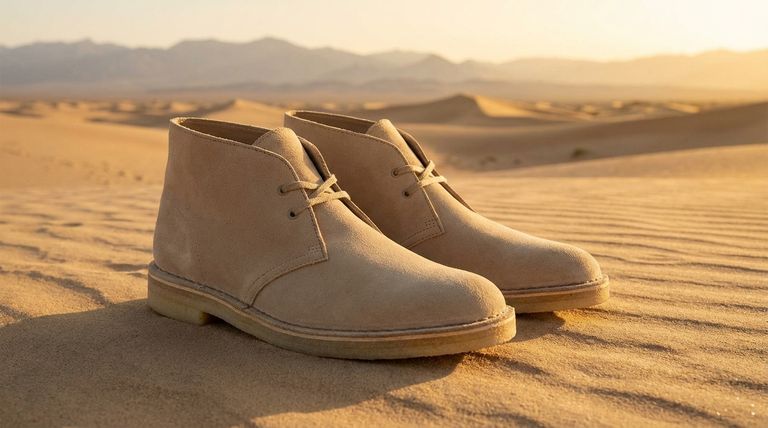
The Anatomy of a Classic Desert Boot
A desert boot is a specific type of chukka boot, but its unique combination of features sets it apart. Understanding these components reveals why the design has remained a staple for decades.
The Unstructured Upper
The upper is typically made of lightweight suede or soft leather. This material choice makes the boot breathable and comfortable from the very first wear, requiring minimal break-in time.
The Open Lacing System
A key identifier is the minimalist lacing, which usually consists of only two pairs of eyelets. This open-lacing design, where the quarters are sewn on top of the vamp, allows for a comfortable fit across the instep.
The Ankle-High Cut
The boot's shaft rises to the ankle, providing support without restricting movement. This chukka-style silhouette offers a versatile profile that works well with a variety of trousers.
The Signature Crepe Sole
The most iconic feature is the crepe rubber sole. This material is made from natural latex and has a crinkled, gummy texture that provides significant bounce and shock absorption. Its composition offers excellent grip and traction, a key reason for its original adoption.
A Design Born from Necessity
The desert boot's features were not conceived for fashion, but for function in one of the world's most demanding environments.
Origins in the Western Desert Campaign
During World War II, British soldiers found their standard-issue military boots to be heavy and cumbersome in the North African desert. They were inspired by the simple, lightweight boots with crepe soles worn by traders in Cairo's bazaars.
From Military Function to Civilian Style
Soldiers had these boots custom-made, valuing their comfort and the crepe sole's effectiveness on sand. After the war, this practical design was commercialized and quickly became a popular casual footwear choice around the world.
Understanding the Trade-offs
While iconic, the traditional features of a desert boot come with practical limitations that are important to understand.
Crepe Sole Considerations
The soft, porous nature of a crepe sole makes it act like a magnet for dirt and dust. While providing unparalleled comfort, it offers less structural support than a modern synthetic sole and can feel sticky on hot pavement.
Suede's Vulnerability
Traditional suede uppers are not naturally suited for wet or muddy conditions. Without a protective treatment, they are susceptible to water stains and damage, making the desert boot a poor choice for rainy days.
Construction Methods
Classic desert boots often use stitch-down construction, where the upper is turned outward and stitched directly to the outsole. This method is durable and flexible. Other techniques like cemented construction are also common.
Making the Right Choice for Your Style
The desert boot's enduring appeal comes from its remarkable versatility.
- If your primary focus is effortless casual style: Pair them with denim or chinos, as they are a perfect go-to for comfortable, everyday wear.
- If your primary focus is rugged elegance: Style them with neutral-colored corduroys or slim dark denim and a blazer for a smart-casual look.
The desert boot's timeless design proves that functionality and comfort are the true foundations of lasting style.
Summary Table:
| Feature | Description | Key Characteristic |
|---|---|---|
| Upper | Lightweight suede or soft leather | Breathable, comfortable, minimal break-in |
| Lacing | Open system with 2-3 pairs of eyelets | Allows for a comfortable fit across the instep |
| Cut | Ankle-high (chukka silhouette) | Provides support without restricting movement |
| Sole | Natural crepe rubber | Excellent shock absorption and grip |
Ready to Source Your Own Classic Boots?
As a large-scale manufacturer, 3515 produces a comprehensive range of footwear for distributors, brand owners, and bulk clients. Our production capabilities encompass all types of shoes and boots, including timeless styles like the desert boot. We can help you bring high-quality, comfortable, and stylish footwear to your market.
Contact us today to discuss your manufacturing needs and get a quote!
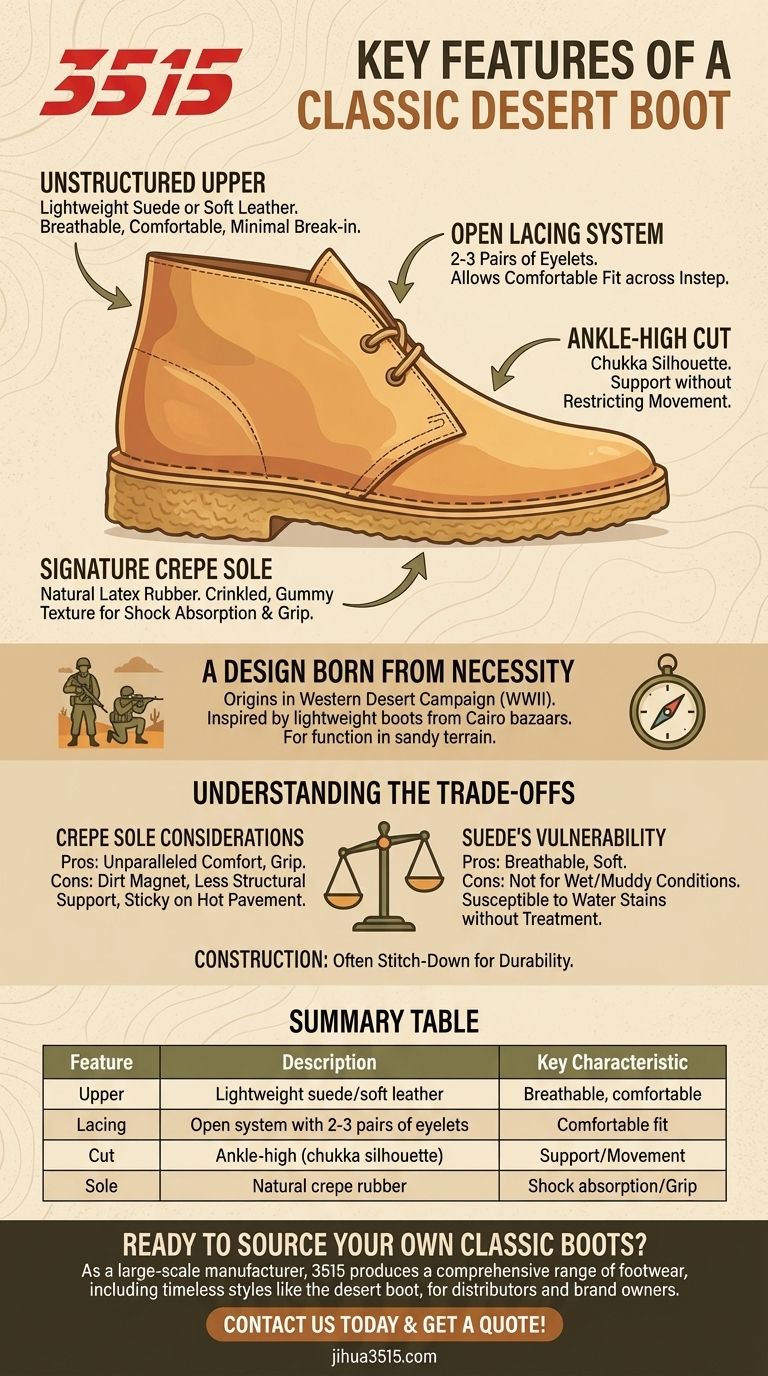
Visual Guide
Related Products
- Wholesale Lightweight Tactical Boots Custom Manufacturer for Desert & Combat Use
- Wholesale Classic Leather Lace-Up Ankle Boots for Brand Manufacturing
- Wholesale High-Traction Camo Boots - Custom Manufacturer for Brands
- Durable Military Combat Boots with Water Drainage for Wholesale & OEM
- Durable Rubber Sole Outdoor Shoes Wholesale & Custom Manufacturing
People Also Ask
- What are the common types of combat boots? Find the Right Boot for Your Mission
- What specialized protections do tactical boots offer? Maximize Endurance with High-Performance Footwear
- What is the role of high-frequency acquisition hardware in technical skill analysis for outdoor and tactical boots?
- How is the compatibility of polymer materials demonstrated in smart footwear? Enhancing Tactical & Training Performance
- What are the different types of tactical boots available? Find the Right Boot for Your Mission


















