
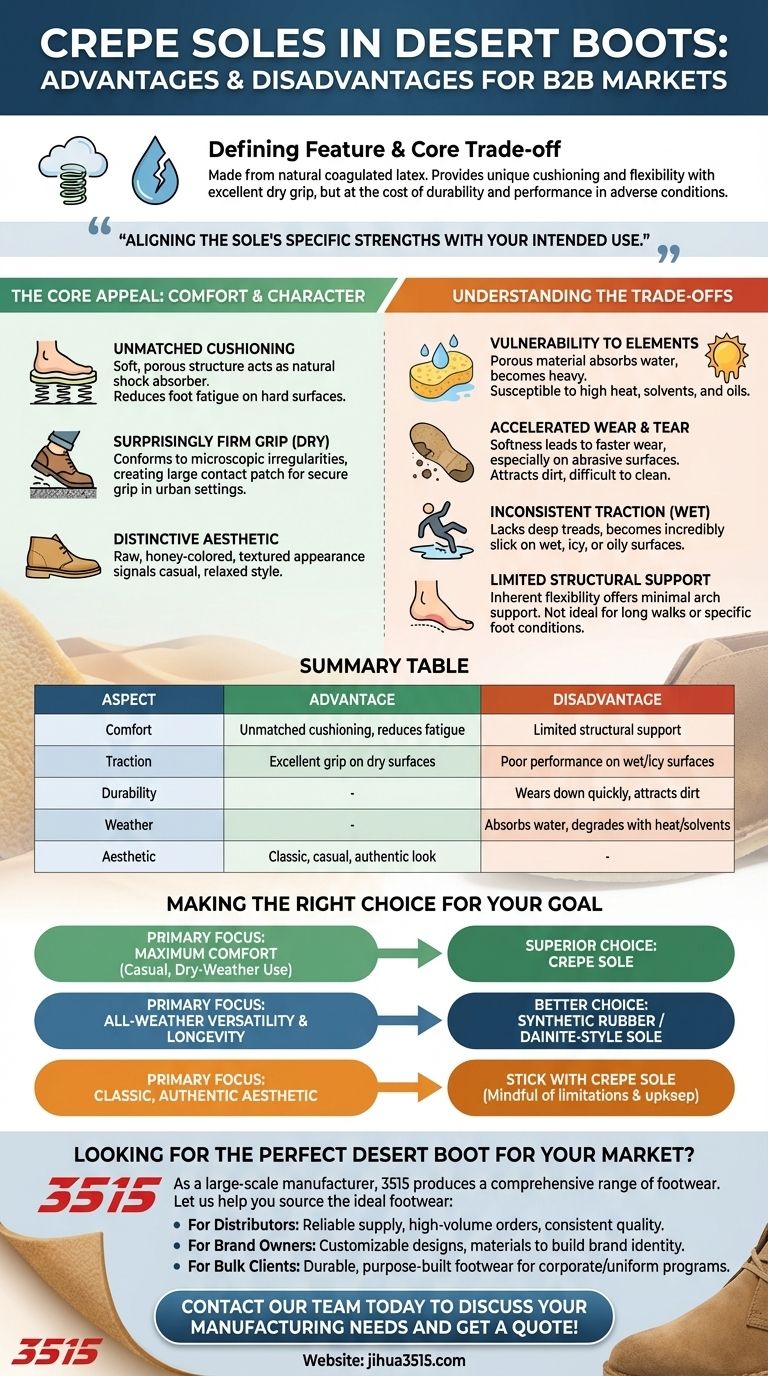
The defining feature of a desert boot's sole is its material, which fundamentally dictates its performance. Crepe soles provide a uniquely cushioned and flexible experience with excellent grip on dry surfaces, but this comes at the cost of durability and performance in adverse weather conditions.
The decision to choose a crepe sole is not about finding a universally "better" material. It's about aligning the sole's specific strengths—namely, unparalleled comfort in dry, urban environments—with your intended use.
The Core Appeal: Comfort and Character
The primary reasons for the enduring popularity of crepe soles are rooted in their unique feel and appearance. They offer a wearing experience that denser, synthetic soles cannot replicate.
Unmatched Cushioning
A crepe sole is made from natural coagulated latex, giving it a soft, porous, and springy structure. This material acts as a natural shock absorber.
The result is a bouncy, cushioned ride that significantly reduces foot fatigue during long periods of standing or walking on hard surfaces like pavement.
A Surprisingly Firm Grip
On dry surfaces, the soft texture of the crepe allows it to conform to microscopic irregularities in the ground. This creates a large contact patch, providing a surprisingly secure and confident grip.
It excels on surfaces like sidewalks, office flooring, and dry asphalt, making it an ideal choice for urban and casual settings.
A Distinctive Aesthetic
The raw, honey-colored, and slightly textured appearance of a crepe sole is inseparable from the classic desert boot silhouette. It signals a more casual, relaxed style compared to the hard-edged look of a synthetic lug sole.
Understanding the Trade-offs
The same properties that make crepe soles comfortable also create significant limitations. Understanding these is critical to avoiding disappointment.
Vulnerability to Elements
Crepe is naturally porous and acts like a sponge. When exposed to water, the sole will absorb it, becoming heavy and taking a very long time to dry, which can degrade the material.
Furthermore, crepe is susceptible to high heat, which can make it sticky, and to solvents or oils, which can cause it to break down and dissolve.
Accelerated Wear and Tear
The softness that provides comfort also means crepe wears down much faster than dense rubber soles, especially on abrasive surfaces. It is also notorious for attracting dirt, dust, and grime, quickly becoming discolored and difficult to clean.
Inconsistent Traction
While excellent on dry ground, crepe soles can be treacherous on wet, icy, or oily surfaces. The material lacks deep treads and becomes incredibly slick when moisture is introduced, posing a significant slipping hazard.
Limited Structural Support
The inherent flexibility of crepe means it offers minimal arch support or torsional rigidity. For those who require a solid, supportive footbed for long walks or due to foot conditions, the pliability of crepe might be a disadvantage.
Making the Right Choice for Your Goal
Select your desert boot's sole based on how and where you will realistically wear them.
- If your primary focus is maximum comfort for casual, dry-weather use: The exceptional cushioning of a crepe sole is the superior choice.
- If your primary focus is all-weather versatility and longevity: A boot with a synthetic rubber or Dainite-style sole will provide far better durability and wet-weather traction.
- If your primary focus is the classic, authentic aesthetic: Stick with the crepe sole, but be mindful of its limitations and dedicate time to its upkeep.
By understanding these characteristics, you can choose a sole that aligns perfectly with your needs and expectations.
Summary Table:
| Aspect | Advantage | Disadvantage |
|---|---|---|
| Comfort | Unmatched cushioning, reduces foot fatigue | Limited structural support |
| Traction | Excellent grip on dry surfaces | Poor performance on wet/icy surfaces |
| Durability | - | Wears down quickly, attracts dirt |
| Weather | - | Absorbs water, degrades with heat/solvents |
| Aesthetic | Classic, casual, authentic look | - |
Looking for the Perfect Desert Boot for Your Market?
As a large-scale manufacturer, 3515 produces a comprehensive range of footwear for distributors, brand owners, and bulk clients. Our production capabilities encompass all types of shoes and boots, including high-quality desert boots with various sole options to meet your specific market needs and customer demands.
Let us help you source the ideal footwear:
- For Distributors: Reliable supply of high-volume orders with consistent quality.
- For Brand Owners: Customizable designs and materials to build your unique brand identity.
- For Bulk Clients: Durable, purpose-built footwear for corporate or uniform programs.
Contact our team today to discuss your manufacturing needs and get a quote!
Visual Guide
Related Products
- Wholesale Lightweight Tactical Boots Custom Manufacturer for Desert & Combat Use
- Durable Rubber Sole Outdoor Shoes Wholesale & Custom Manufacturing
- Premium Grain Leather Safety Boots for Bulk Supply
- Wholesale Leather Ankle Boots with Lug Soles for Custom Brand Manufacturing
- Wholesale Leather Work Boots with Customizable Wedge Sole for Brands
People Also Ask
- What are the common types of combat boots? Find the Right Boot for Your Mission
- What specialized protections do tactical boots offer? Maximize Endurance with High-Performance Footwear
- What are the main construction similarities between tactical boots and tactical sneakers? Built for Performance & Durability
- How is the compatibility of polymer materials demonstrated in smart footwear? Enhancing Tactical & Training Performance
- How does additive manufacturing equipment reduce environmental risks? Sustainable Tactics for Modern Footwear Production









