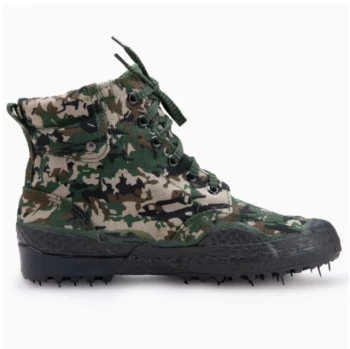
Selecting the right hunting boot requires a critical evaluation of factors like waterproofing, insulation, traction, support, and overall durability. The ideal boot is not simply the one with the most features, but rather a specialized tool that provides a protective, comfortable platform precisely matched to your specific hunting environment and style.
The most common mistake is searching for a single "best" hunting boot. The goal is to find the right boot for your hunt. Your terrain, weather, and activity level—not a generic feature list—should be the primary drivers of your decision.
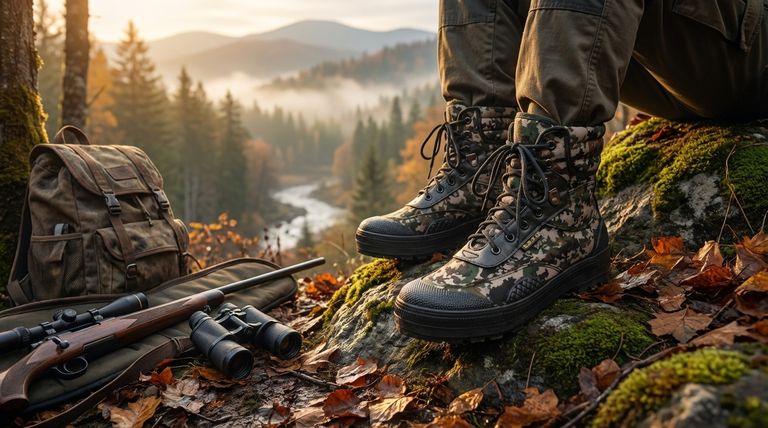
The Core Components of a Hunting Boot
To make an informed choice, you must first understand the anatomy of a boot and how each part contributes to its performance.
Uppers: The First Line of Defense
The upper portion of the boot provides structure and protection. Full-grain leather is a classic choice, known for its exceptional durability and ability to mold to your foot over time, but it requires a break-in period.
Synthetic materials, like nylon, offer a lighter-weight alternative that is often more breathable and requires less break-in time, though they may offer less long-term durability than premium leather.
Waterproofing & Breathability: Managing Moisture
Most quality hunting boots feature a waterproof, breathable membrane, like Gore-Tex, sandwiched between the outer material and inner liner. This membrane is designed to block external water while allowing foot perspiration to escape.
It's crucial to understand that there is always a trade-off. The more waterproof a boot is, the less breathable it will be.
Insulation: The Key to Thermal Regulation
Insulation, measured in grams, is critical for cold-weather hunting. A boot with 200-400g is suitable for early season or high-activity hunts. For cold, static hunts, such as sitting in a treestand, 800g of insulation or more is often necessary to prevent heat loss.
Outsole & Midsole: Your Connection to the Ground
The outsole is the rubber layer that contacts the ground. Its "lugs" (the tread pattern) should be deep and aggressive for traction in mud, snow, or on steep terrain.
The midsole provides cushioning and absorbs shock. A stiffer midsole offers greater stability and support under the weight of a heavy pack, which is essential for mountain hunting.
Matching the Boot to Your Environment
A boot that excels in one scenario will be a liability in another. The key is to analyze your primary hunting style and choose accordingly.
For the Mountain Hunter: Stability is Paramount
When navigating steep, uneven terrain, often with a heavy pack, ankle support and boot stiffness are your top priorities. Look for boots with uppers at least 8-10 inches high and a rigid sole structure to prevent ankle rolls and foot fatigue.
For the Wetland Hunter: Waterproofing is Non-Negotiable
In swamps, marshes, or consistently wet conditions, keeping your feet dry is the only thing that matters. Rubber or neoprene boots offer the most reliable waterproofing, sacrificing the breathability and support of a traditional leather boot.
For the Upland Hunter: Agility and Mileage
Upland hunting often involves walking many miles over rolling fields and through light brush. The ideal boot is lightweight and flexible, feeling more like a durable hiking shoe. This minimizes fatigue and allows for a more natural stride.
For the Treestand Hunter: Insulation is Critical
During a static hunt in cold weather, your body generates very little heat. Your boot must do the work of retaining it. This is where high levels of insulation (800g+) become essential. Fit is also key, as boots that are too tight will restrict blood flow and lead to cold feet faster.
Understanding the Trade-offs
There is no perfect, do-it-all hunting boot. Every design choice involves a compromise. Being aware of these trade-offs is what separates a smart purchase from a frustrating one.
Stiffness vs. Flexibility
A stiff mountain boot provides incredible support on treacherous terrain but can feel clunky and uncomfortable on flat ground. A flexible upland boot is comfortable for long walks but offers poor support for side-hilling or carrying weight.
Waterproofing vs. Breathability
A fully waterproof rubber boot will keep every drop of rain out, but it will also trap all of your sweat in. On a warm day, your socks can become soaked from the inside. A more breathable boot may eventually fail in a downpour but will keep your feet drier during strenuous activity in milder weather.
Insulation vs. Versatility
A heavily insulated boot is a lifesaver in the late season but will be unbearably hot and cause excessive sweating during early-season hunts. This is why many serious hunters own multiple pairs of boots tailored to different seasons.
Fit is Everything
No feature can compensate for a poor fit. Your boot should be snug but not tight, with enough room to wiggle your toes freely. Always try on boots at the end of the day (when your feet are slightly swollen) and wear the exact socks you plan to hunt in. Never take a brand-new pair of boots on a long hunt without a proper break-in period.
Making the Right Choice for Your Hunt
Use your primary hunting style as the final filter for your decision.
- If your primary focus is rugged, steep terrain with a heavy pack: Prioritize tall, stiff, full-grain leather boots with aggressive outsoles for maximum ankle support and durability.
- If your primary focus is wet, swampy, or muddy environments: Choose rubber or seamless waterproof boots that prioritize keeping your feet dry over all other features.
- If your primary focus is covering long distances on flat or rolling terrain: Opt for a lighter, more flexible boot that reduces fatigue and feels more like an athletic hiker.
- If your primary focus is staying stationary in cold weather: Select a boot with a high level of insulation (800g or more) to prevent heat loss during long sits.
A well-chosen boot disappears from thought, allowing you to focus completely on the hunt.
Summary Table:
| Hunting Style | Primary Priority | Key Boot Features |
|---|---|---|
| Mountain Hunter | Ankle Support & Stability | 8-10" height, stiff sole, full-grain leather |
| Wetland Hunter | Waterproofing | Rubber/neoprene construction, seamless design |
| Upland Hunter | Lightweight & Agility | Flexible, low-cut, breathable materials |
| Treestand Hunter | Insulation | 800g+ insulation, roomy fit for blood flow |
Need Hunting Boots for Your Business? Partner with 3515, a Leading Manufacturer.
As a large-scale manufacturer, 3515 produces a comprehensive range of hunting and outdoor footwear for distributors, brand owners, and bulk clients. Our production capabilities encompass all types of boots, from rugged mountain designs to insulated rubber boots, ensuring durability, performance, and precise fit for every hunting style.
We can help you:
- Source or Customize boots tailored to your target market's specific needs.
- Ensure Consistent Quality with high-grade materials and expert craftsmanship.
- Scale Production efficiently for large orders.
Let's discuss your footwear needs. Contact our team today to explore manufacturing solutions that will equip your customers for success in the field.
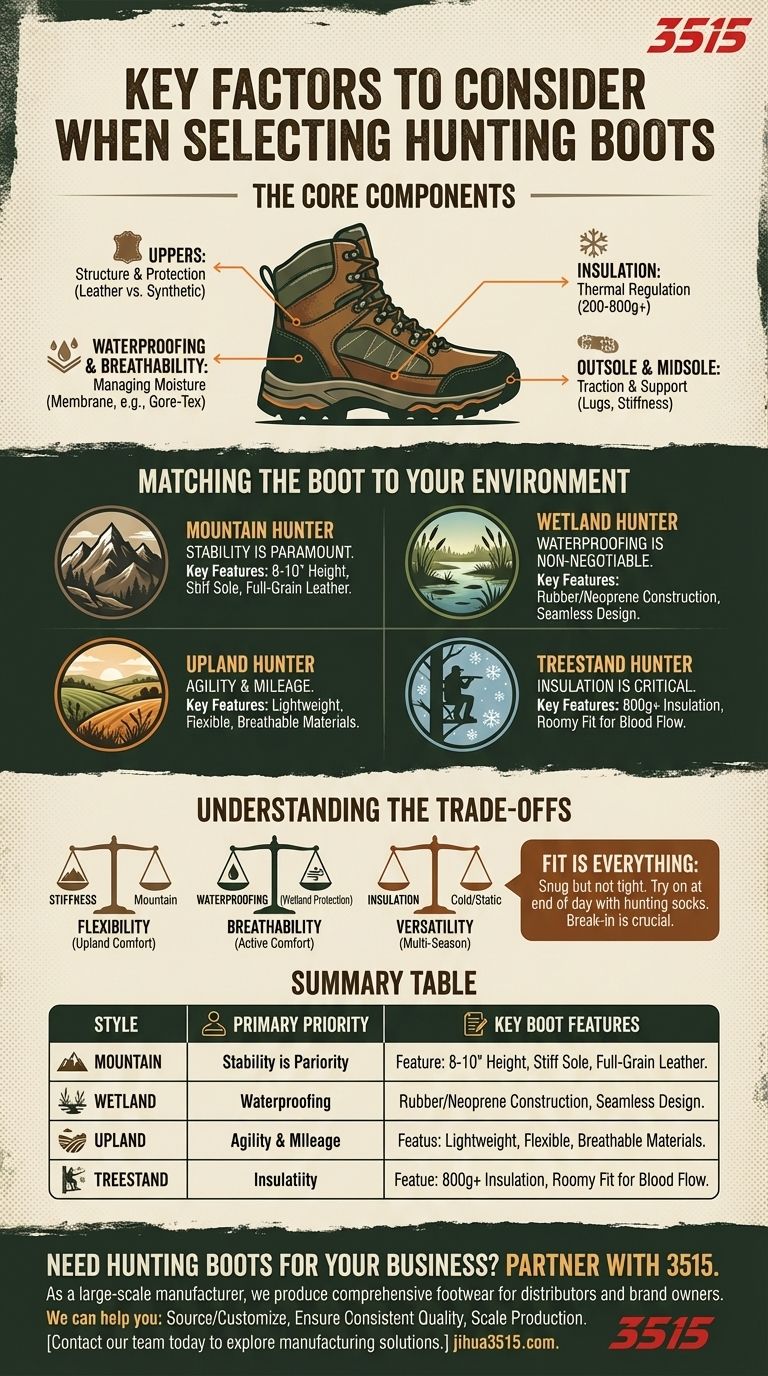
Visual Guide
Related Products
- Wholesale Lightweight Tactical Boots Custom Manufacturer for Desert & Combat Use
- High-Traction Suede Tactical Boots Wholesale & Custom Manufacturing
- Durable Leather Tactical Boots Wholesale & Custom Manufacturing for Brands
- Durable Military Combat Boots with Water Drainage for Wholesale & OEM
- Wholesale Waterproof Tactical Boots Custom Suede & High-Traction Soles
People Also Ask
- What are the common types of combat boots? Find the Right Boot for Your Mission
- What specialized protections do tactical boots offer? Maximize Endurance with High-Performance Footwear
- How does additive manufacturing equipment reduce environmental risks? Sustainable Tactics for Modern Footwear Production
- How is the compatibility of polymer materials demonstrated in smart footwear? Enhancing Tactical & Training Performance
- What are the main construction similarities between tactical boots and tactical sneakers? Built for Performance & Durability