
The choice between Wellington boots and walking boots hinges on the specific demands of your activity and environment. Wellingtons are specialized for total waterproof protection in extremely wet and muddy conditions over short distances. In contrast, walking boots are engineered systems designed to provide crucial support, superior grip, and long-term comfort for extended treks over varied terrain.
Your decision is not about which boot is "better," but which is the right tool for the job. Wellingtons offer simple waterproof protection against the elements, while walking boots provide a technical solution for performance and stability on the move.
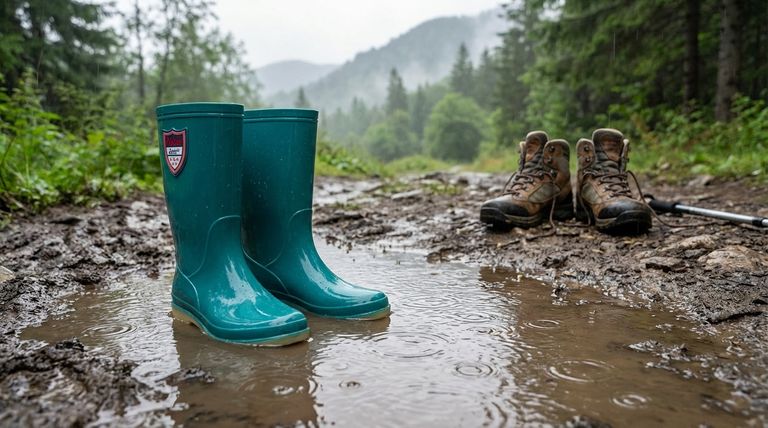
The Core Difference: Protection vs. Performance
Understanding the fundamental design philosophy behind each boot type is the first step in making an informed choice. One is a barrier, the other is a vehicle.
Wellington Boots: The Waterproof Barrier
Wellington boots are designed with one primary goal: to be a completely waterproof shield. Their tall, seamless rubber or PVC construction is perfect for wading through deep mud, puddles, or flooded areas.
They are the ideal tool for farming, gardening, music festivals, or any casual activity where staying dry in messy conditions is the top priority. Their simple design also makes them exceptionally easy to clean.
Walking Boots: The Support System
Walking boots are built as a comprehensive support system for your feet and ankles. Their purpose is to provide stability, comfort, and traction over long distances and challenging surfaces.
Features like a structured ankle cuff, a lacing system for a secure fit, and an engineered outsole are all designed to reduce fatigue and prevent injury during hikes and long walks.
Key Decision Factors Analyzed
Your specific situation will dictate which boot is the superior choice. Consider these three factors carefully.
Terrain and Ground Conditions
Wellington boots are best suited for flat, soft ground like muddy fields or wet pavement. Their relatively simple, flat outsoles offer limited grip on steep, rocky, or slippery inclines.
Walking boots excel on mixed and uneven terrain. Their deep, patterned lugs on the outsole are specifically designed to provide reliable traction on trails, rocks, and slopes.
Duration and Distance
For short-term wear, the simplicity of a Wellington boot is a benefit. You can slip them on and off easily for quick tasks.
However, for any walk of significant distance, their lack of support and breathability becomes a major liability. This can lead to discomfort, blisters, and fatigue. Walking boots are built for mileage, providing the necessary cushioning and support to keep you comfortable for hours.
Ankle Support and Stability
This is a critical distinction. Wellington boots offer virtually no ankle support. Their loose, pull-on design leaves your ankle vulnerable to twists and sprains on uneven ground.
Walking boots, especially mid or high-cut models, are designed to lock your ankle in place. The combination of a stiff cuff and a secure lacing system provides essential stability that is non-negotiable for serious hiking.
Understanding the Trade-offs
Neither boot is perfect for all situations. Acknowledging their inherent limitations is key to avoiding frustration and potential injury.
The Limits of Wellington Boots
The primary weakness of Wellingtons is their lack of breathability. The same rubber that keeps water out also traps sweat in, leading to damp and uncomfortable feet on long walks.
Their minimal support and poor traction on varied terrain make them an unsuitable and potentially unsafe choice for hiking or trekking.
The Downsides of Walking Boots
While many walking boots are waterproof, they cannot compete with the top-to-bottom coverage of a Wellington in deep water or thick mud. Their fabric panels and seams can eventually be compromised.
They also require more effort to clean and maintain compared to a simple rubber boot that can be hosed off in seconds.
Making the Right Choice for Your Goal
To select the correct footwear, match the boot's strengths directly to your intended activity.
- If your primary focus is keeping feet dry in extremely wet, muddy, or flooded conditions for short periods: Choose Wellington boots for their simple, total waterproof protection.
- If your primary focus is walking any significant distance, especially on varied or uneven terrain: Choose walking boots for their essential ankle support, superior traction, and long-term comfort.
- If your primary focus is frequent, short-term work on a farm or in a garden: Wellington boots are the practical choice due to their durability and ease of cleaning.
Ultimately, selecting the right boot means accurately matching the tool to the task ahead.
Summary Table:
| Factor | Wellington Boots | Walking Boots |
|---|---|---|
| Primary Use | Wet, muddy conditions; short-term wear | Hiking, long-distance walking; varied terrain |
| Waterproofing | Total, seamless protection | Waterproof but with fabric seams |
| Ankle Support | Minimal to none | High, with structured cuff and lacing |
| Traction | Limited on slopes | Superior grip on uneven ground |
| Ideal For | Farming, gardening, festivals | Trekking, hiking, long walks |
Need the Right Boots for Your Business? Partner with 3515.
As a large-scale manufacturer, 3515 produces a comprehensive range of footwear for distributors, brand owners, and bulk clients. Whether you need durable Wellington boots for agricultural use or high-performance walking boots for outdoor retail, our production capabilities encompass all types of shoes and boots. We ensure quality, durability, and the right fit for every market need.
Let’s discuss your specific requirements and how we can support your supply chain. Contact our team today for expert consultation and competitive pricing.
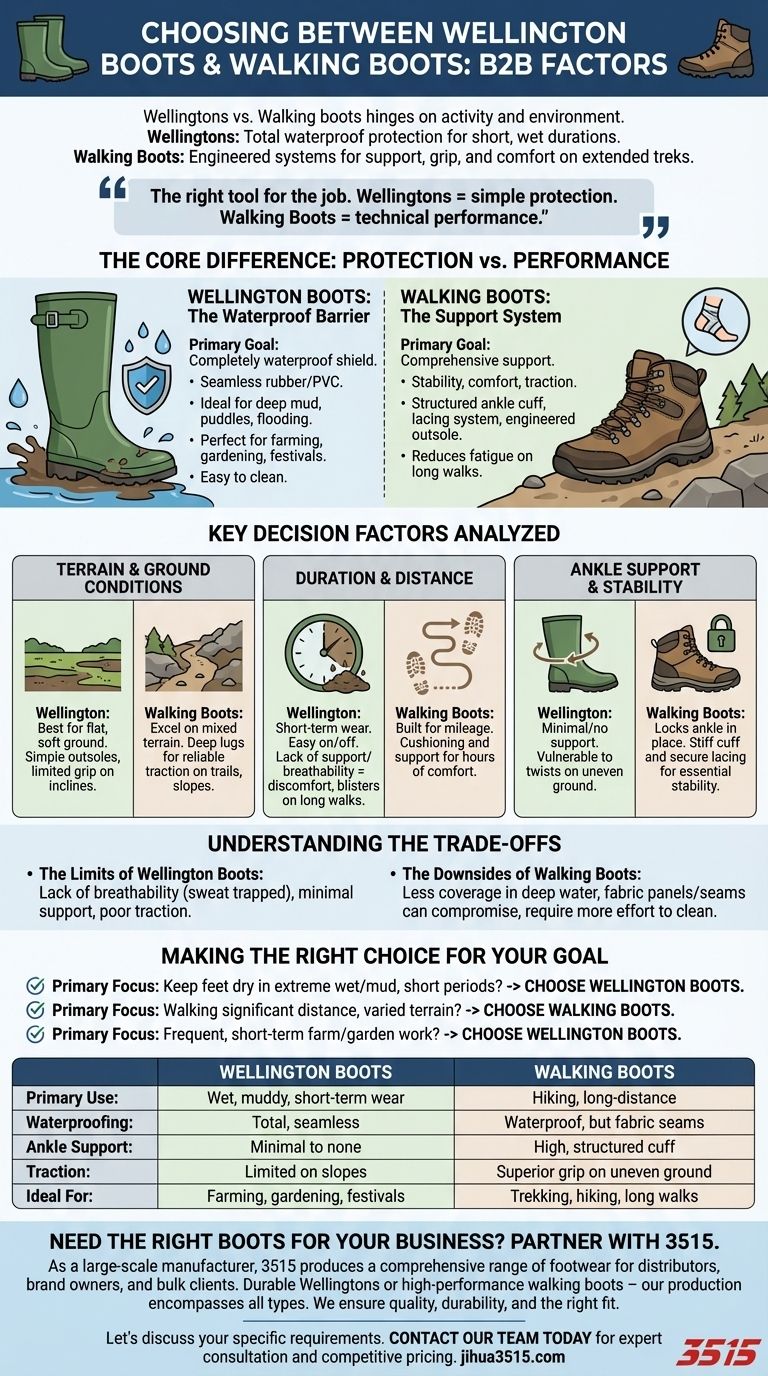
Visual Guide
Related Products
- Durable Goodyear Welt Leather Work Boots for Wholesale & Private Label
- Durable Rubber Sole Outdoor Shoes Wholesale & Custom Manufacturing
- Wholesale Durable Camouflage Canvas Shoes with High-Traction Cleated Rubber Sole
- Wholesale Safety Boots Manufacturer for Custom & Private Label Orders
- Wholesale Lightweight Tactical Boots Custom Manufacturer for Desert & Combat Use
People Also Ask
- What is the difference between full-grain and top-grain leather? Premium Material Guide for Boot Manufacturers
- What are the advantages of leather as an upper material for work boots? Unmatched Durability & Custom Comfort
- Why is it important to waterproof leather work boots? Protect Your Investment and Performance
- How should new leather work boots be broken in? A Guide to Comfort and Durability
- What are the advantages of leather uppers in work boots? Unmatched Durability & Protection

















