
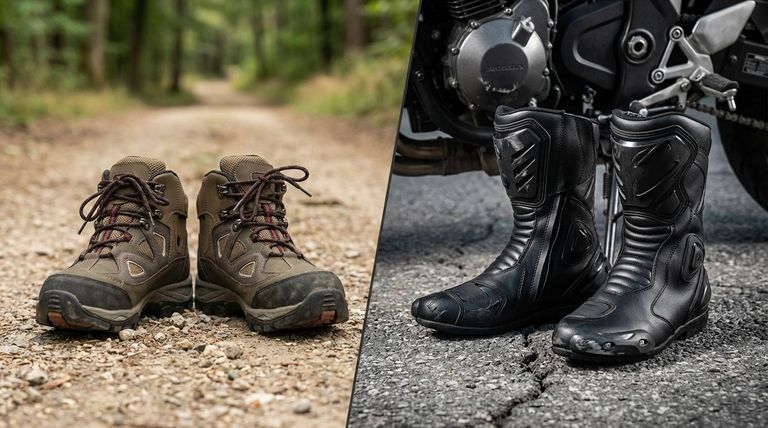
The fundamental difference is that motorcycle boots are specialized safety equipment, while everyday boots are footwear. A motorcycle boot is engineered from the ground up to protect your feet and ankles from the specific, high-energy forces of a crash, whereas a regular boot is designed primarily for walking comfort and general durability.
Your work boots, hiking boots, or casual boots are designed to protect you from the hazards of walking around. A motorcycle boot is purpose-built armor designed to protect you from the unique physics of a motorcycle accident—namely impact, abrasion, and extreme twisting forces.
The Core Pillars of a True Riding Boot
To understand the difference, we need to move beyond the simple idea of "sturdiness" and look at the specific protective functions engineered into a proper motorcycle boot. These functions fall into three main categories.
1. Advanced Safety Features
This is the most critical area of differentiation. A motorcycle boot is an integrated safety system for your lower leg.
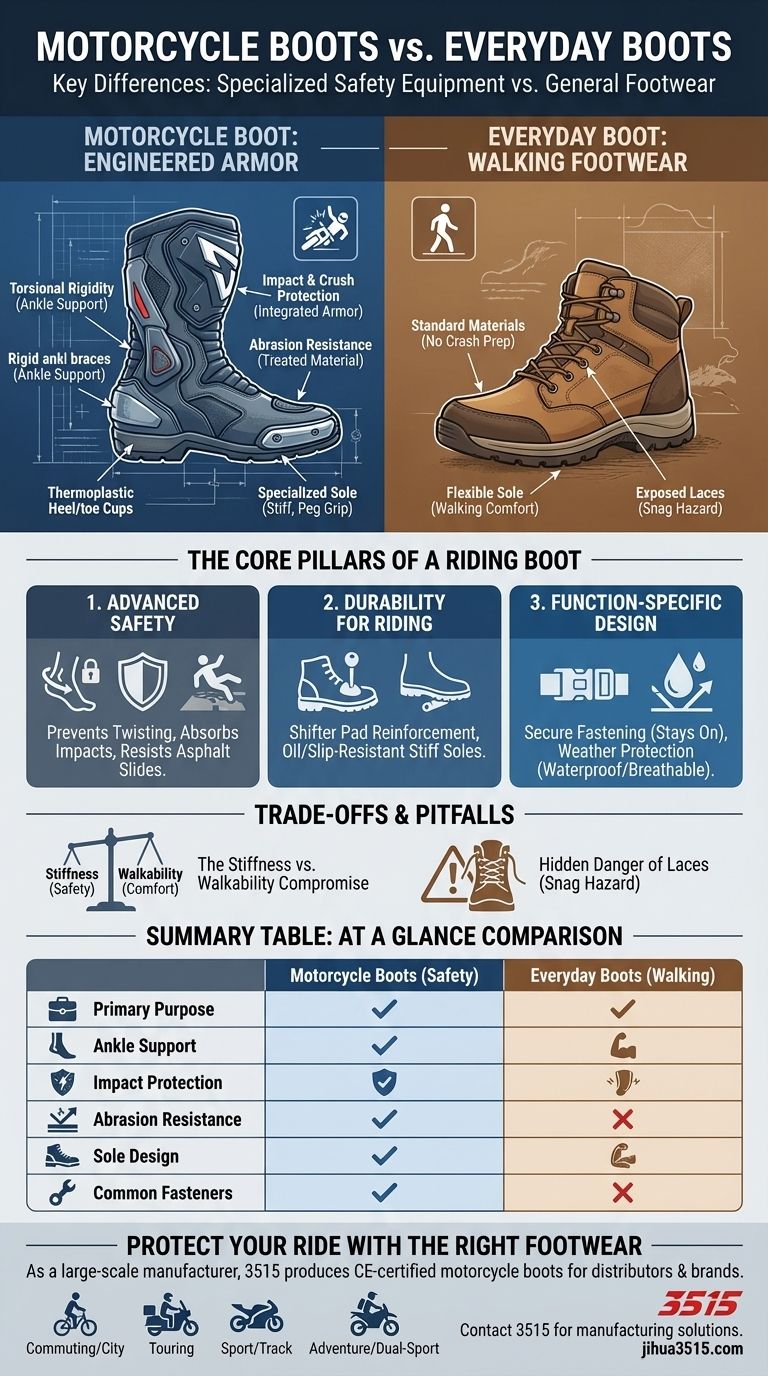
Torsional Rigidity and Ankle Support A primary goal of a riding boot is to prevent your ankle from twisting, hyper-extending, or breaking during a fall. They achieve this with torsional stiffness, incorporating reinforcements that severely limit side-to-side rotation while still allowing the front-to-back movement needed for shifting and braking. Regular boots offer virtually no protection against these forces.
Impact and Crush Protection Motorcycle boots feature integrated armor, often made of a hard thermoplastic (TPU), in critical areas. This includes reinforced heel cups, toe boxes, and shin plates designed to absorb and distribute the force of a direct impact, protecting you from the bike itself or road obstacles in a crash.
Abrasion Resistance In a slide, standard leather or fabric will be destroyed by asphalt in seconds. Motorcycle boots use thick, treated leather or advanced abrasion-resistant textiles, combined with reinforced stitching, specifically to withstand sliding on pavement and keep your skin protected.
2. Durability for Riding Demands
The durability of a motorcycle boot is tailored specifically to the demands of operating a motorcycle.
Reinforcement for Controls Most riding boots include an extra layer of material or a plastic pad over the toe area. This shifter pad prevents the bike's gear lever from wearing a hole in the top of your boot over time.
Specialized Soles The soles are not just for walking. They are made from oil-resistant and slip-resistant compounds to ensure a secure grip on the footpegs and on potentially slick road surfaces when you stop. They are also significantly stiffer than regular boots to reduce foot fatigue on long rides and prevent the sole from bending over the peg in a crash.
3. Function-Specific Design
Every design choice is made with the rider in mind, prioritizing control and security.
Secure Fastening Systems While some riding shoes use laces, they are often covered by a retaining strap. Most full-height boots use a combination of zippers, buckles, and hook-and-loop fasteners. This ensures the boot stays securely on your foot during the violent tumbling of an accident, a scenario where a simple laced boot could easily come off.
Weather Protection Many touring and adventure boots incorporate waterproof and breathable membranes. This provides comfort and protection from the elements that is far more robust than what is found in typical "weather-resistant" casual boots.
Understanding the Trade-offs and Common Pitfalls
Choosing the right footwear involves understanding what you gain and what you give up. Confusing "sturdy" with "protective" is a common and dangerous mistake.
The Stiffness vs. Walkability Compromise
The very features that make a riding boot safe—its armor and torsional rigidity—make it less comfortable for walking long distances. They are tools for the job of riding, and like many specialized tools, they are not ideal for general-purpose use. A good touring boot strikes a balance, but a race boot is nearly impossible to walk in comfortably.
The Hidden Danger of Laces
Standard work or hiking boots with long, exposed laces present a significant snag hazard on a motorcycle. The loops can easily catch on a footpeg, shifter, or brake lever, preventing you from putting your foot down at a stop and causing a simple, embarrassing—or dangerous—tip-over.
"Work Boot" Is Not "Riding Boot"
A steel-toed work boot is designed to protect your foot from a heavy object falling on it (compression). It offers no meaningful protection against the impact, abrasion, and twisting forces inherent in a motorcycle crash. The materials and construction are simply not designed for that purpose.
Making the Right Choice for Your Ride
Your choice of boot should directly reflect the type of riding you do.
- If your primary focus is daily commuting or city riding: Consider CE-rated, over-the-ankle riding shoes that blend protection with walkability.
- If your primary focus is long-distance touring: Look for taller, waterproof boots with robust ankle support and features designed for all-day comfort on the bike.
- If your primary focus is sport or track riding: Prioritize maximum protection with features like external bracing, shin armor, and replaceable sliders.
- If your primary focus is adventure or dual-sport riding: Choose a hybrid boot that combines the heavy-duty protection of a dirt boot with the comfort and weatherproofing of a touring boot.
Investing in purpose-built motorcycle footwear is one of the most important gear decisions you can make.
Summary Table:
| Feature | Motorcycle Boots | Everyday Boots |
|---|---|---|
| Primary Purpose | Crash Protection & Riding Safety | Walking Comfort & General Use |
| Ankle Support | High Torsional Rigidity to Prevent Injury | Minimal Support |
| Impact Protection | Reinforced Armor (Heel, Toe, Shin) | None or Minimal (e.g., Steel Toe) |
| Abrasion Resistance | High-Grade, Treated Leather/Textiles | Standard Materials |
| Sole Design | Stiff, Oil/Slip-Resistant for Peg Grip | Flexible for Walking Comfort |
| Common Fasteners | Buckles, Zippers, Straps (Secure Fit) | Primarily Laces (Snag Hazard) |
Protect Your Ride with the Right Footwear
As a large-scale manufacturer, 3515 produces a comprehensive range of CE-certified motorcycle boots for distributors, brand owners, and bulk clients. Our production capabilities encompass all types of riding footwear—from durable touring boots to high-protection sport boots—ensuring your customers get the safety and quality they need.
Contact 3515 today to discuss your footwear needs and elevate your product line with purpose-built protection.
Visual Guide
Related Products
- Wholesale Tactical Boots High-Traction & Reflective for Bulk & Brand Orders
- High Performance Fire-Retardant Waterproof Safety Boots
- Durable Goodyear Welt Leather Work Boots for Wholesale & Private Label
- Wholesale High-Traction Camo Boots - Custom Manufacturer for Brands
- Heavy-Duty Waterproof Nubuck Safety Boots Safety Shoes for Bulk Supply
People Also Ask
- How do tactical boots protect against injuries? Discover the Integrated Safety System
- Importance of Professional Tactical Boots in Loess Gully Regions: Ensure Safety and Precision for Field Monitoring
- What types of boots are used by Bravo in SEAL Team? Salomon & Merrell for Elite Performance
- How does additive manufacturing equipment reduce environmental risks? Sustainable Tactics for Modern Footwear Production
- What boots do navy SEALs run in? Discover the Mission-Driven Footwear Philosophy



















