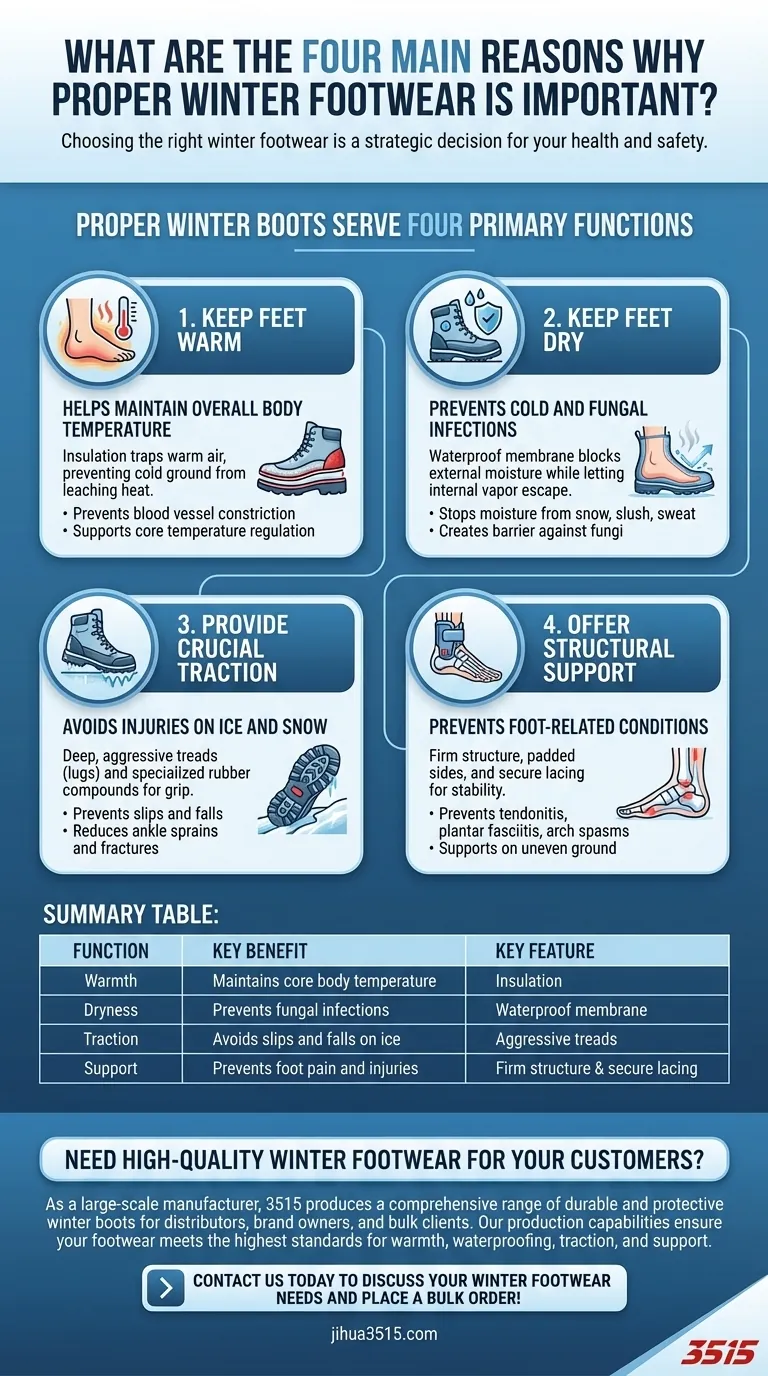
Choosing the right winter footwear is a strategic decision for your health and safety. Proper winter boots serve four primary functions: they keep your feet warm to help maintain overall body temperature, they keep your feet dry to prevent cold and fungal infections, they provide crucial traction to avoid injuries on ice and snow, and they offer structural support to prevent foot-related conditions like tendonitis or plantar fasciitis.
The importance of winter footwear goes far beyond simple comfort. It is a critical system designed to protect you from the immediate danger of falls and the long-term health consequences of cold, moisture, and poor biomechanical support.
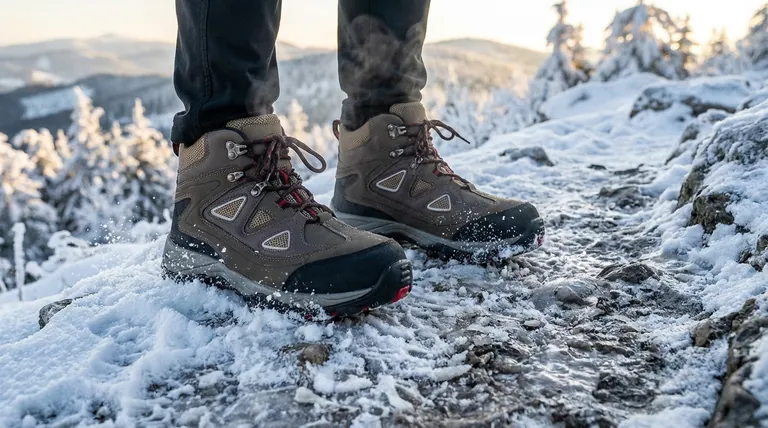
The Foundation: Warmth and Dryness
Your feet are a key area for heat loss and are highly susceptible to moisture, making warmth and dryness the first line of defense in winter conditions.
Maintaining Core Body Health
Cold feet are not just uncomfortable; they can constrict blood vessels, which can impact your body's ability to regulate its core temperature. Insulation in winter footwear is designed to trap a layer of warm air, preventing the cold ground from leaching heat away from your body.
The Dangers of Moisture
Keeping feet dry is equally critical. Moisture from snow, slush, or even sweat can rapidly cool your feet and create an ideal environment for fungal infections. Modern winter boots use a waterproof membrane to block external moisture while allowing internal vapor to escape.
The Structure: Preventing Acute and Chronic Injury
Winter surfaces are inherently unstable. The right footwear provides the necessary structure to protect you from both sudden accidents and the cumulative stress of walking on uneven ground.
Traction on Treacherous Surfaces
Slips and falls on ice and snow are a leading cause of winter injuries, ranging from ankle sprains to fractures. Proper winter footwear features deep, aggressive treads (lugs) and specialized rubber compounds that remain flexible in the cold to provide essential anti-slip properties.
Essential Biomechanical Support
Winter walking often involves navigating uneven, slippery, or hard-frozen ground. This places significant stress on your feet and ankles. A boot with a firm structure, padded sides, and a secure lacing system provides the stability needed to prevent conditions like plantar fasciitis, arch spasms, and tendonitis.
Understanding the Trade-offs
The most effective winter boot is not always the most expensive one, but the one that correctly balances key features for your specific needs. Choosing improperly can negate the benefits.
The Balance of Stiffness and Comfort
While a firm structure is vital for support, a boot that is overly stiff can cause its own problems. An excessively rigid boot may lead to blisters or discomfort, especially for those with unstable feet. The goal is support that works with your foot's natural movement.
The Critical Role of Proper Fit
Even the most technologically advanced boot will fail if it doesn't fit correctly. There must be enough room for your toes to move freely, but not so much that your heel rubs or slides. A poor fit compromises both comfort and support.
The Necessity of Maintenance
A boot's protective qualities are not permanent. Waterproof treatments and materials can degrade over time with use. Regular care, cleaning, and re-application of waterproofing treatments are necessary to maintain the boot's performance season after season.
Making the Right Choice for Your Goal
To select the best footwear, you must first be realistic about the weather conditions you will face and the activities you will be doing.
- If your primary focus is preventing slips and falls: Prioritize boots with deep, aggressive lugs and specialized anti-slip rubber compounds for maximum traction.
- If your primary focus is preventing foot pain: Look for models with excellent ankle support, a firm heel counter, and a secure lacing system to ensure biomechanical stability.
- If your primary focus is all-day warmth and dryness: Insist on boots with a certified waterproof membrane and an insulation rating appropriate for your region's coldest temperatures.
Investing in the right winter footwear is a direct investment in your well-being throughout the harshest months of the year.
Summary Table:
| Function | Key Benefit | Key Feature |
|---|---|---|
| Warmth | Maintains core body temperature | Insulation |
| Dryness | Prevents fungal infections | Waterproof membrane |
| Traction | Avoids slips and falls on ice | Aggressive treads |
| Support | Prevents foot pain and injuries | Firm structure & secure lacing |
Need high-quality winter footwear for your customers?
As a large-scale manufacturer, 3515 produces a comprehensive range of durable and protective winter boots for distributors, brand owners, and bulk clients. Our production capabilities ensure your footwear meets the highest standards for warmth, waterproofing, traction, and support.
Contact us today to discuss your winter footwear needs and place a bulk order!
Visual Guide
Related Products
- Premium Insulated Safety Boots and Shoes for Wholesale & Bulk Orders
- Factory Direct Wholesale Rain Boots Durable Waterproof & Fully Customizable
- Durable Waterproof Rain Boots | Custom Manufacturer for Wholesale & Brands
- Wholesale Waterproof Tactical Boots Custom Suede & High-Traction Soles
- Heavy-Duty Waterproof Nubuck Safety Boots Safety Shoes for Bulk Supply
People Also Ask
- What are the recommended insulation ratings for mild winter conditions? A Guide for Active & Stationary Workers
- How does insulation thickness correlate with temperature ranges? A Guide to Choosing the Right Warmth
- What insulation level is needed for severe cold and stationary work? 1200g or Higher is Essential
- What safety advantages do insulated boots offer beyond warmth? Dielectric Protection & Superior Grip
- How does fleece lining contribute to the warmth of insulated boots? Trapping Air for Superior Cold Protection