To identify the best value chukka boot, you must look beyond the price tag and focus on two core features: the material and, most importantly, the construction method. The key indicators of a boot built to last are a quality suede or leather upper and a Goodyear welt construction, which allows the boot to be re-soled repeatedly.
The true value of a chukka boot isn't found in its initial cost, but in its cost-per-wear over many years. This is achieved through durable, repairable construction, which transforms the boot from a disposable item into a long-term investment.
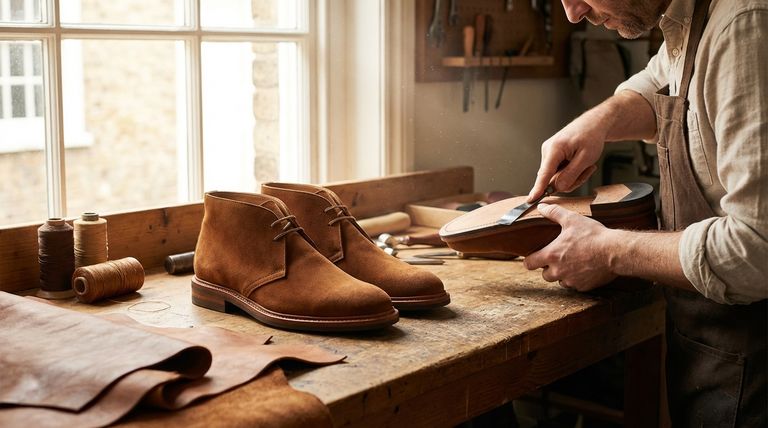
The Anatomy of a High-Value Chukka
Before assessing value, it's essential to understand the boot's fundamental characteristics. These design elements define the chukka and serve as the baseline for quality.
The Defining Silhouette
A true chukka boot is minimalist by design. It is defined by its ankle-high cut, open lacing with only two or three eyelets, and a simple, rounded toebox.
This classic form is typically constructed from just two pieces of leather, giving it a clean and unstructured look that blurs the line between a casual boot and a shoe.
Material Matters: Suede vs. Leather
The most common material for chukka boots is suede, which offers a more relaxed, versatile aesthetic perfect for smart-casual wear. It's particularly well-suited for spring and summer.
Full-grain leather is also an excellent option, providing a slightly more formal look and often greater durability against the elements.
The Interior: The Importance of a Leather Lining
A feature often overlooked in cheaper boots is the lining. A full leather lining is a hallmark of quality, offering superior breathability and comfort compared to synthetic materials. It helps manage moisture and molds to your foot over time.
The Single Most Important Feature for Longevity
While materials and style are important, the construction method is the ultimate determinant of a boot's value and lifespan.
Understanding Goodyear Welt Construction
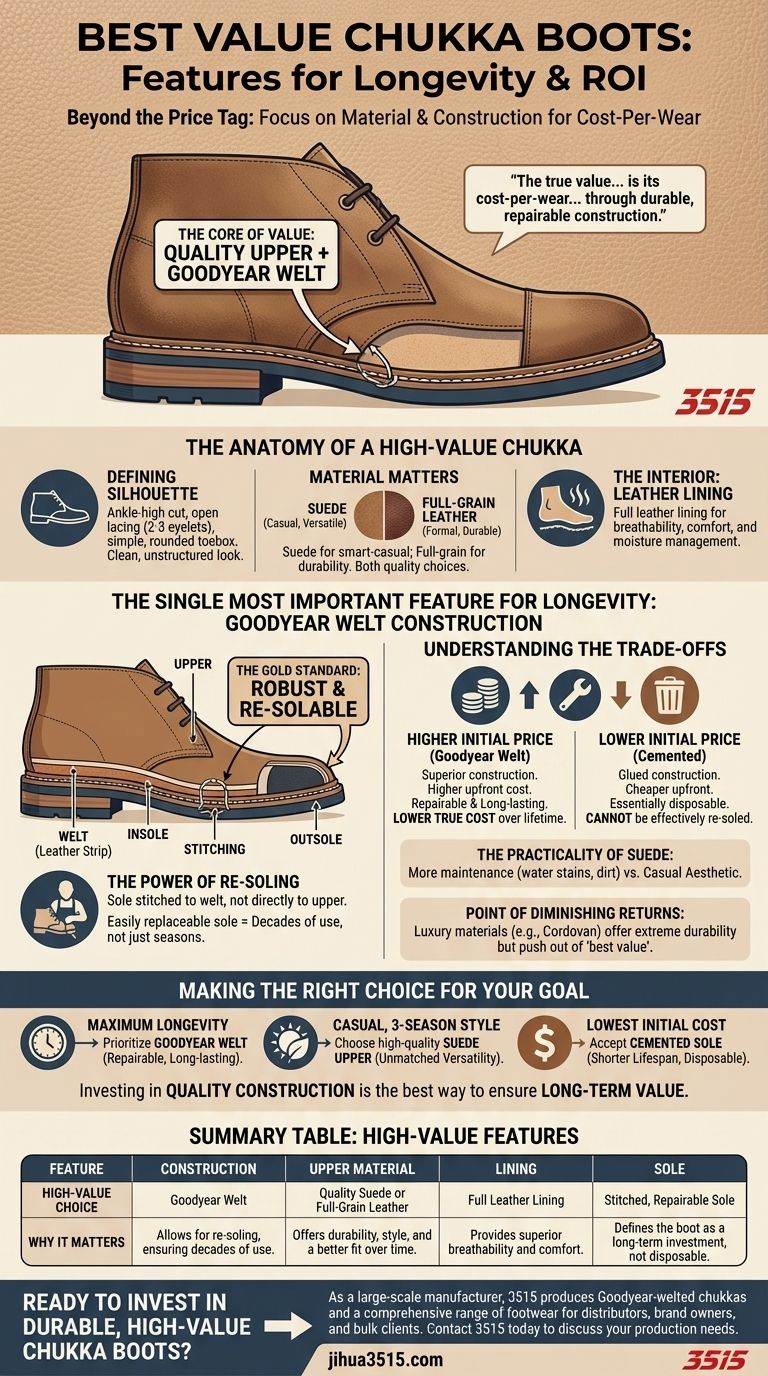
The gold standard for durable footwear is the Goodyear welt. This method involves stitching a strip of leather (the "welt") to both the upper and the insole. The outsole is then stitched to this welt.
This complex process creates an incredibly robust and water-resistant bond between the boot's upper and its sole.
The Power of Re-soling
The primary benefit of a Goodyear welt is that it makes the boot easy to re-sole. Because the sole is stitched to the welt and not directly to the upper, a cobbler can remove the old sole and attach a new one without compromising the boot's structure.
This means a well-cared-for pair of Goodyear-welted chukkas can last for decades, not just a few seasons.
Understanding the Trade-offs
A higher price tag often reflects superior construction, but it's crucial to know what you're paying for.
Initial Price vs. True Cost
Boots with cemented construction, where the sole is simply glued to the upper, will always be cheaper upfront. However, they are essentially disposable; once the sole wears out, the boot cannot be effectively repaired.
A Goodyear-welted boot costs more initially but has a much lower true cost over its lifetime because you are only paying to replace the sole, not the entire boot.
The Practicality of Suede
While stylish, suede requires more maintenance than smooth leather. It is more susceptible to water stains and dirt, so it's a trade-off between its casual aesthetic and the need for regular care and weather-proofing.
The Point of Diminishing Returns
Extremely high-end materials like Cordovan leather offer unparalleled durability but push the boot out of the "best value" category and into luxury territory. For most users, a quality calfskin or suede provides the ideal balance of performance and price.
Making the Right Choice for Your Goal
Your ideal chukka depends on what you value most. Use these guidelines to make an informed decision.
- If your primary focus is maximum longevity: Prioritize a Goodyear welt construction above all else, as this is the key to a repairable, long-lasting boot.
- If your primary focus is casual, three-season style: A high-quality suede upper is your best choice, offering unmatched versatility for less formal outfits.
- If your primary focus is the absolute lowest initial cost: Be prepared to accept a cemented sole, understanding that the boot's lifespan will be significantly shorter and it cannot be re-soled.
Ultimately, investing in quality construction is the most effective way to ensure you get the best possible value from your footwear.
Summary Table:
| Feature | High-Value Choice | Why It Matters |
|---|---|---|
| Construction | Goodyear Welt | Allows for re-soling, ensuring decades of use. |
| Upper Material | Quality Suede or Full-Grain Leather | Offers durability, style, and a better fit over time. |
| Lining | Full Leather Lining | Provides superior breathability and comfort. |
| Sole | Stitched, Repairable Sole | Defines the boot as a long-term investment, not disposable. |
Ready to invest in durable, high-value chukka boots?
As a large-scale manufacturer, 3515 produces a comprehensive range of footwear for distributors, brand owners, and bulk clients. Our production capabilities encompass all types of shoes and boots, including Goodyear-welted chukkas built with the quality materials detailed above. We help you offer your customers footwear that represents true long-term value.
Contact 3515 today to discuss your chukka boot production needs.
Visual Guide
Related Products
- Durable Spiked Camouflage Boots Wholesale & Factory Production
- Wholesale High-Traction Camo Boots - Custom Manufacturer for Brands
- High-Traction Suede Tactical Boots Wholesale & Custom Manufacturing
- Durable Leather High-Ankle Tactical Boots for Wholesale & Custom Manufacturing
- Premium Wholesale Tactical Style Safety Shoes Boots with Quick Lacing
People Also Ask
- How does boot height affect waterproofing? Choose the Right Height for Ultimate Protection
- What are the best types of shoes for different gardening conditions? Find Your Perfect Match.
- What role does camouflage play in hunting boots? It's More Than Just a Pattern
- What should you look for to ensure boots are fully waterproof? The Essential 2-Part System
- How does boot construction affect waterproofing? The Science Behind Truly Dry Feet