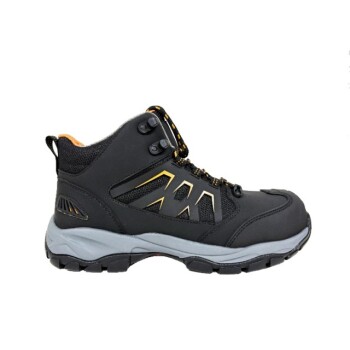
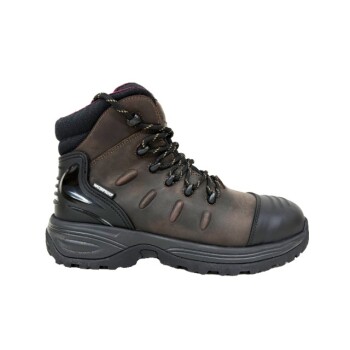
At its core, a square toe cowboy boot is defined by its wide, squared-off front. This modern design provides significantly more room in the toe box compared to traditional pointed styles, making it a popular choice for both everyday wear and work due to its enhanced comfort and functional, contemporary aesthetic.
The rise of the square toe boot marks a shift in western footwear, prioritizing all-day comfort and a bold, modern style over the narrow, riding-specific function of its pointed-toe predecessors.
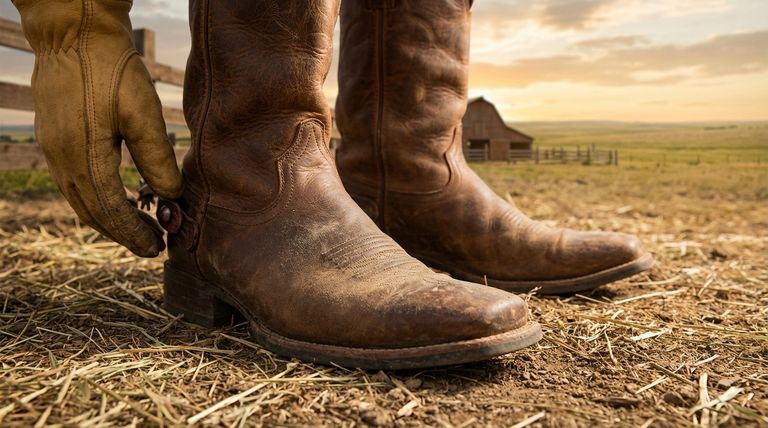
The Anatomy of the Square Toe Boot
To understand why this style has become so prevalent, it's essential to look at its core design principles, which center on space, comfort, and a departure from tradition.
The Defining Feature: A Wider Toe Box
The most obvious feature is the shape itself. Unlike the tapering point of a classic boot, the square toe provides a broad, flat front.
This design isn't monolithic; it ranges from a wide, shorter box to a longer, more defined squared-off style. The primary benefit is ample room for your toes to spread naturally.
A Focus on Practical Comfort
This generous toe box makes square toe boots exceptionally comfortable, especially for individuals with wider feet or those who spend long hours standing or walking.
This focus on comfort is why the square toe is a common feature on utilitarian boot types like the Stockman or Roper boot, which are built for work rather than just riding.
Versatility in Function
While the pointed toe is specialized for sliding easily into stirrups, the square toe is a capable all-rounder.
It is perfectly suitable for riding but excels in situations that require more walking, making it a highly functional choice for a wide range of activities beyond the saddle.
How Square Toe Compares to Other Styles
The choice of a boot's toe shape is the most significant factor in its overall look and feel. The square toe offers a distinct alternative to the classic western profile.
vs. The Classic Pointed Toe
The classic or "western" toe is narrow and tapered, designed for quick and safe entry into a rider's stirrups. This creates a sleek, traditional silhouette often associated with formal wear or dedicated riding.
In contrast, the square toe offers a more grounded, robust appearance. The choice is between a specialized, traditional tool and a comfortable, modern multipurpose boot.
vs. The Round Toe
The round toe is a middle ground, offering more room than a pointed toe but a more subdued look than a square toe. It's a conservative, highly functional option.
The square toe makes a more definitive style statement, leaning into a contemporary and often bolder western aesthetic.
Understanding the Trade-offs
Choosing a square toe boot involves a clear set of compromises. Acknowledging them ensures you select a boot that truly aligns with your needs.
Style and Tradition
The primary trade-off is aesthetic. The square toe boot forgoes the timeless, sleek silhouette of a pointed toe for a more modern, substantial look.
For purists or formal western occasions, the classic pointed toe remains the traditional standard.
Riding-Specific Performance
While a square toe is functional for riding, it is not as specialized as a pointed toe. The narrow point is purpose-built to find the stirrup quickly.
For riders who prioritize speed and precision in mounting, the classic pointed toe still holds a functional advantage.
Making the Right Choice for Your Needs
Your ideal boot depends entirely on your primary goal. Use these guidelines to determine the best fit for your intended use.
- If your primary focus is all-day comfort and work: The square toe is the superior choice, providing necessary room and support for long hours on your feet.
- If your primary focus is a modern fashion statement: The square toe offers a bold, contemporary look that pairs well with modern western and casual wear.
- If your primary focus is traditional riding or formal events: The classic pointed toe offers the specialized function and timeless aesthetic appropriate for these settings.
Ultimately, selecting a square toe boot is an intentional choice for comfort and modern style.
Summary Table:
| Feature | Description | Key Benefit |
|---|---|---|
| Wide Toe Box | Broad, squared-off front design. | Provides ample room for toes, enhancing all-day comfort. |
| Modern Aesthetic | Bold, contemporary look. | Makes a strong fashion statement, distinct from traditional styles. |
| Versatile Function | Suitable for riding, work, and casual wear. | A capable all-rounder, excelling in situations requiring walking. |
| Ideal For | Individuals with wider feet, work boots, modern western fashion. | Prioritizes practical comfort and a modern style over tradition. |
Ready to experience the superior comfort and modern style of square toe boots?
As a large-scale manufacturer, 3515 produces a comprehensive range of footwear for distributors, brand owners, and bulk clients. Our production capabilities encompass all types of shoes and boots, including high-quality square toe cowboy boots designed for maximum comfort and durability.
We can help you stock or create the perfect boots for your customers. Contact us today to discuss your needs and explore our catalog!
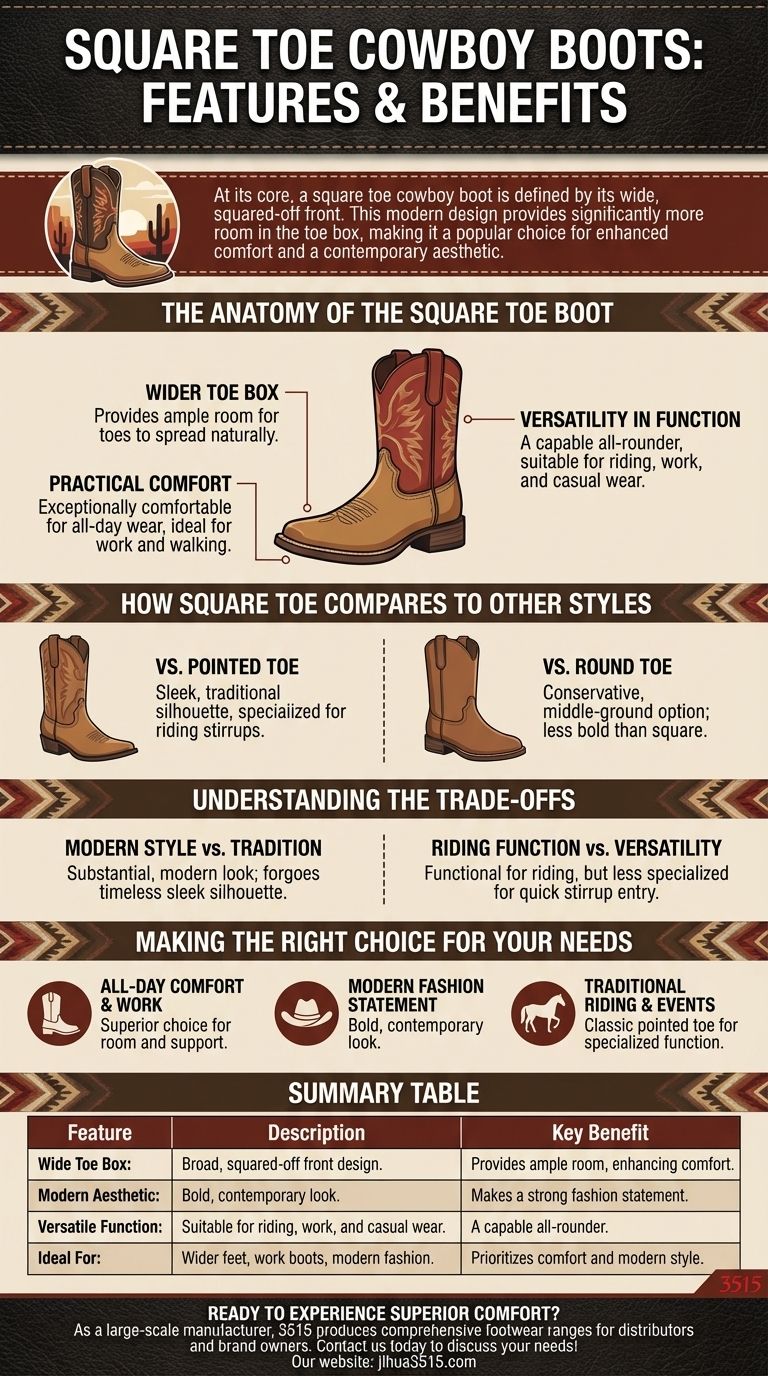
Visual Guide
Related Products
- Durable Leather Moc Toe Work Boots for Wholesale & Custom Manufacturing
- Durable Moc-Toe Wedge Work Boots | Wholesale Manufacturing for Brands
- Wholesale Customizable Safety Boots Durable & Protective Footwear Manufacturing
- Durable Steel Toe Safety Boots Wholesale & Custom Manufacturing
- Wholesale Durable Safety Boots | Custom Steel Toe & Puncture-Resistant Manufacturing
People Also Ask
- What are moc toe work boots designed for? Superior Comfort and Mobility for Tradespeople
- What are the key features to look for when purchasing moc toe boots? A Guide to Durability & Fit
- How did moc toe boots originate? A Legacy of Workwear Durability and Style
- What clothing items complement the Outdoorsman/Heritage Look with moc toe boots? Build a Timeless, Rugged Wardrobe
- What types of outfits can moc toe boots be worn with? Versatile Style Guide