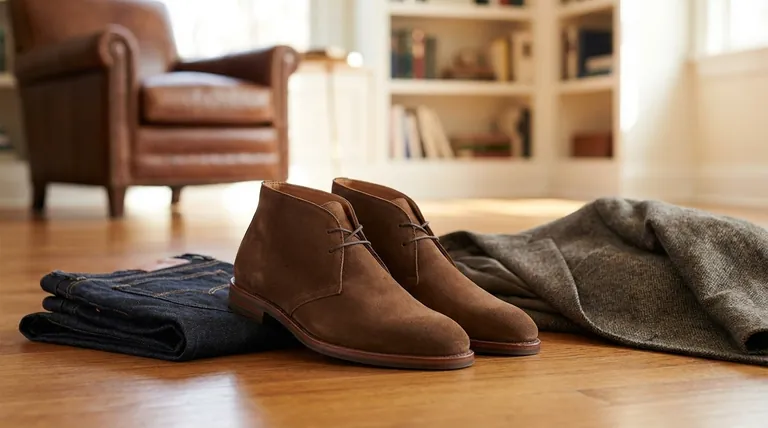
At its core, a Chukka is an ankle-high boot defined by its minimalist design. It almost always features an open lacing system with only two or three pairs of eyelets and is typically constructed from suede or leather with a simple, rounded toe.
The Chukka boot's defining characteristic is its versatility. The specific material—primarily suede or leather—and the type of sole are the key factors that determine whether it leans casual for weekend wear or sharp enough for a smart-casual office.
The Anatomy of a True Chukka Boot
Understanding the specific features that define a Chukka is the first step to appreciating its timeless appeal and knowing how to wear it correctly.
The Ankle-High Silhouette
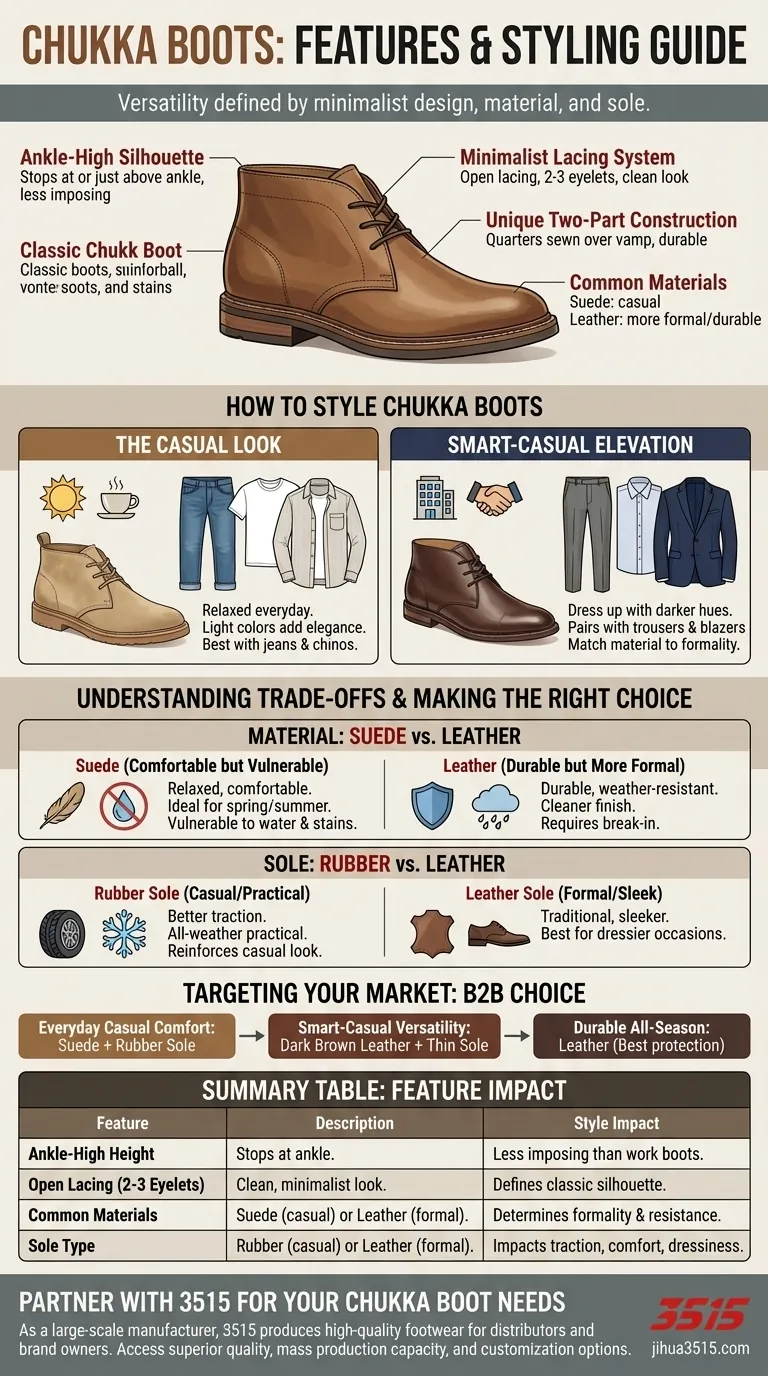
The most recognizable feature is its height. The boot's upper stops at or just above the ankle, making it less imposing than a full work boot but more substantial than a dress shoe.
The Minimalist Lacing System
A true Chukka boot is distinguished by its open lacing and a small number of eyelets, almost always just two or three pairs. This creates a clean, uncluttered look across the top of the foot.
The Unique Two-Part Construction
Traditionally, the upper part of the boot is crafted from just two pieces of leather or suede. The quarters (the rear and side sections) are sewn on top of the vamp (the front section), a simple but durable construction method.
The Common Materials: Suede vs. Leather
Chukkas are most commonly found in suede or smooth leather. Suede is inherently more casual and better suited for mild, dry weather, while leather offers more durability and a slightly more formal appearance.
How to Style Chukka Boots
The boot's simple design allows it to adapt to a wide range of outfits, from highly casual to business-appropriate.
Nailing the Casual Look
For a relaxed, everyday style, pair your Chukkas with jeans or chinos. A simple T-shirt or a casual button-down shirt completes this effortless look.
Lighter-colored boots, such as tan or cream suede, are particularly effective at adding a touch of elegance to an otherwise simple casual outfit.
Elevating for Smart-Casual
To dress up your Chukkas, choose a pair in a darker hue like brown or black leather. These pair exceptionally well with tailored trousers, wool slacks, and even a casual suit.
The key is to match the boot's material to the formality of the outfit. A sleek leather Chukka works better with a blazer than a rough, casual suede does.
Understanding the Trade-offs
While versatile, the specific type of Chukka you choose comes with practical considerations that affect its look, feel, and durability.
Suede: Comfortable but Vulnerable
Suede Chukkas offer superior comfort and a relaxed aesthetic right out of the box. They are ideal for spring and summer wear.
However, suede is susceptible to water damage and staining. It requires more careful maintenance and is not the best choice for wet or unpredictable weather.
Leather: Durable but More Formal
Smooth leather Chukkas provide greater durability and weather resistance. Their cleaner finish allows them to be dressed up more easily than their suede counterparts.
The trade-off is that they can be stiffer initially and may require a break-in period. They also project a slightly more formal, less relaxed vibe.
The Sole: Rubber vs. Leather
The sole dramatically impacts the boot's character. A rubber sole offers better traction and all-weather practicality, reinforcing a casual look. A thin leather sole is more traditional and formal, making the boot sleeker and better suited for dressier occasions.
Making the Right Choice for Your Goal
Select your Chukka boot based on your primary intended use.
- If your primary focus is everyday casual comfort: A suede Chukka with a flexible rubber sole is your most practical and comfortable option.
- If your primary focus is smart-casual versatility: A dark brown leather Chukka with a thin sole provides the greatest flexibility to dress up or down.
- If your primary focus is a durable, all-season boot: A leather Chukka offers the best protection and longevity for more demanding, year-round wear.
Ultimately, the Chukka boot serves as the perfect bridge in a modern wardrobe, offering a refined yet understated alternative to both sneakers and formal dress shoes.
Summary Table:
| Feature | Description | Style Impact |
|---|---|---|
| Ankle-High Height | Stops at or just above the ankle. | Less imposing than work boots, more substantial than shoes. |
| Open Lacing (2-3 Eyelets) | Clean, minimalist look across the foot. | Defines the classic Chukka silhouette. |
| Common Materials | Suede (casual) or Leather (more formal/durable). | Determines the boot's overall formality and weather resistance. |
| Sole Type | Rubber (casual/practical) or Leather (formal/sleek). | Impacts traction, comfort, and the boot's dressiness. |
Ready to Elevate Your Footwear Collection with Timeless Chukka Boots?
As a large-scale manufacturer, 3515 produces a comprehensive range of high-quality footwear for distributors, brand owners, and bulk clients. Our production capabilities encompass all types of shoes and boots, including versatile Chukkas in various materials and sole types to meet your market's demands.
Partner with us to access:
- Superior Quality: Durable construction and premium materials.
- Mass Production Capacity: Reliable supply for large orders.
- Customization Options: Tailor styles to your brand's needs.
Contact us today to discuss your Chukka boot requirements and discover how 3515 can be your trusted manufacturing partner!
Visual Guide
Related Products
- Durable Spiked Camouflage Boots Wholesale & Factory Production
- Wholesale High-Traction Camo Boots - Custom Manufacturer for Brands
- High-Traction Suede Tactical Boots Wholesale & Custom Manufacturing
- Durable Leather High-Ankle Tactical Boots for Wholesale & Custom Manufacturing
- Premium Wholesale Tactical Style Safety Shoes Boots with Quick Lacing
People Also Ask
- How does boot height affect waterproofing? Choose the Right Height for Ultimate Protection
- What are the best types of shoes for different gardening conditions? Find Your Perfect Match.
- What role does camouflage play in hunting boots? It's More Than Just a Pattern
- What should you look for to ensure boots are fully waterproof? The Essential 2-Part System
- How does boot construction affect waterproofing? The Science Behind Truly Dry Feet