
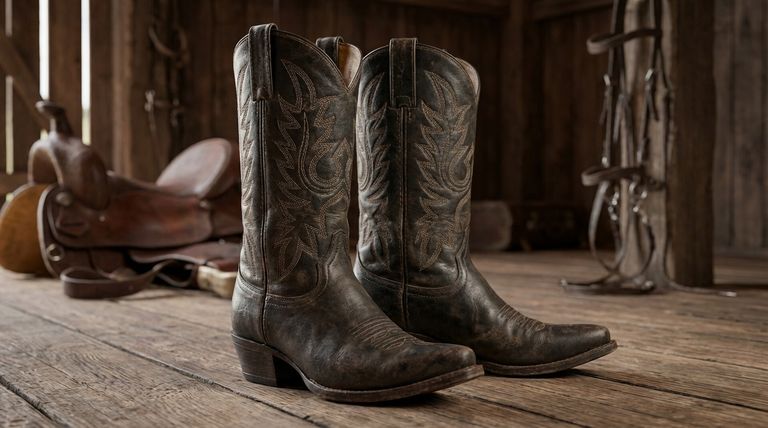
The defining design elements of a Western boot are its tall shaft, angled high heel, and pointed toe. These core components are frequently enhanced with ornate decorative stitching and are crafted from high-sheen leathers, creating a visually distinct and iconic piece of footwear.
The design of a Western boot is not arbitrary; it is a masterclass in purpose-driven engineering. Every element, from the shape of the heel to the height of the shaft, originated as a practical solution for the specific needs of a person on horseback.
The Functional Anatomy of a Western Boot
To truly understand the Western boot, you must look past its aesthetic appeal and see the functional purpose behind each component. The design is a direct reflection of its original working environment: the saddle.
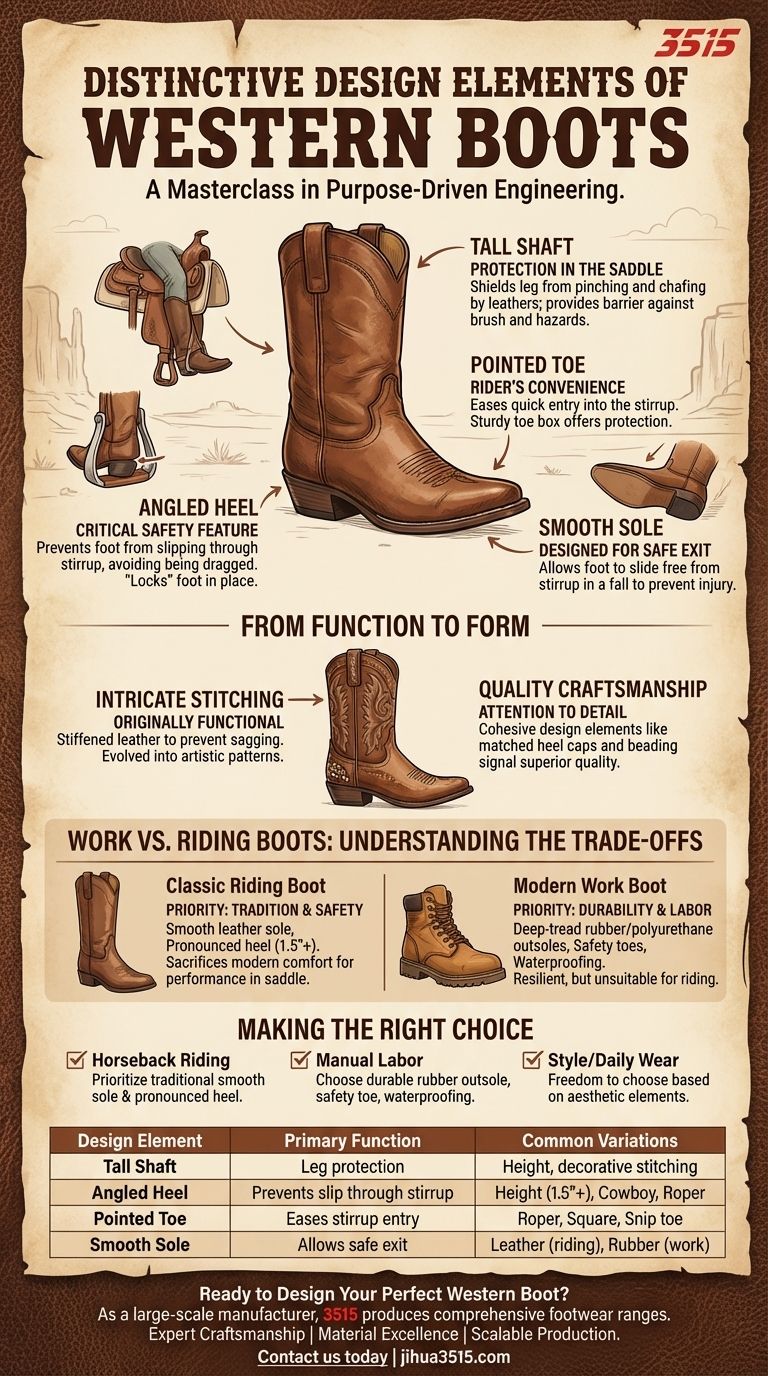
The Tall Shaft: Protection in the Saddle
The high shaft, which can extend to the knee, serves a critical protective role. It shields the rider's leg from being pinched or chafed by the saddle's leather straps (leathers).
It also provides a barrier against brush, rocks, and other hazards encountered on the trail.
The Angled Heel: A Critical Safety Feature
The pronounced, often angled heel is arguably the most important safety feature of the boot.
Its purpose is to prevent the rider's foot from accidentally slipping all the way through the stirrup, which could lead to being dragged in a fall. The heel "locks" the foot in place.
The Pointed Toe: A Rider's Convenience
While toe shapes vary, the classic, slightly pointed toe was designed to help a rider guide their foot into the stirrup quickly and easily.
A sturdy toe box also offers a degree of protection for the foot when working on the ground around livestock.
The Smooth Sole: Designed for a Safe Exit
A traditional Western boot has a smooth, leather outsole with minimal texturing. This is an intentional safety design.
In the event of a fall, a smooth sole is less likely to get caught on the stirrup, allowing the rider's foot to slide free and avoid a more serious accident.
From Function to Form: The Aesthetic Elements
Once the functional foundation was established, the boot evolved into a canvas for cultural and personal expression.
Intricate Stitching and Patterns
The decorative stitching found on the shaft wasn't always just for looks. It originally served to stiffen the leather, helping the boot shaft stay upright and preventing it from sagging.
Over time, this functional stitching evolved into the intricate, artistic patterns that are a hallmark of the style today.
The Mark of Quality Craftsmanship
Attention to detail distinguishes a high-quality boot. Cohesive design elements, where the heel caps, side seams, and even the beading are matched to the boot's color, signal superior craftsmanship.
This dedication to a harmonious final product is a key element of the boot's enduring appeal.
Understanding the Trade-offs: Work vs. Riding Boots
The classic design has been adapted for different purposes, leading to important distinctions, particularly between traditional riding boots and modern work boots.
Prioritizing Tradition: The Classic Riding Boot
A true riding boot prioritizes the original safety features. It will always have a smooth leather sole and a heel of at least 1.5 inches to ensure proper function with a stirrup.
These boots sacrifice modern comfort and durability features like rubber outsoles and waterproofing for optimal performance in the saddle.
Prioritizing Durability: The Modern Work Boot
Western work boots borrow the iconic silhouette but modify it for labor. They feature deep-tread rubber or polyurethane outsoles for traction and durability.
They often include safety toes (steel, composite, or alloy), breathable mesh linings, and waterproofing, making them resilient to harsh conditions but unsuitable and potentially unsafe for riding.
Making the Right Choice for Your Goal
Understanding the purpose behind each design element allows you to select the correct boot for your specific needs.
- If your primary focus is horseback riding: Prioritize a boot with a traditional smooth leather sole and a pronounced heel for safety and proper function in the stirrup.
- If your primary focus is manual labor: Choose a Western work boot with a durable rubber outsole, a safety toe, and features like waterproofing.
- If your primary focus is style and daily wear: You have the freedom to choose based on aesthetic elements like stitching, leather type, and toe shape that appeal to you most.
Ultimately, appreciating a Western boot is appreciating its perfect balance of historical function and timeless form.
Summary Table:
| Design Element | Primary Function | Common Variations |
|---|---|---|
| Tall Shaft | Leg protection from saddle and brush | Height, decorative stitching patterns |
| Angled Heel | Prevents foot from slipping through stirrup | Height (1.5"+ for riding), angle (cowboy, roper) |
| Pointed Toe | Eases entry into stirrup; protects foot | Roper (rounded), square, snip toe |
| Smooth Sole | Allows for safe exit from stirrup in a fall | Leather (traditional riding), rubber (work boots) |
Ready to Design Your Perfect Western Boot?
As a large-scale manufacturer, 3515 produces a comprehensive range of footwear for distributors, brand owners, and bulk clients. Our production capabilities encompass all types of shoes and boots, from traditional riding styles to modern work boots.
We can help you bring your vision to life with:
- Expert Craftsmanship: Precision in every stitch, from intricate patterns to durable construction.
- Material Excellence: Sourcing high-quality leathers and components for superior performance and style.
- Scalable Production: Reliable, high-volume manufacturing to meet your business demands.
Contact us today to discuss your project and discover how our manufacturing expertise can add value to your brand.
Visual Guide
Related Products
- Durable Goodyear Welt Leather Work Boots for Wholesale & Private Label
- High-Traction Suede Tactical Boots Wholesale & Custom Manufacturing
- Durable Leather Tactical Boots Wholesale & Custom Manufacturing for Brands
- Durable High-Ankle Tactical Boots for Wholesale & Custom Manufacturing
- Wholesale Safety Boots Manufacturer for Custom & Private Label Orders
People Also Ask
- What is the difference between full-grain and top-grain leather? Premium Material Guide for Boot Manufacturers
- What are the advantages of leather as an upper material for work boots? Unmatched Durability & Custom Comfort
- Why is it important to waterproof leather work boots? Protect Your Investment and Performance
- How should new leather work boots be broken in? A Guide to Comfort and Durability
- What are the advantages of leather uppers in work boots? Unmatched Durability & Protection
















