The fundamental difference between steel toe and composite toe work boots lies in the material used for the protective toe cap. Steel toe boots use a heavy-duty steel cap for protection, while composite toe boots use non-metallic materials like carbon fiber, Kevlar, plastic, or fiberglass. This core difference creates distinct advantages and disadvantages related to weight, conductivity, and performance in different environments.
The choice is not about which is "better," but which is the right tool for your specific job. Steel toes offer maximum, time-tested protection for heavy industrial hazards, while composite toes provide modern, lightweight protection with crucial benefits for specialized environments involving electricity or extreme temperatures.
Deconstructing the Key Differences
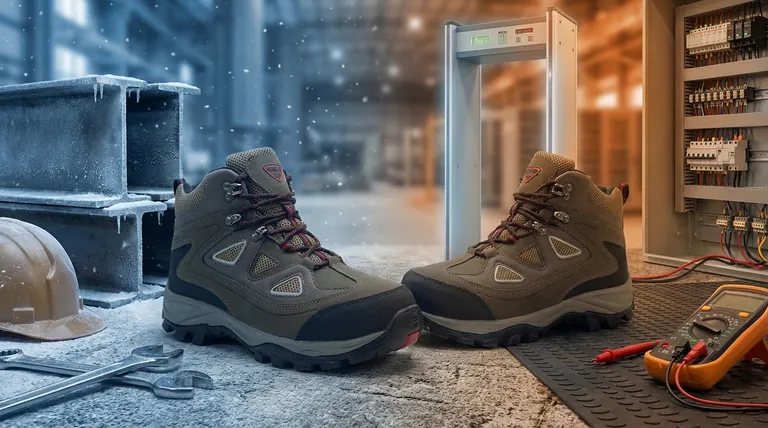
Understanding how these materials perform is crucial for selecting the correct boot. While both are designed to meet ASTM (American Society for Testing and Materials) safety standards for impact and compression, their properties make them suitable for very different tasks.
Protection Level and Material
A steel toe cap is exactly what it sounds like: a piece of steel inserted into the toe box. It offers exceptional resistance to impact, compression, and punctures from heavy or sharp objects.
Composite toe caps are made from a blend of non-metal materials. To achieve the same safety rating as steel, these caps must be slightly thicker and bulkier, but they provide robust, certified protection for most work environments.
Weight and All-Day Comfort
This is one of the most noticeable differences. Composite toe boots are significantly lighter than their steel counterparts. This reduction in weight directly translates to less foot fatigue and greater comfort over a long workday.
Because steel toe caps are made of metal, they add considerable weight to the boot, which can be a drawback for those who walk or stand for extended periods.
Conductivity and Electrical Hazards
Here, the distinction is critical. Steel is a conductor of electricity. This makes steel toe boots entirely unsuitable and dangerous for electricians or anyone working in an environment with a risk of live electrical circuits.
Composite materials are non-conductive. This makes composite toe boots the mandatory choice for jobs with electrical hazards, often designated with an "EH" rating.
Thermal Insulation
Metal readily transfers temperature. This means steel toe boots can become uncomfortably cold in winter and hot in summer, drawing the ambient temperature directly to your feet.
Composite toe caps are poor thermal conductors. They provide superior insulation, keeping your feet warmer in the cold and cooler in the heat, making them ideal for outdoor work in extreme climates.
Metal Detector Compatibility
The non-metallic nature of composite toe boots means they will not trigger metal detectors. This is a significant advantage for workers in airports, nuclear facilities, or high-security buildings who must pass through security checkpoints frequently.
Steel toe boots will consistently set off metal detectors, requiring removal and creating a daily inconvenience in such environments.
Understanding the Trade-offs
Choosing the right boot involves weighing the benefits against the drawbacks of each type based on your specific needs.
Durability and Lifespan
Steel is renowned for its durability. A steel toe boot can often withstand more abuse and a higher number of impacts over its lifespan compared to composite materials in the most rugged conditions, such as heavy construction or logging.
Cost and Budget
Historically, steel toe boots have been the more affordable option due to simpler material and manufacturing costs. However, as composite technology has become more common, this price gap has narrowed considerably.
Fit and Profile
Because a composite toe cap needs to be thicker to provide the same level of protection as steel, it can create a slightly bulkier toe box. This may affect the fit or style of the boot, which can be a consideration for some users.
Making the Right Choice for Your Job
Your work environment and daily tasks should be the final authority in your decision.
- If your primary focus is maximum impact resistance in heavy industrial settings (construction, manufacturing, logging): Choose steel toe for its proven strength and durability against crushing forces.
- If your primary focus is safety as an electrician or around electrical hazards: Composite toe is the only safe and appropriate choice due to its non-conductive properties.
- If your primary focus is all-day comfort and reducing fatigue from walking or standing: The lighter weight of composite toe boots will make a significant difference.
- If your primary focus is working outdoors in extreme heat or cold: Composite toe offers far better thermal insulation for maintaining comfort.
- If your primary focus is convenience in a high-security environment with metal detectors: Composite toe will prevent the daily hassle of removing your footwear.
Ultimately, selecting the correct safety boot is a critical investment in your daily comfort and protection on the job.
Summary Table:
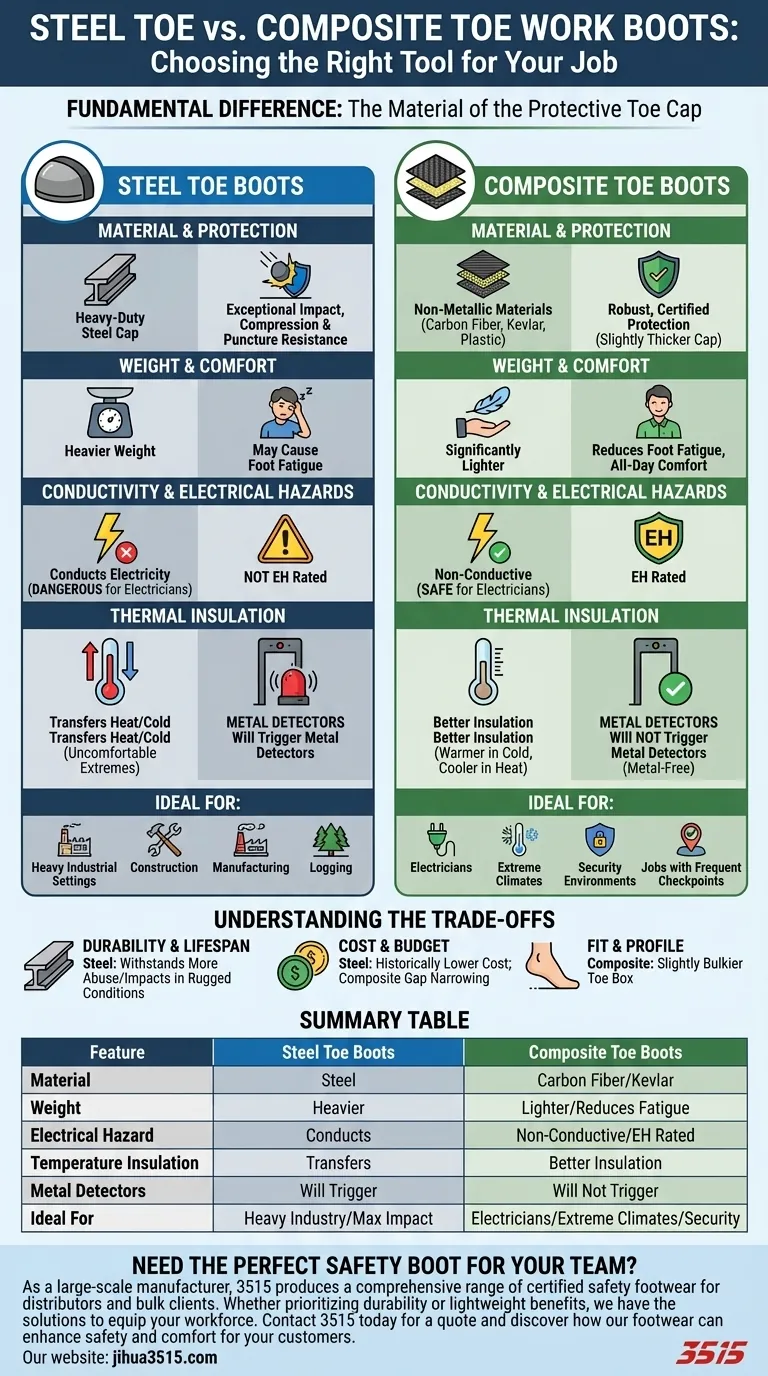
| Feature | Steel Toe Boots | Composite Toe Boots |
|---|---|---|
| Material | Heavy-duty steel | Carbon fiber, Kevlar, plastic |
| Weight | Heavier | Lighter, reduces fatigue |
| Electrical Hazard | Conducts electricity (Not EH rated) | Non-conductive (EH rated) |
| Temperature Insulation | Transfers heat/cold | Better insulation |
| Metal Detectors | Will trigger | Will not trigger |
| Ideal For | Heavy industry, maximum impact resistance | Electricians, extreme climates, security sites |
Need the Perfect Safety Boot for Your Team?
As a large-scale manufacturer, 3515 produces a comprehensive range of certified safety footwear for distributors, brand owners, and bulk clients. Whether your priority is the maximum durability of steel toe or the lightweight, non-conductive benefits of composite toe, we have the production capabilities and expertise to meet your needs.
Let us help you equip your workforce with the right protection.
Contact 3515 today for a quote and discover how our footwear solutions can enhance safety and comfort for your customers.
Visual Guide
Related Products
- Durable Leather Work Boots for Wholesale & Custom Manufacturing
- Durable Leather Work Boots for Wholesale & Custom OEM Manufacturing
- Durable Leather Work Boots Wholesale Manufacturer & Custom Factory
- Durable Leather Moc Toe Work Boots for Wholesale & Custom Manufacturing
- Wholesale Leather Work Boots with Customizable Wedge Sole for Brands
People Also Ask
- What is the difference between full-grain and top-grain leather? Premium Material Guide for Boot Manufacturers
- What are the common workplace hazards that can be mitigated with the right work boots? Protect Your Workforce
- What are the common foot issues workers face due to uncomfortable work boots? Prevent Pain & Deformities
- What are the advantages of leather versus synthetic work boots? A Guide to Choosing the Right Material
- What are the key components of modern work boots? Engineered for Ultimate Durability and Comfort