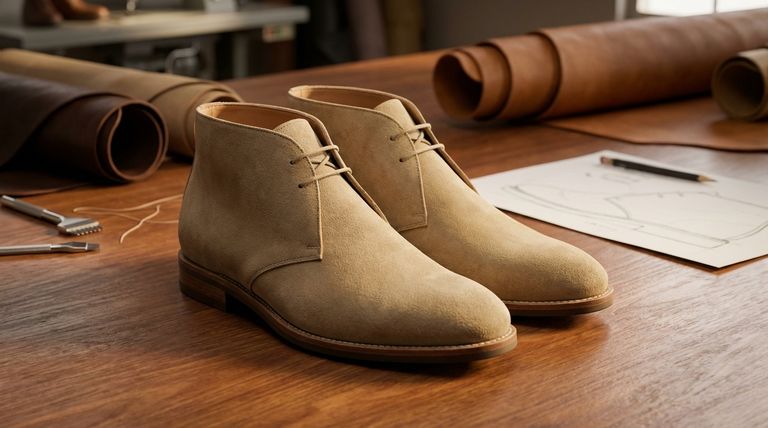
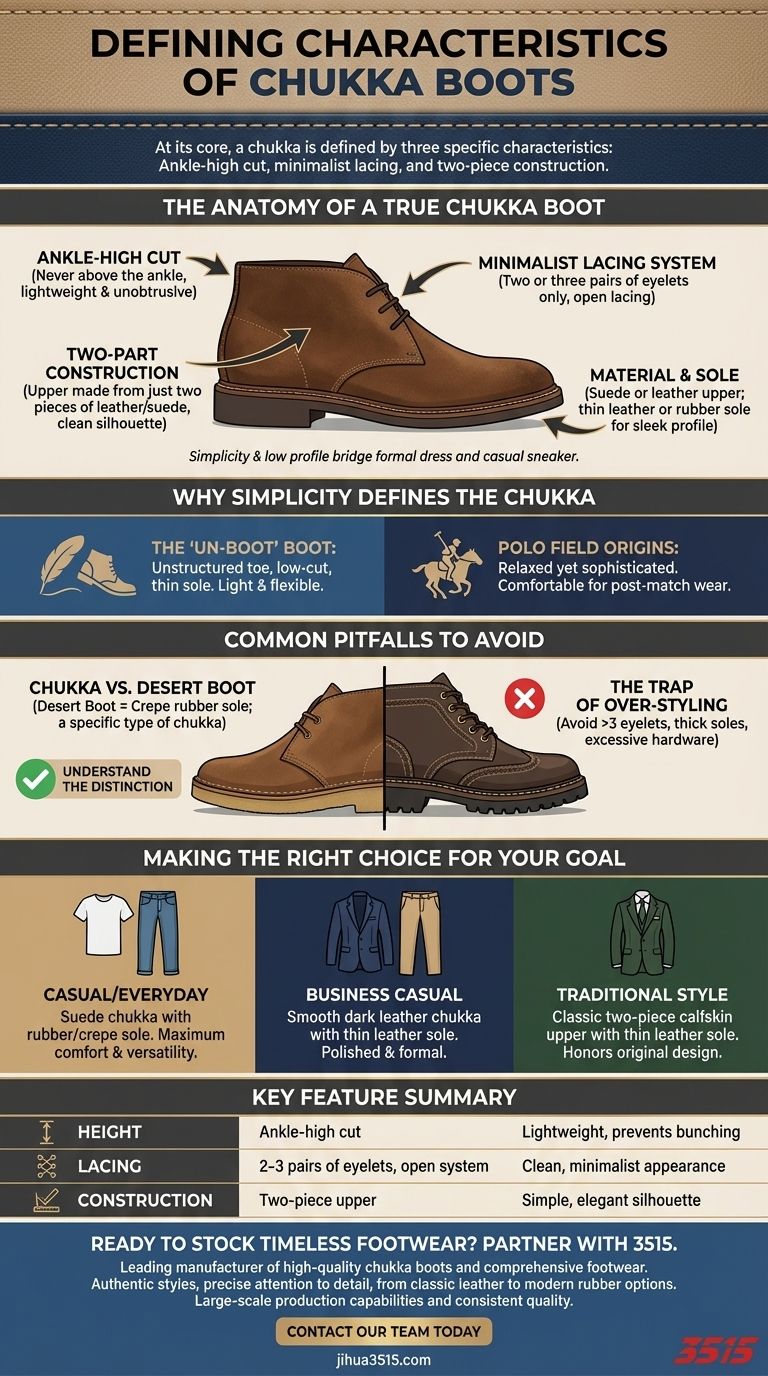
At its core, a chukka is defined by three specific characteristics. It is an ankle-high boot featuring an open lacing system with only two or three pairs of eyelets. Traditionally, its upper is constructed from just two pieces of leather or suede, creating a clean, minimalist silhouette.
The chukka is best understood not as a rugged boot, but as a versatile hybrid. Its simple construction and low profile bridge the gap between a formal dress shoe and a casual sneaker, making its defining characteristic a refined simplicity.
The Anatomy of a True Chukka Boot
To identify a chukka, you must look past general shapes and focus on a few key structural details that have defined the style for decades.
Ankle-High Cut
The silhouette of a chukka never goes above the ankle. This specific height is fundamental, ensuring the boot remains lightweight and unobtrusive, pairing easily with trousers without "bunching" or requiring a specific cuff.
Minimalist Lacing System
This is the most recognizable and non-negotiable feature. A chukka has two or three pairs of eyelets, and no more. This minimal lacing, combined with an "open lacing" system (where the quarters are stitched on top of the vamp), gives it a clean, uncluttered appearance.
Two-Part Construction
Classic chukka boots are made from only two pieces of leather or suede for the upper. This simple construction method is key to its minimalist aesthetic, avoiding unnecessary seams or panels that would make it look heavier or more complex.
Material and Sole
The original chukka featured thin leather soles and calfskin uppers. Today, suede is the most common upper material for a more casual feel, while smooth leather offers a dressier option. Soles can be thin leather or rubber, maintaining the boot's sleek profile.
Why Simplicity Defines the Chukka
The chukka’s identity comes from what it lacks: bulk, excessive hardware, and complex construction. This intentional minimalism is a direct link to its origins.
The 'Un-Boot' Boot
With its unstructured toe, low-cut upper, and thin sole, the chukka often feels more like a high-top shoe than a traditional, heavy boot. This design makes it exceptionally light and flexible.
From Polo Fields to Modern Wardrobes
The name "chukka" is believed to derive from a period of play in polo. The boots worn by players after matches were comfortable, lightweight, and easy to slip on and off, establishing the chukka's DNA as a relaxed, yet sophisticated, piece of footwear.
Common Pitfalls to Avoid
The chukka's popularity has led to many variations that dilute its core identity. Understanding the key distinctions is crucial for making an informed choice.
Chukka vs. Desert Boot
This is the most common point of confusion. A Desert Boot is a specific type of chukka. All Desert Boots are chukkas, but not all chukkas are Desert Boots. The defining feature of a Desert Boot is its natural crepe rubber sole, whereas a chukka can have leather or other types of rubber soles.
The Trap of Over-Styling
Be wary of boots marketed as chukkas that have more than three eyelets, thick lug soles, or elaborate decorative stitching. These additions fundamentally change the character of the boot, moving it away from the minimalist elegance that defines a true chukka.
Making the Right Choice for Your Goal
Select your chukka based on the role you need it to play in your wardrobe.
- If your primary focus is casual, everyday wear: Opt for a suede chukka with a rubber or crepe sole for maximum comfort and versatility.
- If your primary focus is business casual: Choose a chukka in a dark brown or black smooth leather with a thin leather sole for a more formal, polished look.
- If your primary focus is traditional style: Seek out a model with a classic two-piece calfskin upper and a thin leather sole to honor its original design.
Ultimately, the chukka's enduring appeal lies in its clean lines and understated design, making it a timeless footwear essential.
Summary Table:
| Key Feature | Defining Characteristic | Purpose |
|---|---|---|
| Height | Ankle-high cut | Lightweight, prevents bunching with trousers |
| Lacing | 2-3 pairs of eyelets, open system | Clean, minimalist, uncluttered appearance |
| Construction | Two-piece upper (leather/suede) | Simple, elegant silhouette, links to heritage |
Ready to Stock Timeless Footwear?
As a leading manufacturer, 3515 produces high-quality chukka boots and a comprehensive range of other footwear for distributors, brand owners, and bulk clients. We specialize in crafting authentic styles with precise attention to detail, from classic leather soles to modern rubber options.
Partner with us to:
- Offer your customers genuine, well-constructed chukka boots.
- Access a full catalog of shoes and boots tailored to your market.
- Benefit from large-scale production capabilities and consistent quality.
Contact our team today to discuss your manufacturing needs and elevate your footwear collection.
Visual Guide
Related Products
- Durable Spiked Camouflage Boots Wholesale & Factory Production
- Wholesale High-Traction Camo Boots - Custom Manufacturer for Brands
- High-Traction Suede Tactical Boots Wholesale & Custom Manufacturing
- Durable Leather High-Ankle Tactical Boots for Wholesale & Custom Manufacturing
- Premium Wholesale Tactical Style Safety Shoes Boots with Quick Lacing
People Also Ask
- How does boot height affect waterproofing? Choose the Right Height for Ultimate Protection
- What are the best types of shoes for different gardening conditions? Find Your Perfect Match.
- What role does camouflage play in hunting boots? It's More Than Just a Pattern
- What should you look for to ensure boots are fully waterproof? The Essential 2-Part System
- How does boot construction affect waterproofing? The Science Behind Truly Dry Feet