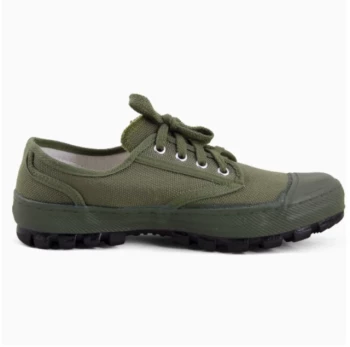
Thermoplastic Rubber (TPR) has become a cornerstone of modern footwear manufacturing because it combines the processing advantages of plastics with the performance characteristics of traditional rubber. By utilizing injection molding techniques, TPR allows manufacturers to achieve high production throughput while delivering finished soles that excel in slip resistance and low-temperature flexibility.
Core Takeaway: TPR streamlines shoe production by offering superior molding efficiency and cost-effectiveness, while providing end-users with durable, slip-resistant outsoles that remain flexible even in extreme cold.
Maximizing Production Efficiency Through Molding
Superior Processing Convenience
Unlike traditional vulcanized rubber, which requires a lengthy curing process, TPR is a thermoplastic material that melts when heated and solidifies when cooled. This allows for rapid injection molding cycles, significantly reducing the time required to produce a finished sole unit.
Enhanced Manufacturing Throughput
Because TPR can be processed using standard thermoplastic machinery, it eliminates several labor-intensive steps found in traditional rubber production. This molding convenience directly increases production efficiency, allowing brands to scale manufacturing quickly to meet market demand.
Precision in Complex Designs
The flow characteristics of TPR allow it to fill intricate mold cavities with high precision. This is particularly useful for creating complex tread patterns or integrated branding directly into the outsole during a single molding step.
Performance Advantages for the End User
Superior Slip Resistance
One of the primary functional benefits of TPR is its inherent grip and traction. It provides better slip resistance than many conventional materials, making it an ideal choice for safety footwear, casual shoes, and athletic gear used on varied surfaces.
Resilience in Extreme Cold
Traditional materials often become brittle and crack when exposed to sub-zero temperatures. TPR maintains excellent flex resistance in low-temperature environments, ensuring the sole does not fail or lose its cushioning properties in harsh winter conditions.
Durability and Tear Strength
While materials like EVA foam are lightweight, TPR offers superior tear strength and physical durability. It resists abrasion better than crepe or standard foam, extending the overall lifespan of the footwear.
Understanding the Trade-offs
Weight vs. Traction
While TPR offers excellent grip, it is generally heavier than expanded foam materials like EVA or lightweight PU. Designers must often balance the need for superior traction against the desired weight of the finished shoe.
Thermal Sensitivity
Because TPR is designed to melt for processing, it can be sensitive to high heat environments after manufacturing. It may soften or deform if exposed to extreme heat, which is a critical consideration for specialized industrial footwear.
Breathability Limitations
Like most synthetic rubber compounds, TPR provides a complete barrier against moisture but offers zero breathability. This necessitates the use of high-quality liners or breathable upper materials to ensure foot comfort during extended wear.
Making the Right Choice for Your Goal
How to Apply This to Your Project
Selecting the right sole material depends entirely on the environment and the price point of your target market.
- If your primary focus is high-volume production: Utilize TPR to leverage its molding convenience and rapid cycle times to lower per-unit costs.
- If your primary focus is cold-weather performance: Prioritize TPR for its ability to maintain flex resistance and prevent cracking in sub-zero temperatures.
- If your primary focus is maximum slip resistance: Choose TPR over leather or crepe to ensure superior grip on wet or uneven surfaces.
- If your primary focus is complex geometric structures: Consider TPU as an alternative if the design requires high-impact absorption through intricate auxetic shapes.
By integrating TPR into the molding process, manufacturers can achieve a perfect balance of industrial speed and reliable consumer performance.
Summary Table:
| Feature | Benefit of TPR in Footwear | Manufacturing Advantage |
|---|---|---|
| Processing | Rapid cooling & solidification | High throughput via injection molding |
| Traction | Superior slip resistance | Reliable grip for safety & athletic gear |
| Flexibility | High low-temperature resilience | Prevents cracking in sub-zero climates |
| Design | High flow precision | Handles complex tread & integrated branding |
| Durability | High tear strength & abrasion resistance | Extended product lifespan for end-users |
Partner with 3515 for High-Performance Footwear Manufacturing
As a large-scale manufacturer serving global distributors and brand owners, 3515 leverages advanced TPR molding and production capabilities to bring your designs to life. Our flagship Safety Shoes series and extensive portfolio—including tactical boots, outdoor shoes, training sneakers, and formal dress shoes—are engineered to meet rigorous bulk requirements with unmatched precision.
Ready to scale your production with a partner that understands material science and manufacturing excellence?
Contact Us Today to Discuss Your Project
References
- S. Jaiganesh, K. Elayaraja. Investigating Grip Study of Different Types of Footwear Soiling Materials in SATRA Std. DOI: 10.5281/zenodo.6827368
This article is also based on technical information from 3515 Knowledge Base .
Related Products
- Durable Rubber-Soled Utility Shoes for Wholesale & Custom Brand Manufacturing
- Durable Rubber Sole Outdoor Shoes Wholesale & Custom Manufacturing
- Wholesale Durable Camo Canvas Shoes with High-Traction Rubber Soles
- Wholesale Waterproof Tactical Boots Custom Suede & High-Traction Soles
- Wholesale Durable Camouflage Canvas Shoes with High-Traction Cleated Rubber Sole
People Also Ask
- Why are rubber-soled shoes considered multi-weather footwear? Unlock All-Season Traction & Protection
- Why should we wear rubber soled shoes? Unlock Superior Safety and Durability
- How do rubber soles affect a shoe's appearance? Defining Your Shoe's Style and Formality
- What are the types of rubber sole shoes available? Choose the Right Sole for Durability & Comfort
- When were rubber sole shoes invented? From 1800s Concept to Modern Mainstay