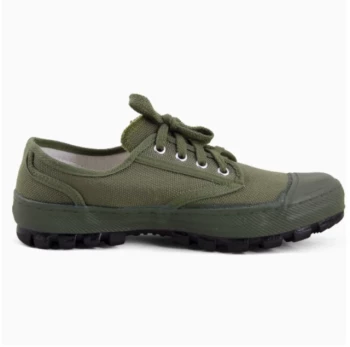
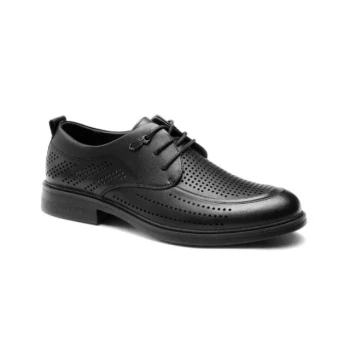
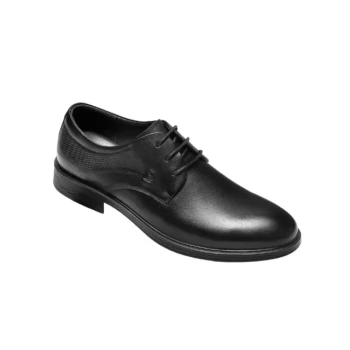
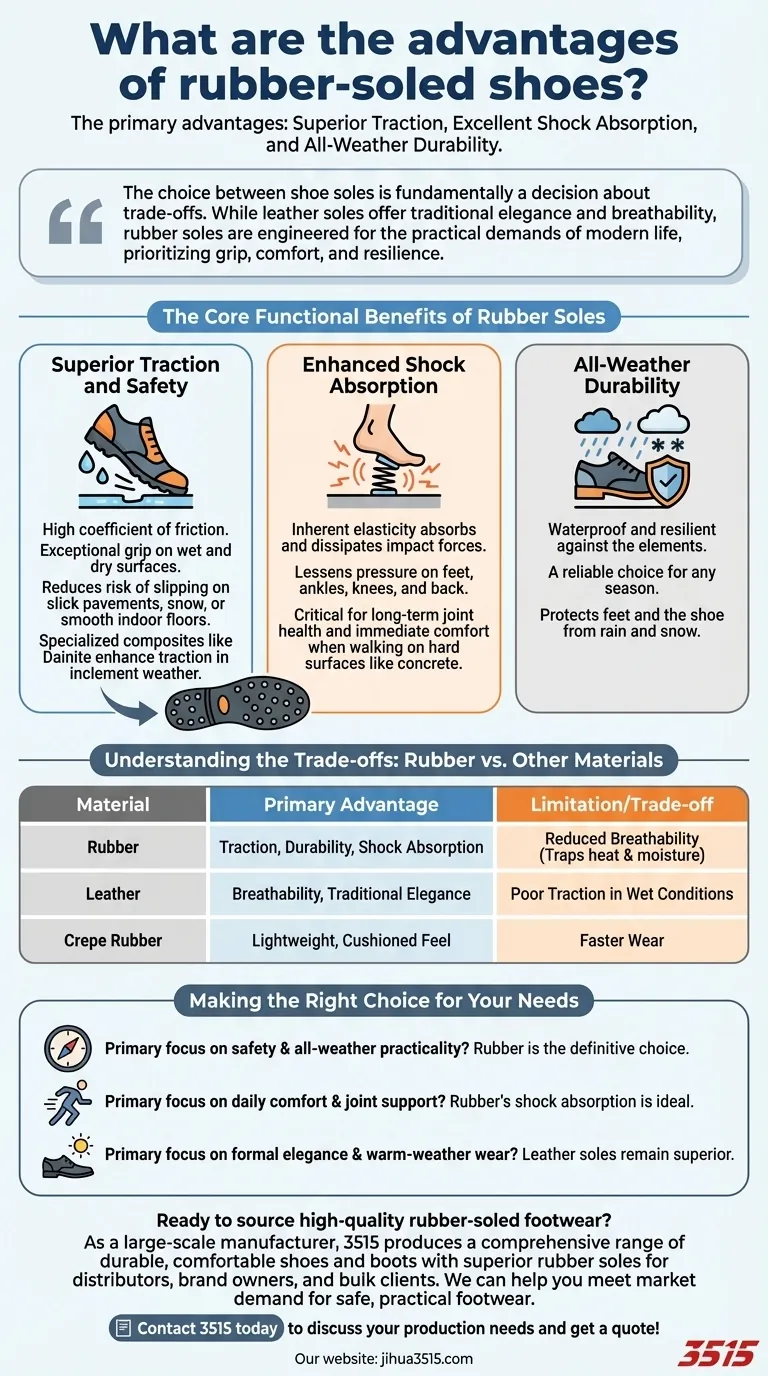
The primary advantages of rubber-soled shoes are superior traction, excellent shock absorption, and all-weather durability. These functional benefits make them a highly practical choice for reducing the risk of slips and enhancing comfort during daily wear on various surfaces.
The choice between shoe soles is fundamentally a decision about trade-offs. While leather soles offer traditional elegance and breathability, rubber soles are engineered for the practical demands of modern life, prioritizing grip, comfort, and resilience.
The Core Functional Benefits of Rubber Soles
Rubber's material properties translate directly into tangible benefits for the wearer, focusing on safety and physical comfort.
Superior Traction and Safety
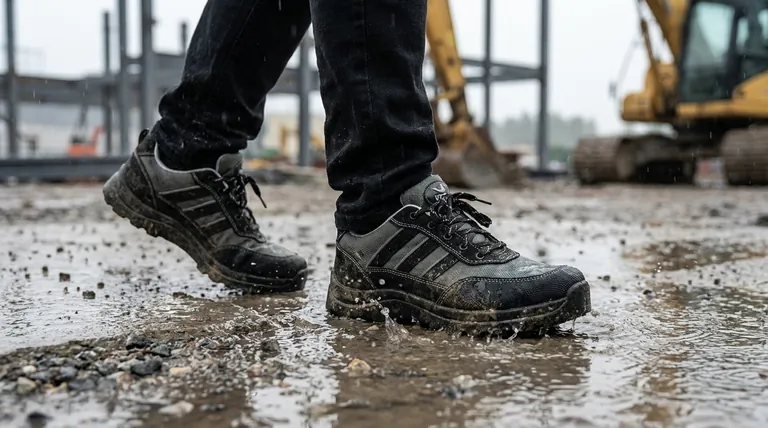
Rubber offers a high coefficient of friction, providing an exceptional grip on both wet and dry surfaces. This significantly reduces the risk of slipping on slick pavements, snow, or smooth indoor floors.
Specialized rubber composites, like Dainite, incorporate studded designs to further enhance this traction in inclement weather.
Enhanced Shock Absorption
The inherent elasticity of rubber allows it to absorb and dissipate impact forces with each step. This lessens the pressure on your feet, ankles, knees, and back.
For anyone who spends significant time walking on hard surfaces like concrete, this shock absorption is a critical feature for long-term joint health and immediate comfort.
All-Weather Durability
Unlike more porous materials, rubber is waterproof and resilient against the elements. This makes rubber-soled shoes a reliable choice for any season, protecting your feet and the shoe itself from rain and snow.
Understanding the Trade-offs: Rubber vs. Other Materials
No single sole material is universally superior. The optimal choice depends entirely on your environment, intended use, and personal priorities.
The Case for Leather
Leather soles are the traditional choice for formal and dress shoes, prized for their elegant aesthetic.
Their primary functional advantage is breathability, which allows moisture to escape and enhances comfort, particularly in warm, dry weather. However, they offer very poor traction in wet conditions.
The Limitations of Rubber
The main trade-off for rubber's durability and grip is reduced breathability. Because it is a non-porous material, it can trap heat and moisture more than leather, which may be a consideration in hot climates.
Other Specialized Options
Materials like crepe rubber offer a lightweight and cushioned feel but tend to wear down much more quickly than standard rubber. They represent a choice that prioritizes initial comfort over long-term durability.
Making the Right Choice for Your Needs
To select the right sole, align the material's strengths with your primary goal.
- If your primary focus is safety and all-weather practicality: Rubber is the definitive choice for its unmatched grip and durability in unpredictable conditions.
- If your primary focus is daily comfort and joint support: Rubber's superior shock absorption makes it ideal for long periods of walking on hard surfaces.
- If your primary focus is formal elegance and warm-weather wear: Leather soles remain the superior option for their classic profile and enhanced breathability in dry environments.
By understanding these core differences, you can confidently choose a shoe that performs exactly as you need it to.
Summary Table:
| Advantage | Key Benefit | Ideal For |
|---|---|---|
| Superior Traction | Exceptional grip on wet/dry surfaces | Reducing slip risk, all-weather safety |
| Shock Absorption | Cushions impact on joints | Long walks, hard surfaces, comfort |
| All-Weather Durability | Waterproof and resilient | Rain, snow, long-lasting wear |
Ready to source high-quality rubber-soled footwear?
As a large-scale manufacturer, 3515 produces a comprehensive range of durable, comfortable shoes and boots with superior rubber soles for distributors, brand owners, and bulk clients. We can help you meet market demand for safe, practical footwear.
Contact 3515 today to discuss your production needs and get a quote!
Visual Guide
Related Products
- Durable Rubber-Soled Utility Shoes for Wholesale & Custom Brand Manufacturing
- Durable Rubber Sole Outdoor Shoes Wholesale & Custom Manufacturing
- Durable Canvas Work Shoes with Rubber Lug Sole | Wholesale Manufacturer
- Wholesale Durable Camouflage Canvas Shoes with High-Traction Cleated Rubber Sole
- Wholesale Durable Camo Canvas Shoes with High-Traction Rubber Soles
People Also Ask
- Why are rubber-soled shoes considered multi-weather footwear? Unlock All-Season Traction & Protection
- Why should we wear rubber soled shoes? Unlock Superior Safety and Durability
- How do rubber soles affect a shoe's appearance? Defining Your Shoe's Style and Formality
- What are the types of rubber sole shoes available? Choose the Right Sole for Durability & Comfort
- When were rubber sole shoes invented? From 1800s Concept to Modern Mainstay