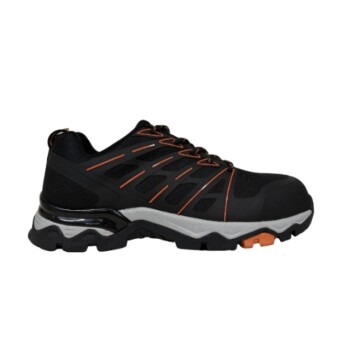
At their core, safety shoes are essential personal protective equipment (PPE) used across any industry where foot injuries pose a significant risk. While most commonly associated with construction, they are critical in manufacturing, logistics, healthcare, laboratories, and hospitality to protect against hazards like falling objects, sharp materials, chemical spills, and slippery surfaces.
The purpose of a safety shoe isn't just to be durable; it's to provide targeted protection against the specific, foreseeable risks of a given work environment, from impact and puncture to electrical shock and slips.
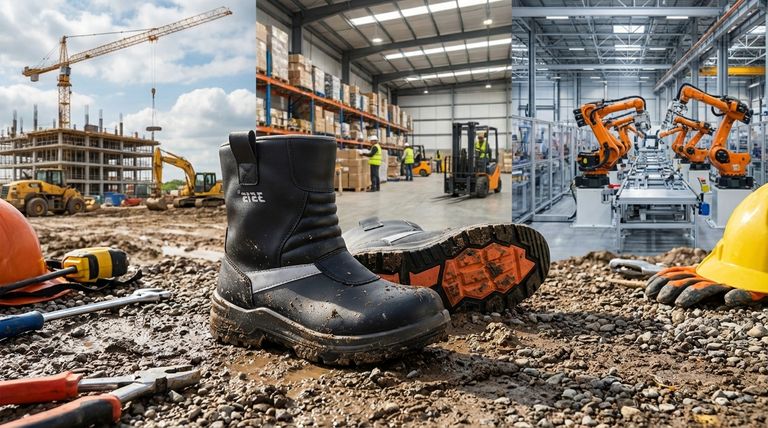
Beyond the Construction Site: Key Industries Requiring Protection
The need for foot protection extends far beyond heavy-duty industrial work. Different environments present unique hazards, each addressed by specific types of safety footwear.
Construction and Heavy Industry
This is the most recognized application. Workers need protection from falling debris, sharp materials like nails, and the immense weight of heavy machinery.
Boots rated S3 or S5 are often recommended for these environments, offering features like reinforced toe caps and puncture-resistant midsoles.
Manufacturing and Automotive
Factory floors expose workers to heavy machinery, potential chemical exposure, and specialized risks like welding sparks.
Footwear may range from a general-purpose S1 or S1P shoe to one with an Hro classification, indicating a sole resistant to high heat.
Logistics and Warehousing
The primary risks in this sector are falling objects from high shelves and slippery or uneven surfaces.
Slip-resistant soles are non-negotiable, and reinforced toe caps provide crucial protection during the loading and unloading of goods.
Healthcare and Laboratories
Professionals here face risks from falling sharp instruments, biological hazards, and chemical spills.
S1 or S2 shoes are often required, with an emphasis on fluid resistance, hygiene, and soles that prevent slips on smooth, often-cleaned floors.
Hospitality and Food Service
Commercial kitchens and service areas are high-risk zones for slips, trips, and falls due to spilled liquids, grease, and constant foot traffic.
The most critical feature for this industry is a highly effective anti-slip sole to ensure stable footing.
Deconstructing the Shoe: Core Protective Features
A safety shoe is a system of protective components. Understanding these features clarifies why specific shoes are suited to specific jobs.
The Reinforced Toe Cap
This is the most famous feature, often called a "steel-toe." It protects the toes from impact and compression forces. Modern caps can also be made from lighter composite materials.
The Slip-Resistant Outsole
This is arguably the most important safety feature in many jobs. The outsole is engineered with specific tread patterns and materials to provide superior traction on wet, oily, or otherwise slick surfaces.
The Puncture-Resistant Midsole
A flexible plate, often made of steel or composite materials like Kevlar, is placed within the sole to prevent sharp objects like nails or glass from piercing through the bottom of the shoe.
Specialized Hazard Protection
Beyond the basics, shoes can offer electrical hazard (EH) protection to insulate against live currents, waterproofing (like GORE-TEX liners), and insulation against extreme heat or cold.
Common Pitfalls and Trade-offs
Choosing safety footwear involves balancing protection with the practical needs of the job. A common mistake is selecting a shoe with more or less protection than required.
Over-Protection Can Hinder Performance
A heavy-duty S5 construction boot offers maximum protection but is cumbersome and inflexible. It would be unsuitable for a worker who needs mobility and dexterity, such as an automotive technician.
Under-Protection Creates Unseen Risks
A lightweight, slip-resistant kitchen clog offers no protection from a falling pallet in a warehouse. Using the wrong shoe provides a false sense of security and exposes the wearer to significant danger.
Style vs. True Function
Modern safety shoes come in many styles, including sneakers and slip-ons. While this increases comfort and wearability, you must always verify that the shoe's official safety rating (e.g., S1, S3) meets the requirements of your workplace, regardless of its appearance.
Making the Right Choice for Your Role
Your choice should be dictated by a clear assessment of your daily workplace hazards.
- If your primary focus is protection from heavy impact and punctures: You need a boot with a reinforced toe cap and a puncture-resistant midsole, likely rated S3 or higher, common in construction and mining.
- If your primary focus is mobility and slip prevention: You need a flexible shoe, perhaps in a sneaker style, with a certified slip-resistant sole for work in logistics, automotive, or light industrial settings.
- If your primary focus is hygiene and spill protection: You need a fluid-resistant clog or shoe, often rated S1 or S2, designed for easy cleaning and grip on smooth floors in healthcare or food service.
Ultimately, selecting the correct safety shoe is a fundamental step in taking proactive control over your personal safety at work.
Summary Table:
| Industry | Common Hazards | Recommended Safety Features |
|---|---|---|
| Construction & Heavy Industry | Falling objects, sharp materials, heavy machinery | Reinforced toe cap (steel/composite), puncture-resistant midsole (S3/S5 rating) |
| Manufacturing & Automotive | Heavy machinery, chemical exposure, welding sparks | General-purpose safety shoe (S1/S1P rating), heat-resistant sole (Hro classification) |
| Logistics & Warehousing | Falling objects, slippery/uneven surfaces | Reinforced toe cap, certified slip-resistant sole |
| Healthcare & Laboratories | Sharp instruments, biological/chemical spills, slips | Fluid-resistant material, hygiene-focused design, slip-resistant sole (S1/S2 rating) |
| Hospitality & Food Service | Spilled liquids, grease, slips and falls | Highly effective anti-slip sole |
Protect Your Workforce with the Right Safety Footwear from 3515
As a large-scale manufacturer, 3515 produces a comprehensive range of safety footwear for distributors, brand owners, and bulk clients. Our production capabilities encompass all types of safety shoes and boots, from heavy-duty S5-rated construction boots to lightweight, slip-resistant sneakers for logistics and healthcare.
We understand that the right safety shoe is a critical investment in your team's well-being and productivity. Let us help you equip your workforce with footwear that offers the perfect balance of protection, comfort, and compliance for your specific industry hazards.
Contact 3515 today to discuss your safety footwear needs and request a quote!
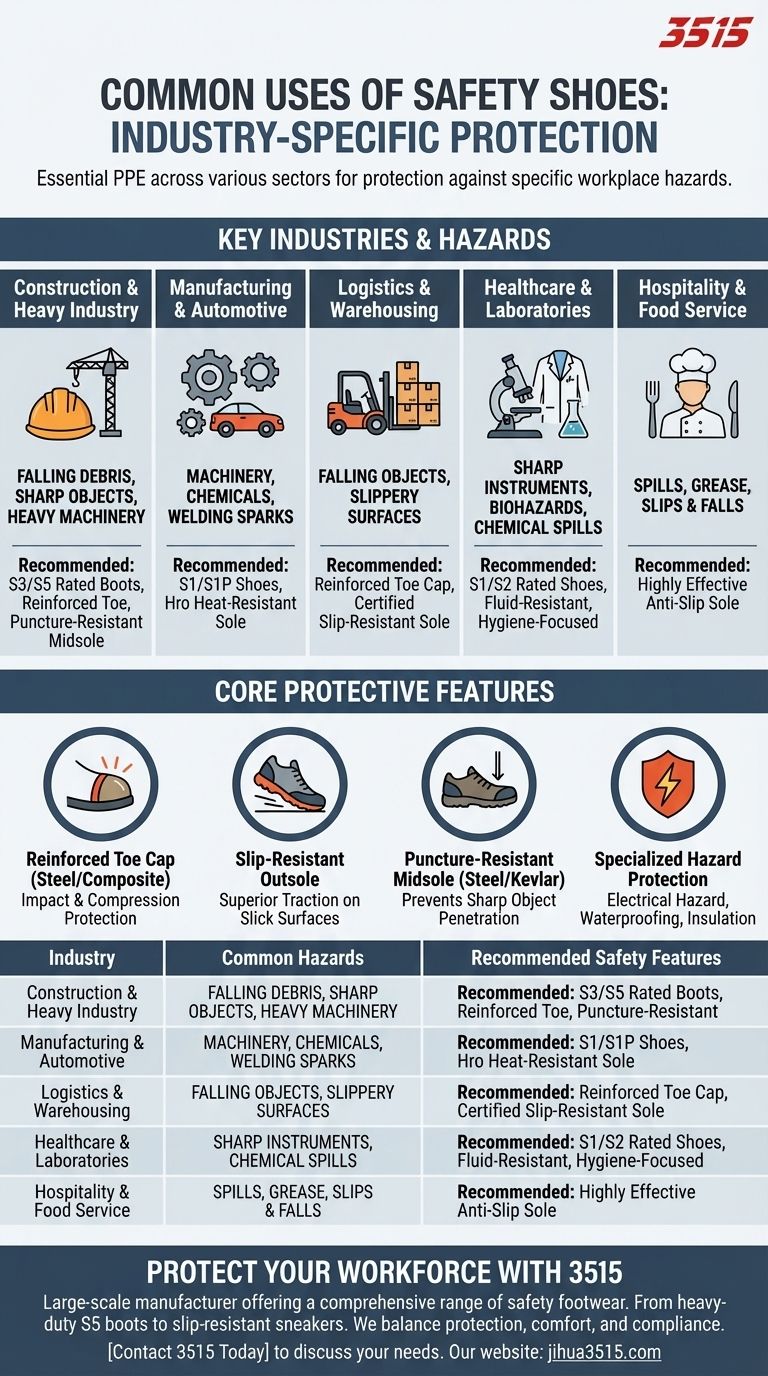
Visual Guide
Related Products
- Premium Suede Sport Safety Shoes for Wholesale & Bulk Orders
- Premium Lightweight Safety Shoes for Wholesale & Bulk Orders
- Wholesale Anti-Smash & Puncture-Proof Safety Shoes Custom Manufacturing for Brands
- Premium KPU Injection Athletic Style Safety Shoes
- Premium Safety Shoes with Rotating Buckle Safety Sneakers
People Also Ask
- What are the primary functions of professional safety shoes? Maximize Safety in Water Supply Confined Spaces
- What industries have specific OSHA footwear requirements? Ensure Compliance & Protect Your Workforce
- What role do specialized safety shoes play in preventing falls? Engineering Stability in Industrial Environments
- What are the main safety features of S1-S5 shoes? The 3 Essential Protections Explained
- What core functions do professional safety shoes serve? Enhance Construction & Industrial Safety Standards