
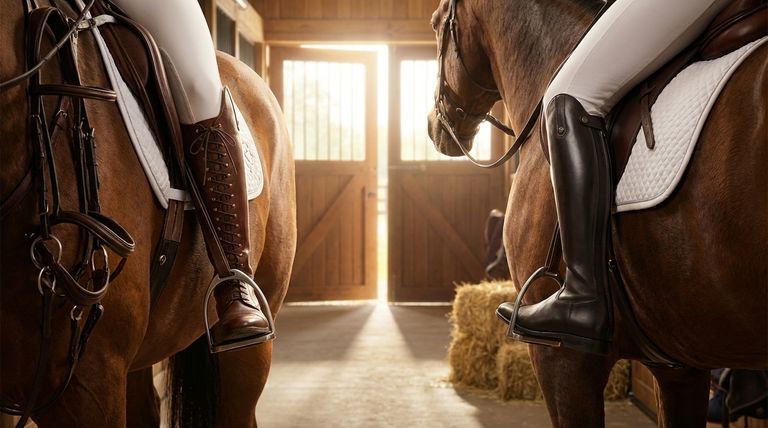
At their core, tall riding boots are specialized equipment designed for protection, stability, and a polished appearance. They are knee-high boots crafted primarily for English riding disciplines, providing significant support to the rider's lower leg while preventing chafing from the saddle and stirrup leathers. Their construction features a distinct heel, a sturdy sole, and specific design variations tailored to the demands of different equestrian sports.
The essential function of a tall riding boot is to create a stable and protected leg, allowing for clear communication with the horse. The primary distinction among styles lies in ankle flexibility: laced field boots are for jumping disciplines, while unlaced dress boots provide a rigid, formal profile for dressage.
The Fundamental Purpose of a Tall Boot
Tall boots are far more than a style choice; every design element serves a specific function for the rider. Understanding this purpose is key to appreciating their characteristics.
Rider Protection and Safety
A tall boot’s most basic job is to protect the rider's leg. The sturdy leather shaft guards the calf against uncomfortable rubbing and pinching from the saddle and stirrup leathers, which can be a significant issue on longer rides.
Reinforced toe caps provide an extra layer of safety against accidental bumps or a horse's hoof. The boot's height also offers a degree of warmth in colder weather.
Enhancing Leg Stability
Properly fitted tall boots provide crucial support to the rider's ankle and lower leg. This stability helps the rider maintain the correct leg position with minimal muscle strain.
This solid foundation ensures that cues given to the horse are clear and precise, preventing the "noise" of a wobbly, unsupported leg.
Creating a Polished Appearance
In the world of English riding, tradition and presentation are important. Tall boots, paired with breeches, create a classic, formal silhouette.
Features like a high "Spanish-cut" topline are specifically designed to create the illusion of a longer, more elegant leg in the saddle, which is highly valued in the show ring.
Anatomy of a Tall Boot: Key Styles and Features
While all tall boots share a common purpose, their characteristics vary significantly based on the intended discipline.
The Critical Distinction: Field Boots vs. Dress Boots
This is the most important style difference to understand. Field boots are defined by the lacing at the ankle. This lacing provides extra flexibility, allowing the rider's heel to drop down comfortably when in a shorter stirrup length for jumping. They are the standard for show jumping, eventing, and hunt seat disciplines.
Dress boots have no lacing and present a sleek, unbroken line. They are intentionally more rigid through the ankle to encourage a long, still leg position. This makes them the boot of choice for the discipline of dressage.
Cut and Topline
Many tall boots feature a Spanish-cut topline, where the boot is cut higher on the outside of the leg than on the inside. This is a purely aesthetic feature designed to visually elongate the rider's leg.
Fit and Closure
Modern tall boots almost universally feature a full-length zipper along the back of the calf, which makes them much easier to put on and take off than traditional pull-on boots.
Because a precise fit is critical, many boots also offer various calf widths and heights to accommodate different leg shapes.
Toe and Heel Construction
The toe of the boot can be either round or square, which is largely a matter of style and personal preference. The heel must be pronounced (typically around one inch) to prevent the rider's foot from accidentally slipping all the way through the stirrup iron.
Understanding the Trade-offs
While essential for many riders, tall boots come with specific considerations that require attention.
The Importance of a Precise Fit
A boot that is too tall will uncomfortably dig into the back of the rider's knee when their leg is bent. A boot that is too loose in the calf will slip down, and one that is too tight will be restrictive and painful.
Proper measurement of calf height and width is non-negotiable for a functional and comfortable fit.
The Break-In Period
New leather tall boots are notoriously stiff. They require a significant "break-in" period before the leather softens and drops to conform to the rider's leg and ankle. This initial stiffness can be uncomfortable but is a necessary part of the process.
Maintenance Requirements
As they are typically made of high-quality leather, tall boots require regular cleaning and conditioning. This maintenance is essential to keep the leather supple and strong, preventing cracks and preserving the boot's appearance and longevity.
Choosing the Right Boot for Your Discipline
Your choice of tall boot should be guided directly by the type of riding you do.
- If your primary focus is show jumping, eventing, or hunt seat: The necessary ankle flexibility for a secure jumping position makes the laced field boot your correct and most practical choice.
- If your primary focus is dressage: The rigidity and sleek, formal profile of a dress boot are essential for achieving the stable leg position and polished appearance required by the discipline.
- If you are a beginner or all-around rider: A comfortable, well-fitting field boot often provides the most versatility and comfort as you explore different facets of English riding.
Understanding these characteristics transforms a riding boot from simple footwear into a vital tool for your performance, safety, and comfort in the saddle.
Summary Table:
| Characteristic | Field Boots (for Jumping) | Dress Boots (for Dressage) |
|---|---|---|
| Primary Feature | Laced ankle for flexibility | Rigid, sleek, unbroken line |
| Purpose | Secure jumping position, comfort | Stable leg, formal appearance |
| Topline | Often Spanish-cut for leg elongation | Often Spanish-cut for leg elongation |
| Key Benefit | Ankle flexibility in shorter stirrups | Encourages a long, still leg position |
Ready to Equip Your Riders with Premium Footwear?
As a large-scale manufacturer, 3515 produces a comprehensive range of equestrian footwear for distributors, brand owners, and bulk clients. Our production capabilities encompass all types of riding boots, ensuring the highest standards of protection, stability, and style.
We provide:
- Expert Craftsmanship: High-quality materials and construction for durability and performance.
- Discipline-Specific Designs: From flexible field boots to rigid dress boots, tailored to your market's needs.
- Bulk Manufacturing Efficiency: Reliable supply and competitive pricing for large orders.
Let's partner to deliver the perfect boot for every rider.
Contact our team today to discuss your footwear requirements and receive a customized quote.
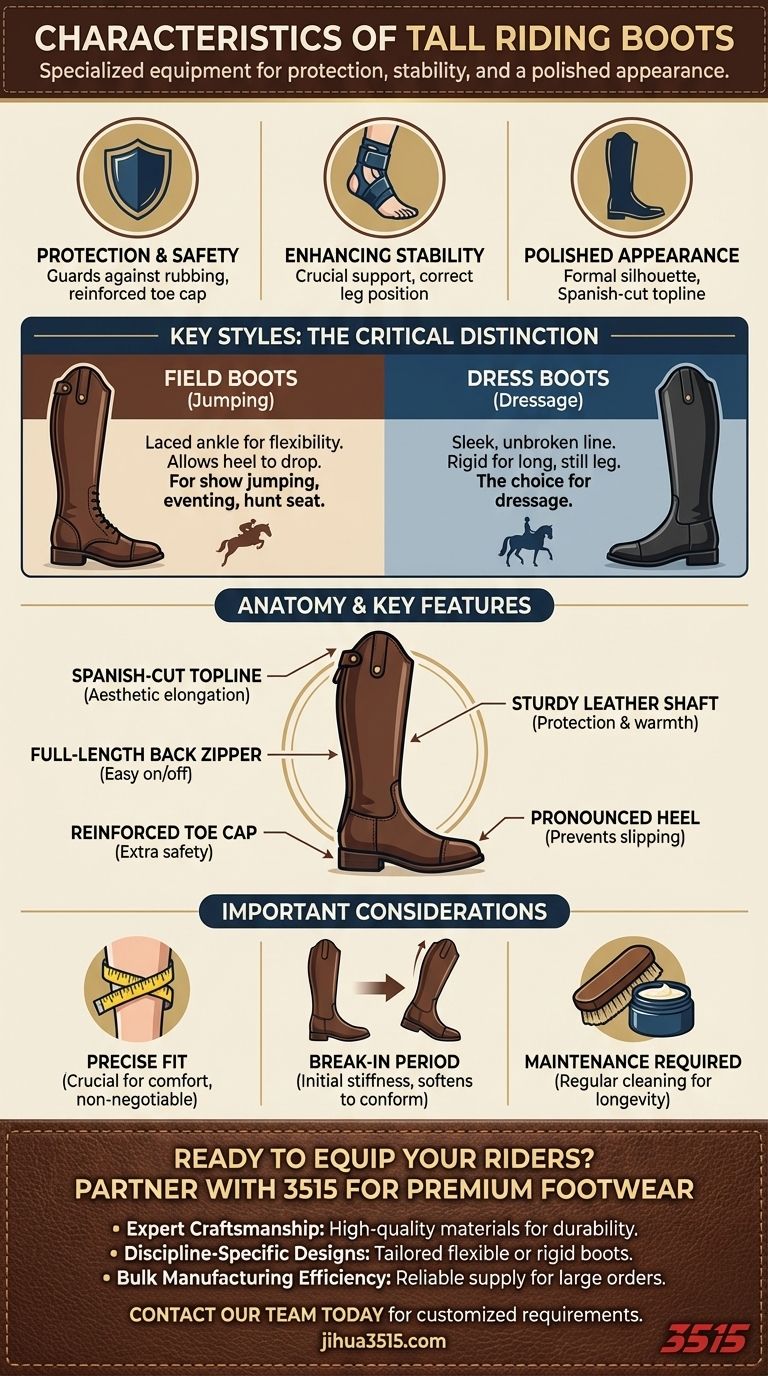
Visual Guide
Related Products
- Heavy-Duty Waterproof Nubuck Safety Boots Safety Shoes for Bulk Supply
- Premium Wholesale Tactical Style Safety Shoes Boots with Quick Lacing
- Wholesale High-Traction Camo Boots - Custom Manufacturer for Brands
- Durable Goodyear Welt Leather Work Boots for Wholesale & Private Label
- Wholesale Tactical Boots High-Traction & Reflective for Bulk & Brand Orders
People Also Ask
- What primary protective functions do professional safety boots provide in urban solid waste recovery and waste picking processes? Discover Dual-Layer Protection.
- How do safety boots reduce cutting hazards? Essential Protection for Your Workforce
- Which organizations develop safety standards for work boots? Ensure Compliance & Worker Safety
- What are the common types of safety boots and their primary uses? A Guide to Industrial Footwear
- Why is ankle and arch support important in safety footwear? Prevent Injury & Fatigue



















