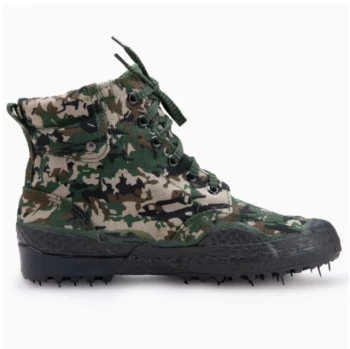
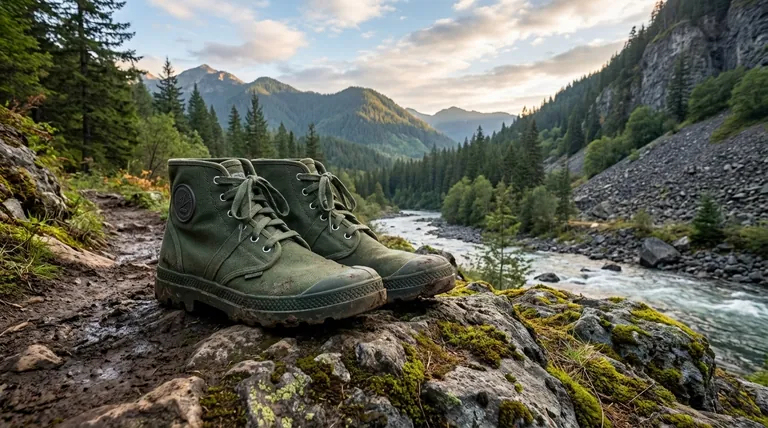
At their core, hiking boots are distinguished by three primary characteristics. They are purpose-built footwear featuring high-cut designs for ankle support, constructed from durable materials to withstand abrasion, and equipped with aggressive outsoles (deep treads) for superior traction on varied and uneven terrain. These elements work together to provide the stability, protection, and grip required for outdoor trails.
The most common mistake is searching for the "best" hiking boot. The goal is to understand the core trade-offs between support, weight, and weather resistance, allowing you to select the right boot for the specific demands of your intended environment.
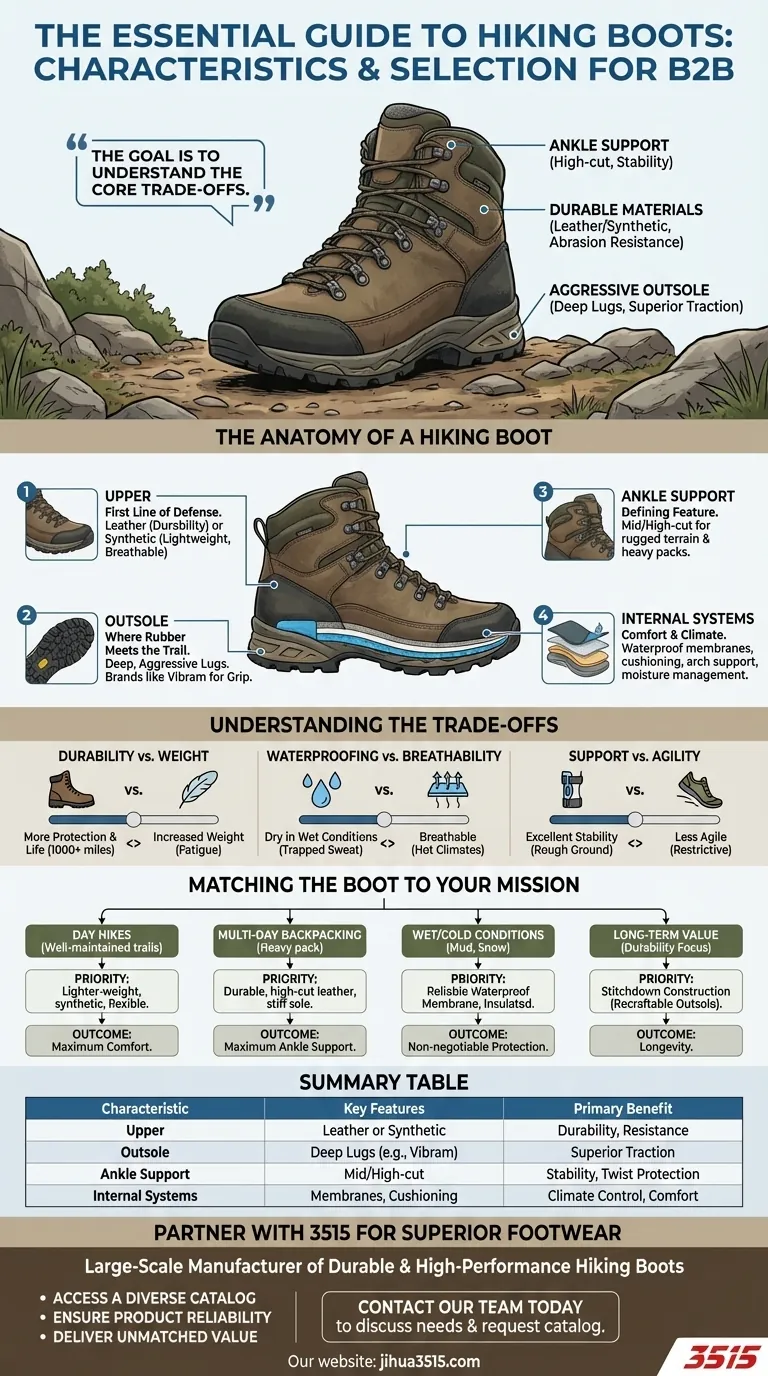
The Anatomy of a Hiking Boot
To understand a hiking boot's function, you must first understand its fundamental components. Each part is engineered to solve a specific challenge posed by trail environments.
The Upper: Your First Line of Defense
The upper is the main body of the boot that covers your foot. It is typically made from full-grain leather, synthetics, or a combination of both.
Leather uppers offer exceptional durability, water resistance, and abrasion resistance. Some designs use a single piece of leather, which enhances longevity.
Synthetic uppers (often nylon and polyester) are lighter, break in more quickly, and are generally more breathable than leather.
The Outsole: Where Rubber Meets the Trail
The outsole is the part of the boot that makes direct contact with the ground. Hiking boot outsoles are defined by deep, aggressive lugs (the tread pattern).
This design provides critical traction on unstable surfaces like dirt, mud, and rock. Brands like Vibram are renowned for producing durable, high-grip outsoles.
Ankle Support: The Defining Feature
Unlike hiking shoes, true hiking boots feature mid- or high-cut designs that cover the ankle.
This structure provides crucial support on rugged terrain, helping to prevent ankle twists and instability, especially when carrying a heavy backpack.
Internal Systems: Comfort and Climate Control
Inside the boot, several components manage comfort and foot health. Waterproof membranes are common, designed to keep feet dry from external moisture.
A boot’s internal materials are also chosen for moisture management, allowing them to perform better in wet conditions on multi-day hikes. Proper cushioning and arch support are also integrated to reduce fatigue.
Understanding the Trade-offs
Choosing a hiking boot involves balancing competing characteristics. Understanding these trade-offs is essential for making an informed decision.
Durability vs. Weight
More robust materials and construction, such as one-piece leather uppers and thick outsoles, significantly increase a boot's lifespan, often lasting over 1,000 miles.
However, this durability comes at the cost of increased weight. Heavier boots provide more protection and support for rugged terrain but can cause fatigue on less demanding trails.
Waterproofing vs. Breathability
A fully waterproof boot is excellent for wet, muddy, or snowy conditions. The membrane that blocks water, however, can also trap sweat.
In hot, dry climates, a highly waterproof boot may feel warm and lead to sweaty feet. Some hikers prefer more breathable, non-waterproof options for these environments.
Support vs. Agility
The high-cut design that provides excellent ankle support also makes the boot more rigid.
This stability is a major benefit on rough ground but can feel restrictive and less agile compared to a lower-cut hiking shoe or trail runner.
Matching the Boot to Your Mission
The ideal boot is the one whose characteristics align perfectly with your primary hiking activity.
- If your primary focus is day hikes on well-maintained trails: Prioritize a lighter-weight synthetic boot with good cushioning and flexibility for maximum comfort.
- If your primary focus is multi-day backpacking with a heavy pack: You need a durable, high-cut leather boot with maximum ankle support and a stiff sole to handle the load.
- If your primary focus is hiking in wet, muddy, or snowy conditions: A boot with a reliable waterproof membrane is non-negotiable; consider insulated models for winter use.
- If your primary focus is long-term value and durability: Look for boots with stitchdown construction, which allows the outsole to be replaced and recrafted.
Ultimately, the right hiking boot becomes an extension of your body, providing the confidence and protection you need to move safely across any terrain.
Summary Table:
| Characteristic | Key Features | Primary Benefit |
|---|---|---|
| Upper | Full-grain leather or synthetic materials | Durability, abrasion resistance, and water resistance |
| Outsole | Deep, aggressive lugs (e.g., Vibram) | Superior traction on uneven and unstable terrain |
| Ankle Support | Mid- or high-cut design | Stability and protection against twists, especially with a heavy pack |
| Internal Systems | Waterproof membranes, cushioning, arch support | Climate control, comfort, and moisture management on long hikes |
Ready to Equip Your Customers with Superior Hiking Footwear?
As a large-scale manufacturer, 3515 produces a comprehensive range of durable and high-performance hiking boots for distributors, brand owners, and bulk clients. Our production capabilities encompass all types of outdoor footwear, from lightweight day-hikers to heavy-duty backpacking boots, ensuring you get the right product for your market.
Partner with us to:
- Access a diverse catalog built on the core characteristics of support, durability, and traction.
- Ensure product reliability with robust materials and construction designed for the trail.
- Deliver unmatched value to your customers with footwear that inspires confidence on any terrain.
Contact our team today to discuss your manufacturing needs and request a catalog.
Visual Guide
Related Products
- Wholesale High-Traction Camo Boots - Custom Manufacturer for Brands
- Durable Rubber Sole Outdoor Shoes Wholesale & Custom Manufacturing
- Durable Spiked Camouflage Boots Wholesale & Factory Production
- Wholesale Lightweight Tactical Boots Custom Manufacturer for Desert & Combat Use
- Wholesale Waterproof Tactical Boots Custom Suede & High-Traction Soles
People Also Ask
- What are the key features of the new line of camo boots? Built for Extreme Cold & Rugged Terrain
- Are camo boots necessary for hunting success? Prioritize Performance Over Pattern
- What is the technical logic behind using closed-eye testing for tactical boots? Unlocking Peak Footwear Stability
- How does the Rank Score Test identify the primary causes of premature failure in tactical and work boots? Key Insights
- What shoes to wear for a security job? Durable, Protective Footwear for Long Shifts