
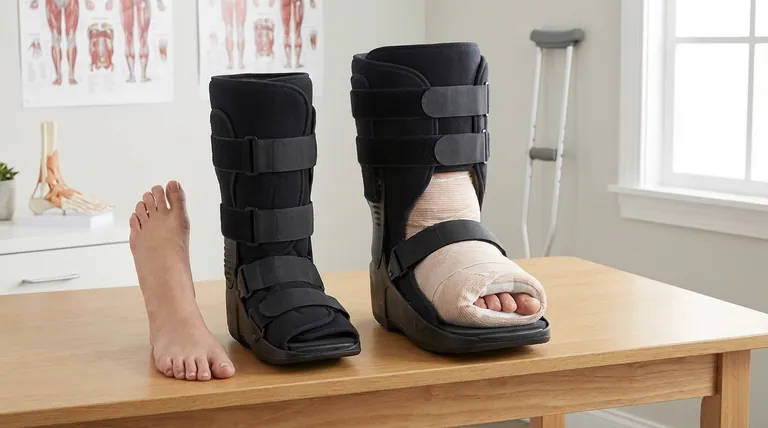
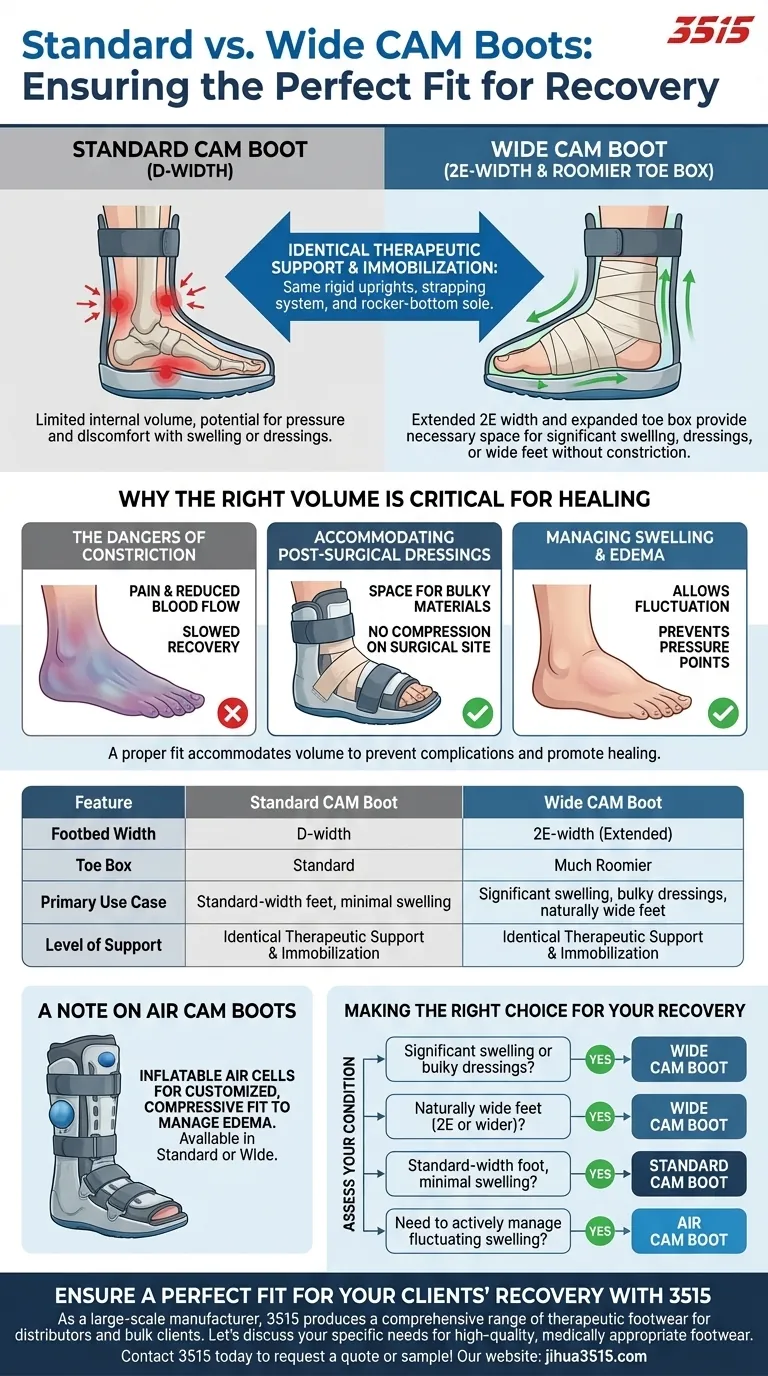
The fundamental difference is that wide CAM boots are specifically built with a 2E extended width and a much roomier toe box. This design provides the necessary space for significant swelling, bulky post-surgical dressings, or naturally wide feet, while delivering the same therapeutic support and immobilization as a standard boot.
The choice between a standard and a wide CAM boot is not about the level of support—it's about ensuring a proper fit to accommodate the volume of your foot and lower leg, which is critical for preventing complications and promoting healing.
Why the Right Boot Volume is Critical for Healing
A CAM (Controlled Ankle Motion) boot works by immobilizing the foot and ankle to allow bones and soft tissues to heal. However, if the boot is too tight, it can actively hinder this process.
The Dangers of Constriction
A boot that is too narrow for a swollen or bandaged foot can create excessive pressure. This constriction can cause pain, reduce blood flow, and potentially slow down your recovery.
Accommodating Post-Surgical Dressings
After surgery, your foot will be wrapped in bulky bandages or a splint. A standard boot often lacks the internal volume to accommodate this extra material without compressing the surgical site.
Managing Swelling and Edema
Injuries and surgeries are almost always accompanied by swelling (edema). A wide CAM boot provides the necessary space for this swelling to fluctuate without creating dangerous pressure points.
Comparing Boot Features
While the core therapeutic function is the same, the dimensional differences are designed for very different clinical needs.
Footbed Width and Toe Box
This is the primary distinction. Standard boots are typically built for a D-width foot. Wide CAM boots are designed for a 2E width, offering significantly more space across the ball of the foot and in the toe area.
Identical Structural Support
It is crucial to understand that a wide boot does not compromise on safety. It features the same rigid uprights, strapping system, and rocker-bottom sole that are essential for immobilizing the ankle and promoting a natural walking motion.
A Note on Air CAM Boots
For injuries with significant or fluctuating swelling, an air CAM boot is another option. These boots, available in standard or wide sizes, include inflatable air cells that allow for a customized, compressive fit to help manage edema directly.
Understanding the Trade-offs
Choosing the wrong size in either direction can create problems. The goal is a secure, comfortable fit that properly immobilizes the joint.
When a Wide Boot is Unnecessary
If you have a standard-width foot and an injury with minimal swelling, a wide boot may feel too loose. This could allow for small, unwanted movements inside the boot, potentially irritating the injury.
The Risk of an Improper Fit
A secure fit is paramount. A boot that is too tight restricts circulation, while a boot that is too loose fails to provide adequate immobilization. Always follow the guidance of your healthcare provider.
Making the Right Choice for Your Recovery
Base your decision on your specific physical condition and the nature of your injury.
- If your primary issue is significant swelling or bulky dressings: A wide CAM boot is necessary to provide space and prevent harmful constriction.
- If you have naturally wide feet (typically size 2E or wider): Choose a wide CAM boot to match your foot’s anatomy for a proper fit.
- If you have a standard-width foot with a straightforward injury and minimal swelling: A standard CAM boot will offer the most secure and effective immobilization.
- If your main goal is to actively manage and reduce fluctuating swelling: An air CAM boot provides adjustable compression that can be tailored to your needs throughout the day.
Selecting the correct boot width is a simple but crucial step toward ensuring your recovery is as comfortable and efficient as possible.
Summary Table:
| Feature | Standard CAM Boot | Wide CAM Boot |
|---|---|---|
| Footbed Width | D-width | 2E-width (Extended) |
| Toe Box | Standard | Much Roomier |
| Primary Use Case | Standard-width feet, minimal swelling | Significant swelling, bulky dressings, naturally wide feet |
| Level of Support | Identical Therapeutic Support & Immobilization | Identical Therapeutic Support & Immobilization |
Ensure a Perfect Fit for Your Clients' Recovery
As a large-scale manufacturer, 3515 produces a comprehensive range of therapeutic footwear, including both standard and wide CAM boots, for distributors, brand owners, and bulk clients. Our production capabilities ensure you receive the precise boot specifications—like 2E widths and roomier toe boxes—required for effective patient recovery, without compromising on the rigid support and immobilization features.
Let's discuss your specific needs and how we can support your inventory with high-quality, medically appropriate footwear.
Contact 3515 today to request a quote or sample!
Visual Guide
Related Products
- Wholesale High-Traction Camo Boots - Custom Manufacturer for Brands
- Wholesale Durable Camo Canvas Shoes with High-Traction Rubber Soles
- Wholesale Durable Camouflage Canvas Shoes with High-Traction Cleated Rubber Sole
- Wholesale Durable Mid-Cut Tactical Boots for Custom & Private Label Brands
- High-Traction Suede Tactical Boots Wholesale & Custom Manufacturing
People Also Ask
- What are the key features of the new line of camo boots? Built for Extreme Cold & Rugged Terrain
- Are camo boots necessary for hunting success? Prioritize Performance Over Pattern
- How does the Rank Score Test identify the primary causes of premature failure in tactical and work boots? Key Insights
- What is the technical logic behind using closed-eye testing for tactical boots? Unlocking Peak Footwear Stability
- What shoes to wear for a security job? Durable, Protective Footwear for Long Shifts

















