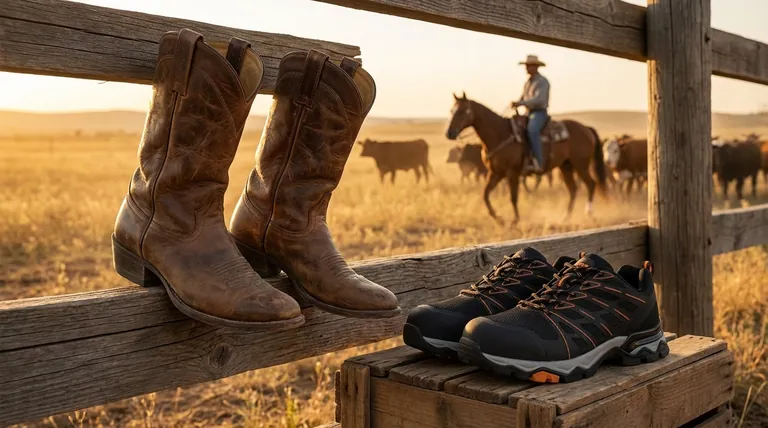
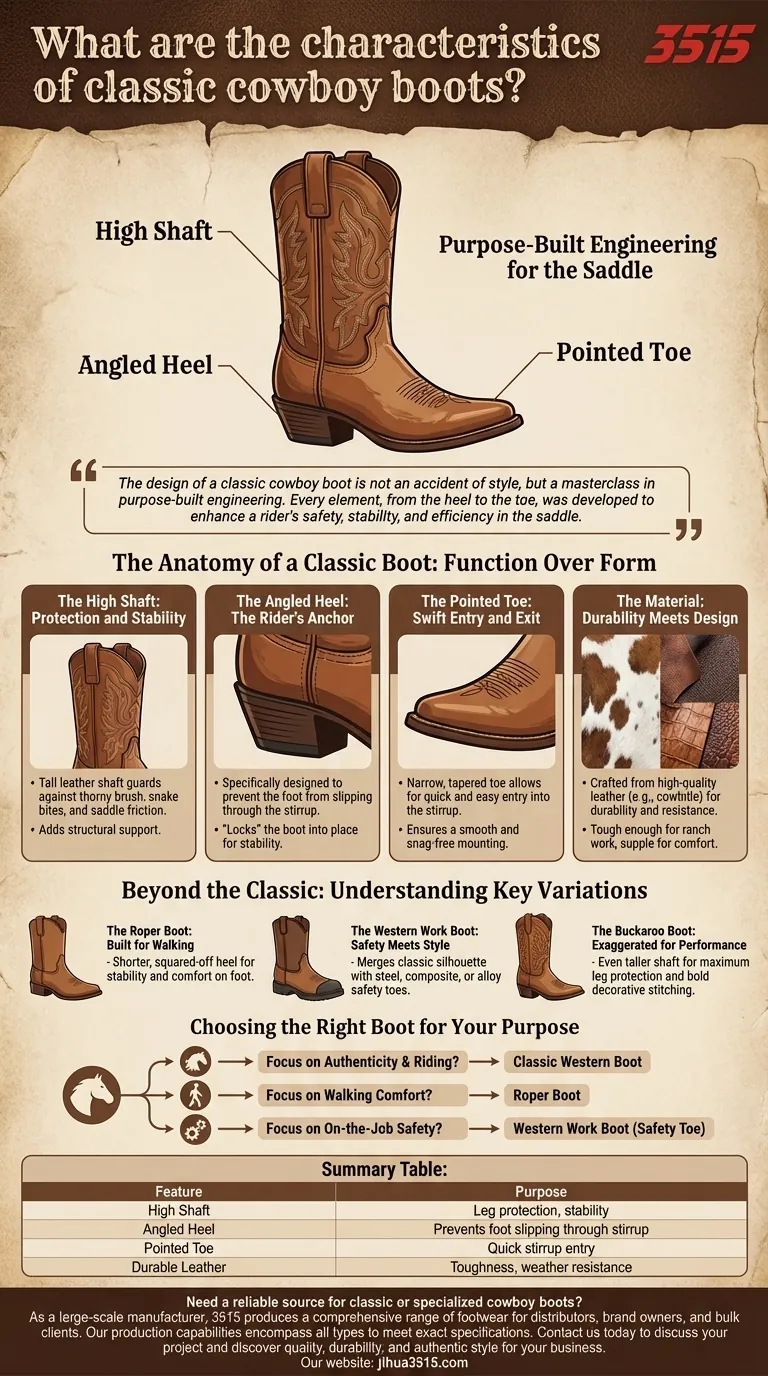
At their core, classic cowboy boots are defined by three distinct features. These are a high shaft that typically reaches mid-calf, a distinctively angled heel (often called a "riding" or "Cuban" heel), and a pointed or slightly tapered toe. This iconic silhouette is a direct result of its original purpose: a functional tool engineered for the specific demands of horseback riding and ranch work.
The design of a classic cowboy boot is not an accident of style, but a masterclass in purpose-built engineering. Every element, from the heel to the toe, was developed to enhance a rider's safety, stability, and efficiency in the saddle.
The Anatomy of a Classic Boot: Function Over Form
To truly understand the classic cowboy boot, you must look at how each component serves a specific, practical purpose. The boot's enduring style is a byproduct of its uncompromising utility.
The High Shaft: Protection and Stability
The tall leather shaft is the boot's first line of defense. It was designed to guard the rider's leg against thorny brush, snake bites, and the constant friction of the saddle and stirrup leathers.
This height also adds structural support, helping to prevent the boot from being pulled off in mud or during a fall.
The Angled Heel: The Rider's Anchor
The tall, angled heel is arguably the boot's most critical safety feature for a rider. It is specifically designed to prevent the foot from slipping through the stirrup, which could lead to a rider being dangerously dragged.
This design effectively "locks" the boot into place, providing a secure and stable base for maneuvering on horseback.
The Pointed Toe: Swift Entry and Exit
The classic boot features a narrow, tapered toe. This was not originally a fashion choice, but a practical one that allows the rider to quickly and easily guide their foot into the stirrup.
This streamlined shape ensures a smooth and snag-free entry, which is crucial for mounting a horse efficiently and safely.
The Material: Durability Meets Design
Classic boots are crafted from high-quality leather, most commonly cowhide, for its proven durability and resistance to the elements. The leather is tough enough to withstand the rigors of ranch work while remaining supple enough for comfort.
Many boots also feature exotic leathers for their unique textures and visual appeal, but the underlying principle of resilience remains the same.
Beyond the Classic: Understanding Key Variations
While the classic "Western" boot is the archetype, its DNA has been adapted for different needs. Recognizing these variations helps clarify what makes the classic model unique.
The Roper Boot: Built for Walking
The roper boot was developed for rodeo events that required participants to dismount and run. It features a much shorter, squared-off heel that provides superior stability and comfort for walking.
The Western Work Boot: Safety Meets Style
Modern demands have led to Western work boots that merge the classic silhouette with industrial safety features. These often include steel, composite, or alloy toes to protect the wearer in hazardous environments.
The Buckaroo Boot: Exaggerated for Performance
The buckaroo boot is a stylistic evolution with an even taller shaft, often reaching the knee. This exaggerated height offers maximum leg protection for rodeo riders and serves as a canvas for bold, decorative stitching.
Choosing the Right Boot for Your Purpose
Your ideal boot depends entirely on your intended use. By focusing on your primary goal, you can easily select the right design.
- If your primary focus is authenticity and riding: Seek out the classic Western boot with its tall shaft, distinctly angled riding heel, and a tapered toe.
- If your primary focus is walking comfort and casual wear: The lower, squared-off heel of a roper boot is the superior choice for all-day wear on your feet.
- If your primary focus is on-the-job safety: Look for a Western work boot that explicitly states it has a certified safety toe for necessary protection.
Understanding the purpose behind each feature is the key to appreciating the timeless design and function of the classic cowboy boot.
Summary Table:
| Feature | Purpose |
|---|---|
| High Shaft | Leg protection from brush, saddle friction, and stability. |
| Angled Heel | Prevents foot from slipping through stirrups for rider safety. |
| Pointed Toe | Allows for quick and easy entry into stirrups. |
| Durable Leather | Provides toughness and resistance to the elements, primarily cowhide. |
Need a reliable source for classic or specialized cowboy boots?
As a large-scale manufacturer, 3515 produces a comprehensive range of footwear for distributors, brand owners, and bulk clients. Whether you require authentic riding boots, comfortable roper styles, or safety-toe work boots, our production capabilities encompass all types of shoes and boots to meet your exact specifications.
Contact us today to discuss your project and discover how we can deliver quality, durability, and authentic style for your business.
Visual Guide
Related Products
- Wholesale High-Traction Camo Boots - Custom Manufacturer for Brands
- Durable Spiked Camouflage Boots Wholesale & Factory Production
- High-Traction Suede Tactical Boots Wholesale & Custom Manufacturing
- Wholesale Lightweight Tactical Boots Custom Manufacturer for Desert & Combat Use
- Durable Leather Tactical Boots Wholesale & Custom Manufacturing for Brands
People Also Ask
- What are the key features of the new line of camo boots? Built for Extreme Cold & Rugged Terrain
- Are camo boots necessary for hunting success? Prioritize Performance Over Pattern
- How does the Rank Score Test identify the primary causes of premature failure in tactical and work boots? Key Insights
- What is the technical logic behind using closed-eye testing for tactical boots? Unlocking Peak Footwear Stability
- What shoes to wear for a security job? Durable, Protective Footwear for Long Shifts