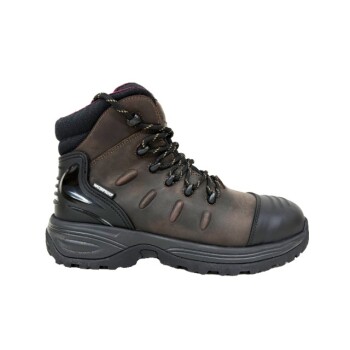
At their core, police boots are engineered systems designed to deliver four primary benefits: uncompromising protection, long-term comfort, enhanced performance, and operational versatility. They are built to withstand harsh conditions while providing the specific support and safety features required for high-stakes professional use.
A police boot is more than just footwear; it is a critical piece of equipment designed to reduce the physical toll of demanding work, mitigate environmental hazards, and enhance an officer's ability to perform safely and effectively over long, unpredictable shifts.
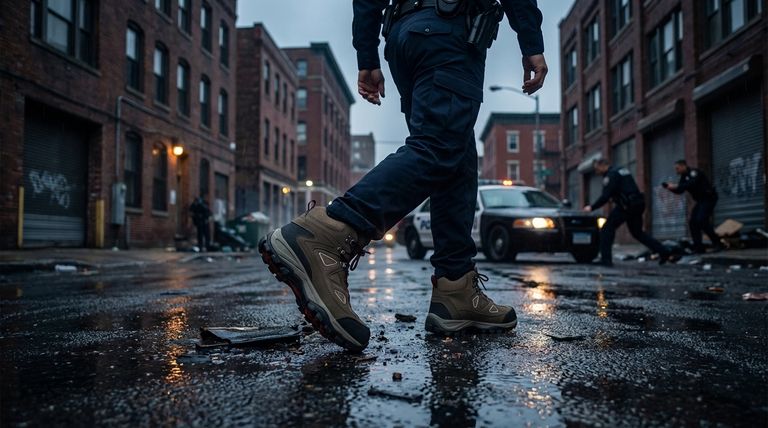
Foundational Pillar 1: Uncompromising Protection
The most critical function of a police boot is to serve as a barrier between the wearer and a hazardous environment. This protection is multi-faceted, covering everything from direct impacts to environmental risks.
Against Impact and Compression
Many police boots incorporate steel or composite toe caps. These reinforced areas are engineered to shield the foot from falling objects or compression, which is vital in dynamic and unpredictable situations.
Against Environmental Hazards
Slip-resistant soles are a standard feature, providing crucial traction on wet, oily, or slick surfaces. Many models also feature waterproof materials to keep feet dry and offer Electrical Hazard (EH) ratings for protection in high-voltage environments.
Against Physical Strain
Proper support is a form of protection against injury. Police boots provide enhanced ankle stability and support, often with higher shafts (e.g., 8-inch designs) that help prevent sprains and twists during intense physical activity.
Foundational Pillar 2: Engineered for All-Day Endurance
An officer can spend over twelve hours on their feet. The design of their boots directly impacts their stamina, focus, and overall health.
Mitigating Fatigue
Features like shock absorption, enhanced arch support, and cushioned insoles are not luxuries—they are essential for reducing the cumulative impact on feet, knees, and back during a long shift.
Reducing Physical Burden
Modern police boots increasingly use lightweight synthetic materials and slimmer designs. A lighter boot, often under 25 ounces, significantly reduces the energy expended with every step, combating fatigue over thousands of steps a day.
Managing Internal Climate
An uncomfortable foot is a distraction. Breathable materials and quick-dry linings are included to manage moisture and heat, preventing blisters and maintaining comfort in all weather conditions, from heat to rain and snow.
Understanding the Trade-offs
Choosing the right boot involves balancing competing design principles. Understanding these trade-offs is key to selecting the appropriate tool for the job.
Protection vs. Flexibility
An 8-inch boot with a steel toe offers maximum protection but may be heavier and less flexible than a 6-inch, mid-height boot with a composite toe. The former is ideal for high-risk scenarios, while the latter offers more agility for general patrol.
Waterproofing vs. Breathability
A fully waterproof boot is excellent for wet conditions but can trap more heat and sweat in a hot, dry climate. The user must choose based on their most common operational environment.
Durability vs. Weight
The most rugged, heavy-duty materials offer incredible longevity but can add to the boot's overall weight. This creates a constant design tension between building a boot that lasts forever and one that minimizes fatigue.
How to Choose the Right Boot for Your Mission
Your ideal boot depends entirely on your primary operational needs. Focus on the features that directly support your most common tasks.
- If your primary focus is patrol duty in varied environments: Prioritize a balanced boot with all-around support, lightweight construction, and reliable all-weather protection.
- If your primary focus is tactical operations or high-risk entries: Emphasize maximum protection with features like reinforced safety toes, puncture-resistant soles, and high shafts for ankle stability.
- If your primary focus is long shifts with extensive walking: Focus on superior cushioning, advanced arch support, and the lightest materials available to minimize fatigue.
Selecting the right boot is a direct investment in your safety, endurance, and operational effectiveness.
Summary Table:
| Benefit Category | Key Features |
|---|---|
| Uncompromising Protection | Steel/Composite Toe, Slip-Resistant Soles, Waterproofing, Ankle Support |
| Engineered for Endurance | Shock Absorption, Lightweight Materials, Breathable Linings, Arch Support |
| Operational Versatility | Balanced Design for Patrol, Maximum Protection for Tactical Ops, Lightweight for Long Shifts |
Equip your team with professional-grade footwear built for the mission.
As a large-scale manufacturer, 3515 produces a comprehensive range of duty boots for distributors, brand owners, and bulk clients. Our production capabilities encompass all types of tactical, patrol, and specialized boots, engineered to deliver the protection, comfort, and durability your customers demand.
Contact us today to discuss your specific requirements and discover how we can be your reliable manufacturing partner.
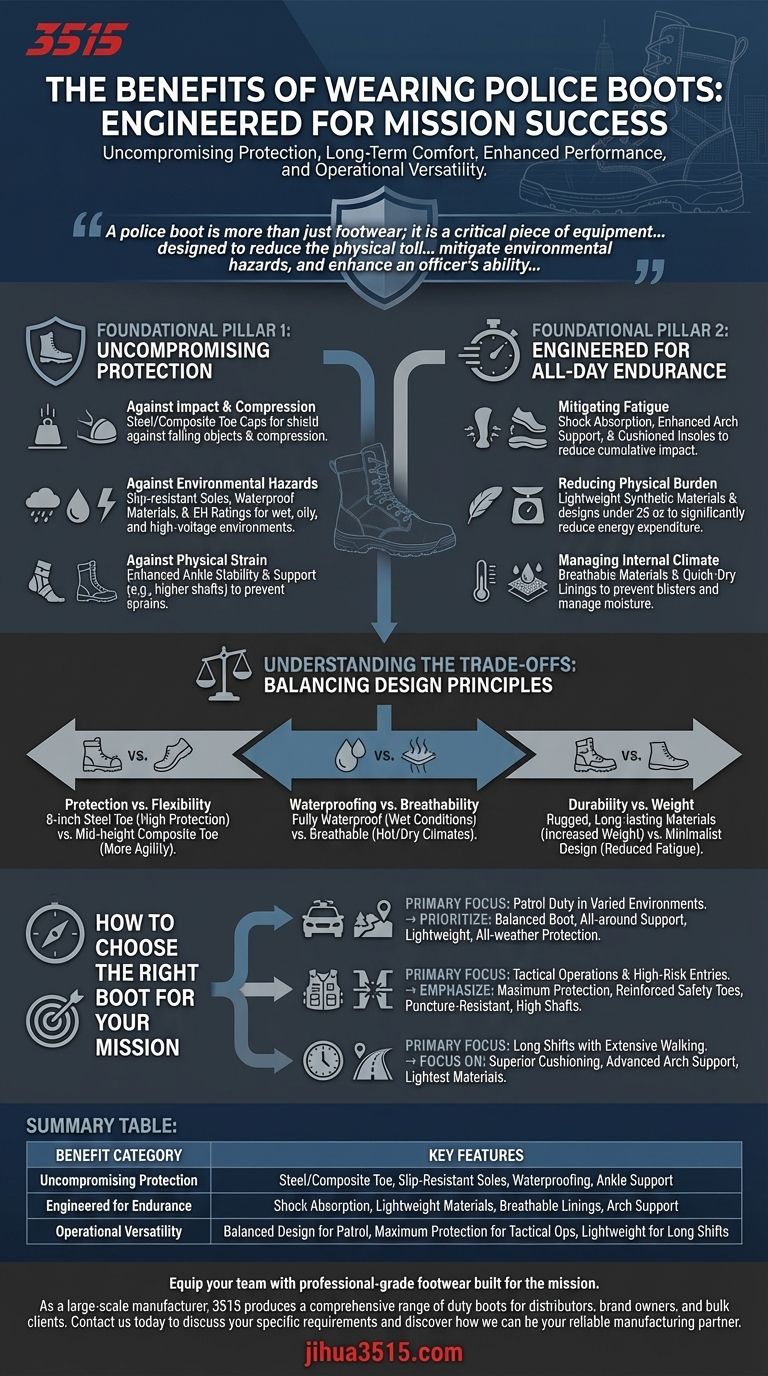
Visual Guide
Related Products
- Durable High-Ankle Tactical Boots for Wholesale & Custom Manufacturing
- Wholesale Durable Mid-Cut Tactical Boots for Custom & Private Label Brands
- Durable Mid-Cut Tactical Boots for Wholesale & Private Label
- High-Traction Suede Tactical Boots Wholesale & Custom Manufacturing
- Durable Leather Tactical Boots Wholesale & Custom Manufacturing for Brands
People Also Ask
- How do tactical boots protect against injuries? Discover the Integrated Safety System
- What are the main construction similarities between tactical boots and tactical sneakers? Built for Performance & Durability
- How does additive manufacturing equipment reduce environmental risks? Sustainable Tactics for Modern Footwear Production
- How is the compatibility of polymer materials demonstrated in smart footwear? Enhancing Tactical & Training Performance
- What are the different types of tactical boots available? Find the Right Boot for Your Mission