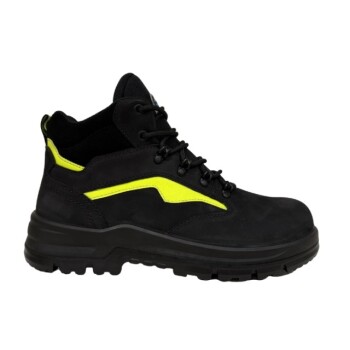
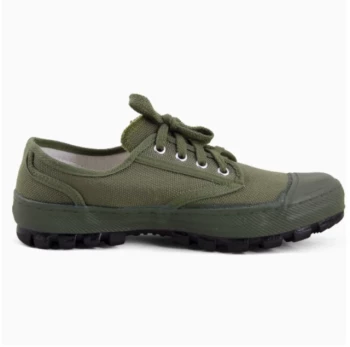
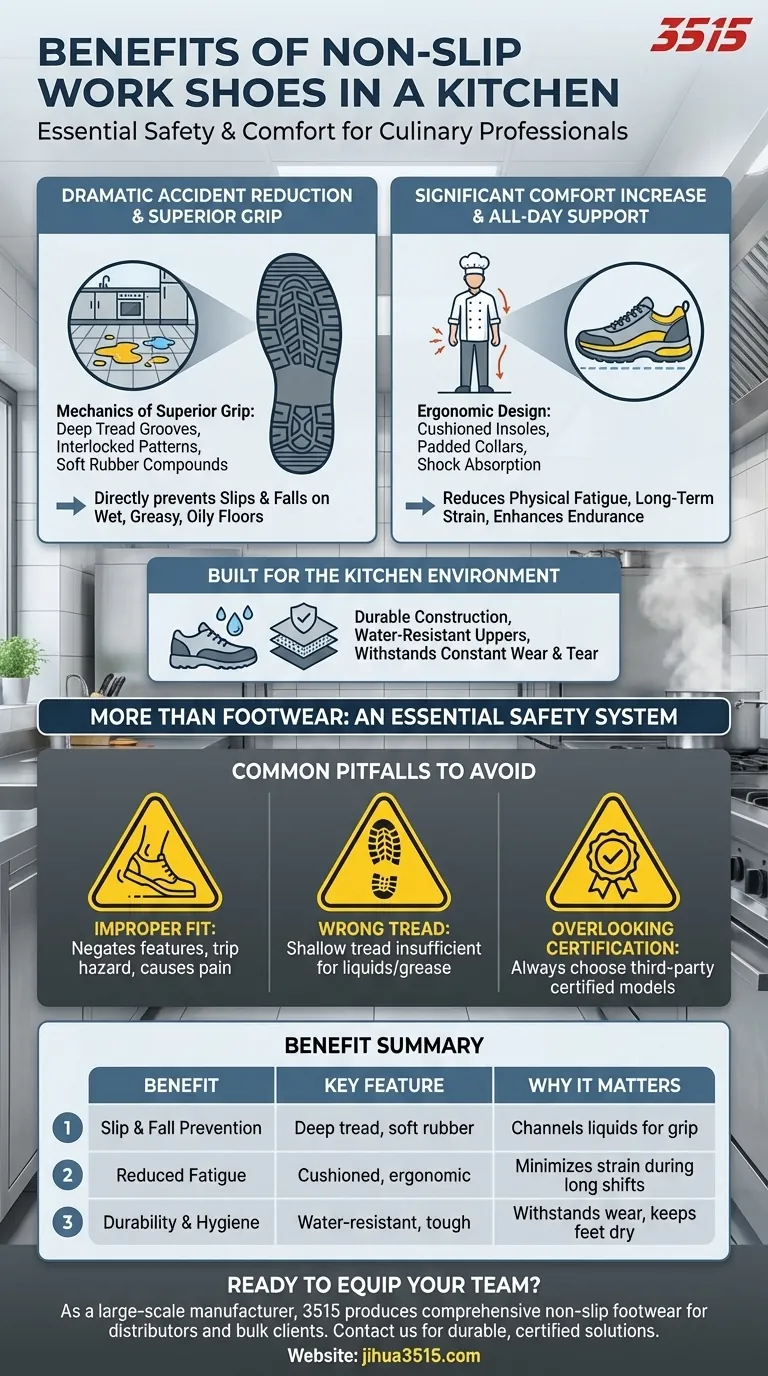
The primary benefits of wearing non-slip work shoes in a kitchen are a dramatic reduction in workplace accidents and a significant increase in comfort and support. These specialized shoes are engineered with unique materials and tread patterns to provide superior traction on wet, greasy, or oily floors, directly preventing the slips and falls that are common in fast-paced culinary environments. They are a foundational piece of personal protective equipment for any kitchen professional.
Non-slip shoes are more than just footwear; they are an essential safety system. Their true value lies not only in preventing falls but also in reducing the physical fatigue and long-term strain that comes from spending hours on your feet, ultimately enhancing both safety and professional endurance.
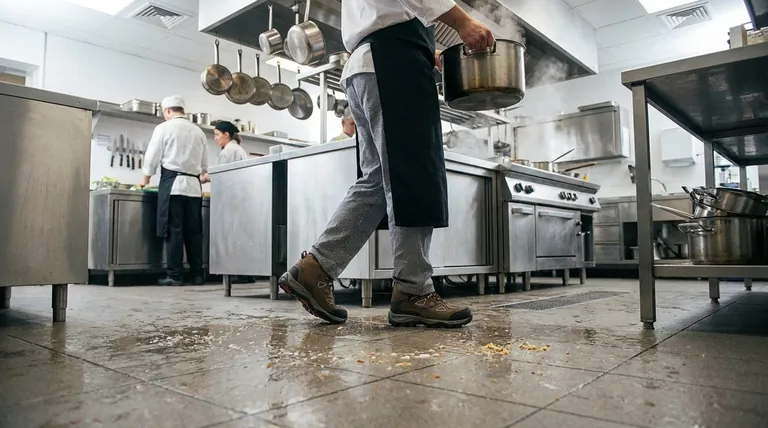
How Non-Slip Shoes Create a Safer Foundation
The effectiveness of a non-slip shoe comes from a combination of material science, intelligent design, and ergonomic support. Understanding these elements clarifies why they are a non-negotiable tool for kitchen staff.
The Mechanics of Superior Grip
The sole of a non-slip shoe is its most critical component. It is specifically designed to increase friction on slippery surfaces.
This is achieved through deep tread grooves and specialized, often interlocked, tread patterns. These channels are engineered to direct liquids like water, grease, and oil away from the bottom of the shoe, allowing the rubber to make solid contact with the floor.
High-quality, softer rubber compounds are used for the outsole, which further enhances its ability to grip smooth, hazardous surfaces like tile or concrete.
Beyond Grip: The Importance of All-Day Support
A kitchen shift involves constant standing, walking, and pivoting. Non-slip shoes are built to manage this physical demand.
Most models include cushioned insoles and padded collars that absorb impact and reduce pressure on the feet, ankles, and lower back. This focus on comfort is crucial for minimizing fatigue over a long day.
By reducing physical strain, proper footwear helps kitchen staff maintain focus, which can indirectly lead to fewer mistakes and a safer working environment for everyone.
Built for the Kitchen Environment
Kitchens are tough on equipment, and footwear is no exception. Non-slip work shoes are constructed from durable materials designed to withstand constant wear and tear.
Many models also offer water-resistant uppers, which help keep feet dry from spills and splashes, improving both comfort and hygiene.
Common Pitfalls to Avoid When Choosing
Simply labeling a shoe "non-slip" is not enough. To get the real benefits, you must select the right shoe for your specific needs and avoid common mistakes that can undermine its effectiveness.
An Improper Fit Negates Every Feature
The most common error is choosing the wrong size. A shoe that is too loose can become a trip hazard, while a shoe that is too tight causes pain and blisters, distracting you from your work. Always try on shoes before purchasing to ensure a snug but comfortable fit.
Not All Treads Are Created Equal
Different tread patterns excel in different conditions. For a kitchen, where liquid and grease are constant, a sole with an interlocked, channel-like pattern is superior for displacing fluids. A simple, shallow tread may not provide adequate protection.
Overlooking Certified Safety
For peace of mind, look for shoes that have been tested and certified by a third-party organization. This confirms that the shoe has met objective standards for slip resistance. You can also ask your employer for recommendations, as they may have a list of approved, tested models.
Making the Right Choice for Your Goal
Your specific role and priorities in the kitchen should guide your selection.
- If your primary focus is maximum safety on wet and greasy floors: Prioritize a shoe with deep, aggressive tread patterns made from a high-quality, soft rubber compound.
- If your primary focus is all-day comfort and reducing fatigue: Look for models with superior cushioned insoles, ergonomic design, and excellent arch support.
- If your primary focus is durability and long-term value: Choose shoes made from robust, water-resistant materials from a reputable brand known for quality construction.
Investing in a proper pair of non-slip shoes is a direct investment in your personal safety and professional well-being.
Summary Table:
| Benefit | Key Feature | Why It Matters |
|---|---|---|
| Slip & Fall Prevention | Deep tread grooves & soft rubber soles | Channels liquids away for superior grip on wet, greasy floors |
| Reduced Fatigue | Cushioned insoles & ergonomic support | Minimizes strain on feet, ankles, and back during long shifts |
| Durability & Hygiene | Water-resistant uppers & tough materials | Withstands kitchen wear and tear while keeping feet dry |
Ready to equip your team with superior safety and comfort?
As a large-scale manufacturer, 3515 produces a comprehensive range of non-slip footwear for distributors, brand owners, and bulk clients. Our production capabilities encompass all types of safety shoes and boots, engineered with the advanced grip and support your kitchen staff needs.
We provide durable, certified non-slip solutions that reduce workplace accidents and enhance productivity. Contact us today to discuss your bulk footwear requirements and receive a customized quote.
Visual Guide
Related Products
- Wholesale Premium Waterproof Nubuck Safety Shoes Boots
- Wholesale Durable 6-Inch Work Boots | Custom & Private Label Manufacturer
- Durable Leather Moc Toe Work Boots for Wholesale & Custom Manufacturing
- Durable Goodyear Welt Leather Work Boots for Wholesale & Private Label
- Premium Suede Sport Safety Shoes for Wholesale & Bulk Orders
People Also Ask
- Why are waterproof safety boots recommended for certain work environments? Essential Protection for Wet & Hazardous Jobs
- What materials are commonly used in waterproof boots? The Complete Guide to Durable, Breathable Protection
- What are the drawbacks of waterproof boots? The Breathability vs. Protection Trade-Off
- What is the advantage of one-piece construction in waterproof boots? Unbeatable Seamless Protection
- What is the difference between waterproof, water-resistant, and water-repellent boots? Choose the Right Protection for Your Feet