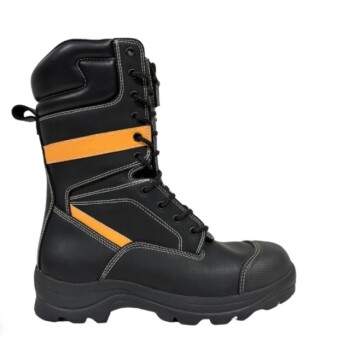
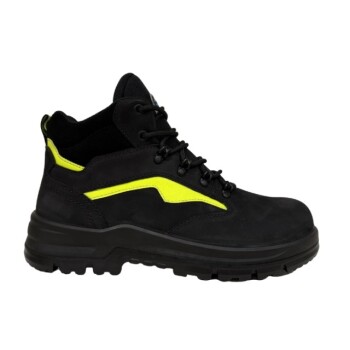
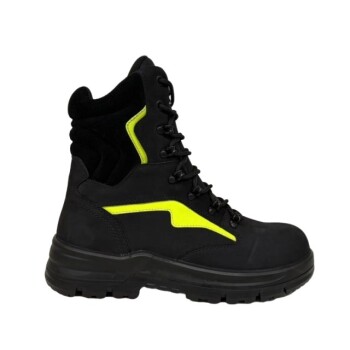
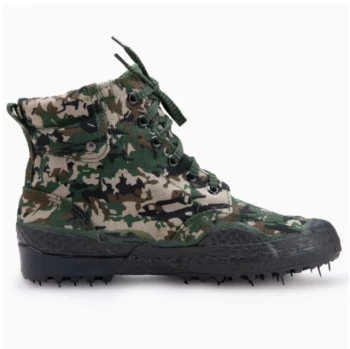
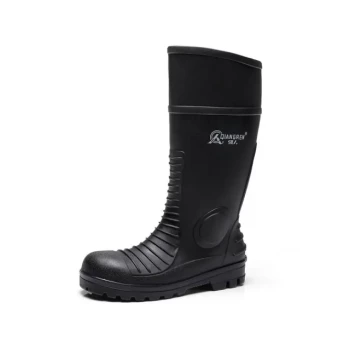
Beyond just being a feature, waterproof construction is the primary benefit of a quality snow boot, designed to keep your feet completely dry from external moisture like snow, slush, and rain. This fundamental protection prevents immediate discomfort and guards against serious health risks such as frostbite and fungal infections while ensuring the boot's insulation remains effective.
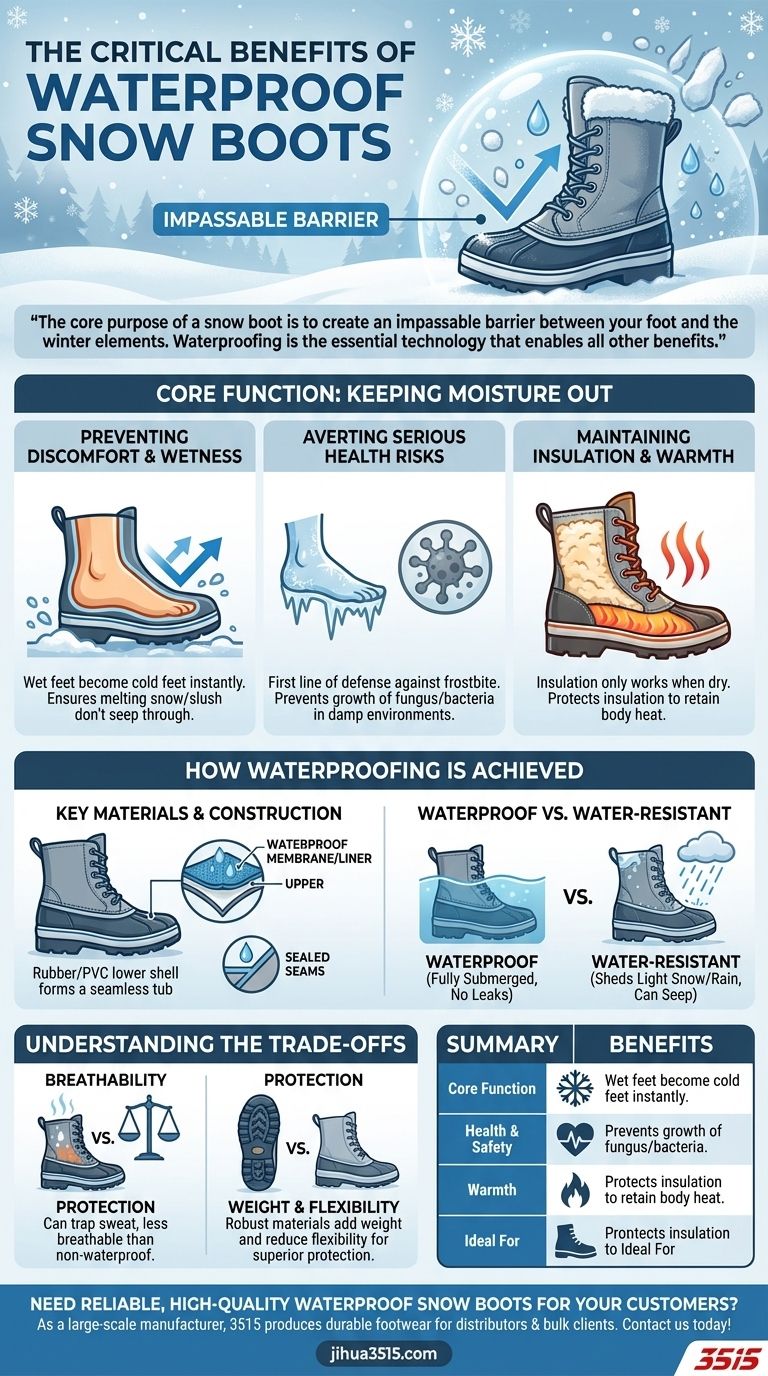
The core purpose of a snow boot is to create an impassable barrier between your foot and the winter elements. Waterproofing isn't a bonus feature; it's the essential technology that enables all other benefits, from warmth to health and safety.
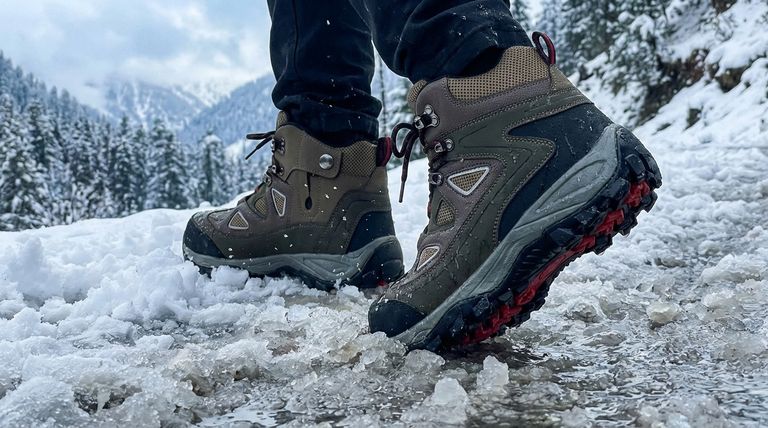
The Core Function: Keeping Moisture Out
A snow boot's value is directly tied to its ability to manage moisture. When snow melts or you step in slush, water will find any point of entry, rendering a boot useless if it isn't properly sealed.
Preventing Discomfort and Wetness
The most immediate benefit is comfort. Wet feet become cold feet almost instantly, leading to a miserable and potentially dangerous outdoor experience. Waterproofing ensures that melting snow and slush on the boot's exterior do not seep through to your socks.
Averting Serious Health Risks
Prolonged exposure to cold and wet conditions can have significant health consequences. Waterproofing is your first line of defense against frostbite, a serious condition where skin and underlying tissues freeze. It also helps prevent the growth of fungus and bacteria, which thrive in damp environments.
Maintaining Insulation and Warmth
Insulation only works when it's dry. Once insulation materials become saturated with water, they lose their ability to trap air and retain heat. A waterproof boot protects the insulation, allowing it to perform its critical function of keeping your feet warm.
How Waterproofing is Achieved
True waterproofing is a result of both materials and construction methods working together. It's important to understand the difference between a boot that is merely water-resistant and one that is fully waterproof.
Key Materials and Components
The base of most snow boots, the sole and lower shell, is typically made from inherently waterproof materials like rubber or PVC. These materials form a seamless tub that provides a non-porous barrier against deep snow and puddles.
Critical Construction Features
Uppers are often made of materials like leather or synthetic textiles that require additional technology. Look for sealed seams and built-in waterproof membranes or liners, which are fabric layers that block liquid water from entering but may allow water vapor (sweat) to escape.
Waterproof vs. Water-Resistant
Water-resistant boots can shed light snow or brief rain but will eventually allow moisture to seep in under prolonged exposure. Waterproof boots are designed to be fully submerged, up to a certain height, without leaking, making them essential for deep snow and slushy conditions.
Understanding the Trade-offs
While essential for snow, a fully waterproof design does come with considerations. No single boot is perfect for every condition.
Breathability vs. Protection
The very barrier that keeps water out can also trap sweat inside. While many modern boots use breathable waterproof membranes, they are inherently less breathable than non-waterproof footwear. This can lead to overheating or dampness from sweat during high-exertion activities or in milder weather.
Weight and Flexibility
Robust waterproof materials, particularly thick rubber lowers, can add weight and reduce the flexibility of a boot compared to a standard winter or hiking boot. This is a direct trade-off for superior protection against the elements.
Making the Right Choice for Your Needs
Selecting the right boot depends entirely on how you plan to use it. Consider your most common winter environment and activity level.
- If your primary focus is deep snow and wet slush: Prioritize a truly waterproof boot with a high rubber shell and sealed seams for maximum protection.
- If your primary focus is cold but dry city walking: A highly water-resistant boot may offer a better balance of protection and breathability for casual use.
- If your primary focus is active winter sports like snowshoeing: Look for a lighter, more flexible boot that balances waterproofing with a high-performance breathable membrane to manage sweat.
Ultimately, choosing a waterproof snow boot is an investment in your comfort, health, and safety throughout the winter.
Summary Table:
| Benefit | Key Takeaway |
|---|---|
| Core Function | Creates a barrier to keep feet dry from snow, slush, and rain. |
| Health & Safety | Prevents frostbite and fungal infections by blocking moisture. |
| Warmth | Keeps insulation dry and effective for maximum heat retention. |
| Ideal For | Deep snow, slushy conditions, and prolonged outdoor exposure. |
Need reliable, high-quality waterproof snow boots for your customers?
As a large-scale manufacturer, 3515 produces a comprehensive range of durable footwear for distributors, brand owners, and bulk clients. Our production capabilities encompass all types of waterproof boots designed for superior winter protection.
Contact us today to discuss your specific needs and leverage our expertise in bulk footwear manufacturing.
Visual Guide
Related Products
- Durable Waterproof Rain Boots | Custom Manufacturer for Wholesale & Brands
- Factory Direct Wholesale Rain Boots Durable Waterproof & Fully Customizable
- Premium Flame-Retardant Waterproof Safety Boots and Shoes
- Wholesale Premium Waterproof Nubuck Safety Shoes Boots
- High Performance Fire-Retardant Waterproof Safety Boots
People Also Ask
- What are the main materials for waterproof rain boots? Choose the Right Material for Durability & Comfort
- What is the overall recommendation for choosing rain boot materials? A Guide to Rubber vs. PVC
- How does boot height affect waterproofing? Choose the Right Height for Ultimate Protection
- Why are rain boots more flexible and comfortable than snow boots? The Key Differences Explained
- What are the best types of shoes for different gardening conditions? Find Your Perfect Match.