
To properly clean motorcycle boots, the fundamental process involves removing loose debris with a brush, washing the exterior with a mild soap and water solution, allowing them to air dry completely away from direct heat, and finally, applying a conditioner if they are made of leather. This method ensures you remove road grime without damaging the protective materials.
Your motorcycle boots are a critical piece of safety equipment. The goal of cleaning is not just cosmetic; it's about preserving the integrity of the materials—whether leather, synthetic, or plastic—to ensure they continue to protect you effectively.
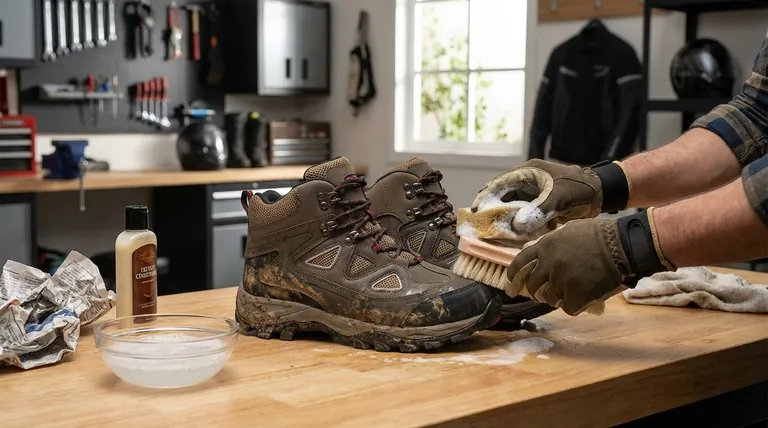
The Essential Cleaning Process: A Step-by-Step Guide
Proper maintenance is straightforward but requires attention to detail. Follow these steps to clean your boots without compromising their construction or protective qualities.
Step 1: Preparation and Dry Cleaning
Before introducing any water, remove the laces and insoles to allow for more thorough cleaning and drying.
Use a soft-bristled brush to gently remove all caked-on mud, dust, and road grime. Pay special attention to seams, buckles, and ventilation areas where debris accumulates.
Step 2: The Gentle Wash
Create a solution of mild soap, like dish soap, and warm water. Harsh chemical cleaners can strip protective oils from leather and damage synthetic materials.
Dip a soft cloth or sponge into the soapy water, wring it out, and gently wipe down the exterior of the boots. Avoid oversaturating the material, especially leather.
After cleaning, use a separate damp cloth with clean water to wipe away any soap residue.
Step 3: Tackling the Soles
The soles and any rubber components can handle slightly more aggressive cleaning. Use your soft-bristled brush and the soapy water solution to scrub the treads and remove embedded dirt.
Step 4: Proper Drying is Non-Negotiable
This is the most critical step for preserving your boots' lifespan. Never use direct heat—such as a hairdryer, radiator, or direct sunlight—to speed up drying.
Forcing them to dry too quickly will crack leather, weaken adhesives, and can cause synthetic materials to become brittle. Stuff the boots with newspaper to absorb internal moisture and let them air dry naturally at room temperature.
Step 5: Conditioning (For Leather Boots Only)
Once the boots are completely dry, apply a quality leather conditioner. This replenishes the natural oils in the leather, keeping it supple, preventing cracks, and maintaining its water resistance.
Work a small amount of conditioner into the leather with a clean, soft cloth.
Addressing the Interior: Odor and Hygiene
A clean exterior is only half the battle. The inside of your boots requires regular attention to prevent bacteria and odor buildup.
Step 1: Clean the Lining
Wipe the inside of the boot with a cloth dampened with the same mild soap and water solution. Use a clean, damp cloth afterward to "rinse" any residue.
Ensure the interior is completely dry before wearing the boots again.
Step 2: Eliminate Odors
For persistent odors, mix a 50/50 solution of white vinegar and water in a spray bottle.
Lightly mist the inside of the boots and let them air dry completely. The vinegar will neutralize odor-causing bacteria, and the smell will dissipate as it dries.
Common Pitfalls to Avoid
Mistakes during cleaning can cause irreversible damage, reducing the safety and lifespan of your gear. Be aware of these common errors.
Using Harsh Chemicals
Avoid all solvents, degreasers, and aggressive household cleaners. These products are not designed for the complex materials used in motorcycle boots and can destroy them. Stick to mild soap.
The Dangers of Improper Drying
The temptation to speed up the drying process is the single most common way riders ruin their boots. Direct heat breaks down the boot's structure from the glue holding the sole to the fibers of the leather itself.
Assuming "Waterproof" Means "Machine Washable"
Never put your motorcycle boots in a washing machine or dryer. The forceful tumbling and high heat will delaminate membranes, destroy stitching, and ruin the boot's protective structure.
A Cleaning Strategy for Your Boot Type
Your specific approach may vary slightly depending on the primary material of your boots.
- If you have full-grain leather boots: The conditioning step is absolutely essential to prevent drying and cracking.
- If you have synthetic or textile boots: Focus on using only mild soap and never use a leather conditioner, as it won't be absorbed.
- If you have adventure or motocross boots: Pay extra attention to cleaning buckles, hinges, and plastic panels with a brush to ensure they function correctly.
- If odor is your main concern: Make regular interior cleaning with a vinegar solution a part of your routine.
Consistent, proper care ensures your boots will be ready and able to protect you on every ride.
Summary Table:
| Step | Key Action | Purpose |
|---|---|---|
| 1. Preparation | Remove laces/insoles; brush off debris. | Prevents damage during washing. |
| 2. Gentle Wash | Use mild soap and water; avoid oversaturation. | Cleans without harming materials. |
| 3. Drying | Air dry naturally; stuff with newspaper. | Prevents cracking from heat. |
| 4. Conditioning | Apply conditioner (leather boots only). | Maintains suppleness and water resistance. |
| 5. Interior Care | Clean lining; use vinegar solution for odors. | Ensures hygiene and comfort. |
Need durable, easy-to-maintain motorcycle boots? As a large-scale manufacturer, 3515 produces a comprehensive range of high-performance footwear designed for longevity and safety. Our expertise ensures every pair, whether for distributors, brand owners, or bulk clients, is built with quality materials that simplify cleaning and upkeep. Contact us today to discuss your footwear needs and discover how we can deliver reliable, protective gear for your market.
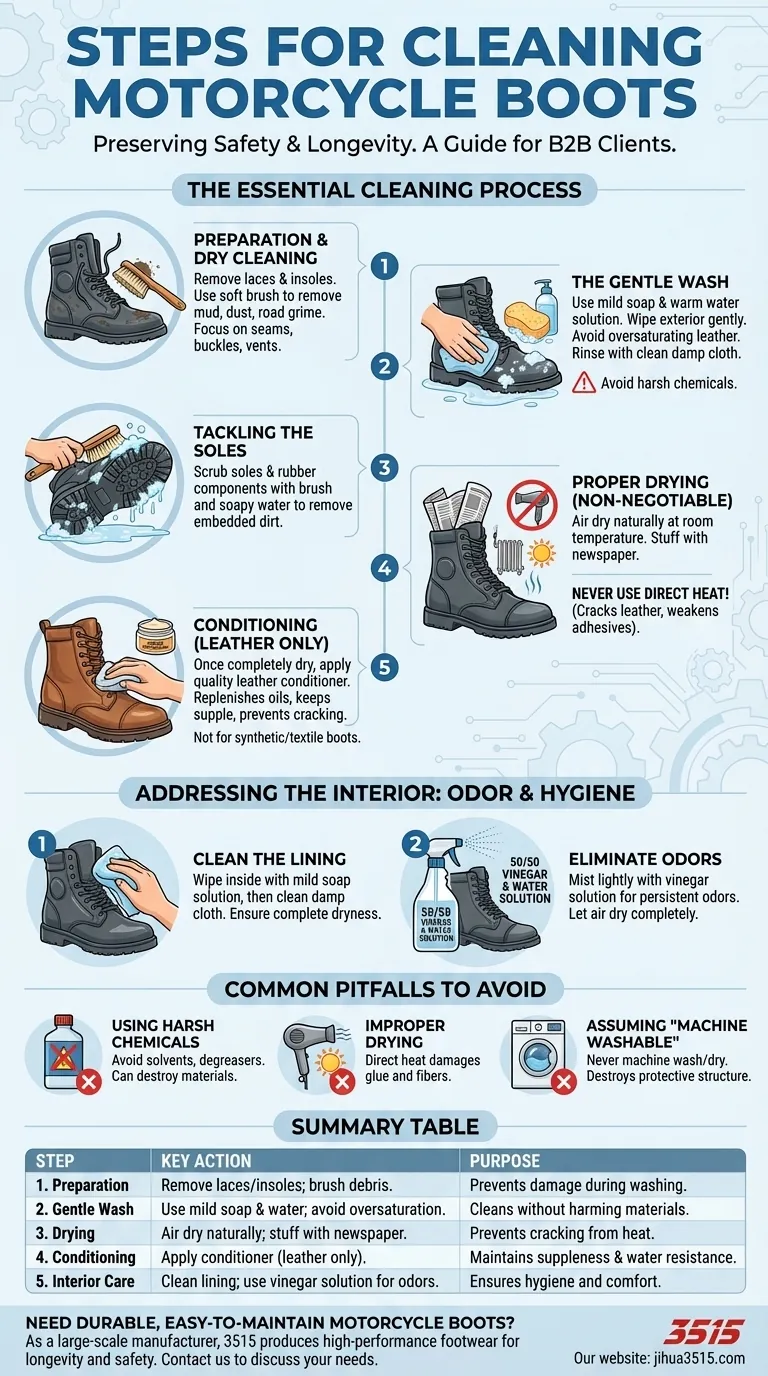
Visual Guide
Related Products
- Wholesale Tactical Boots High-Traction & Reflective for Bulk & Brand Orders
- High Performance Fire-Retardant Waterproof Safety Boots
- Durable Goodyear Welt Leather Work Boots for Wholesale & Private Label
- Wholesale High-Traction Camo Boots - Custom Manufacturer for Brands
- Heavy-Duty Waterproof Nubuck Safety Boots Safety Shoes for Bulk Supply
People Also Ask
- How do tactical boots protect against injuries? Discover the Integrated Safety System
- What is the role of professional 3D medical imaging software in optimizing tactical boot design and performance?
- How does the extraction of sociodemographic factors via NLP influence the design of tactical boots and work shoes?
- What types of boots are used by Bravo in SEAL Team? Salomon & Merrell for Elite Performance
- What is the role of high-frequency acquisition hardware in technical skill analysis for outdoor and tactical boots?



















