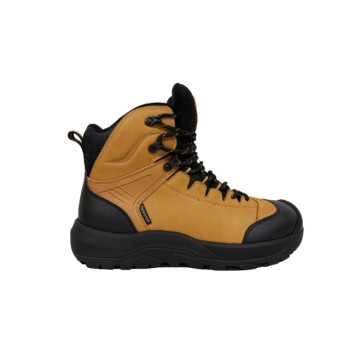
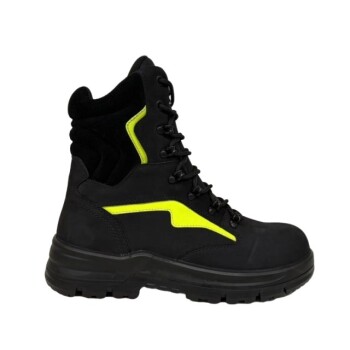
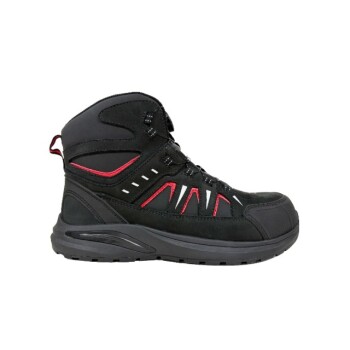
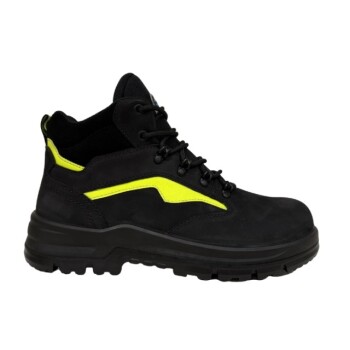
The primary benefit of insulating components in women's safety toe work boots is maintaining a safe and stable foot temperature in extreme environments. These layers trap body heat to protect against the cold, which not only enhances all-day comfort but also allows you to remain focused and safe on the job. Effective insulation works as a complete system, especially when paired with the right type of safety toe.
While warmth is the most obvious advantage, the true value of insulation lies in how it integrates with other safety features. The right combination protects you from environmental hazards, not just physical impacts, ensuring your gear is an asset rather than a liability in challenging conditions.
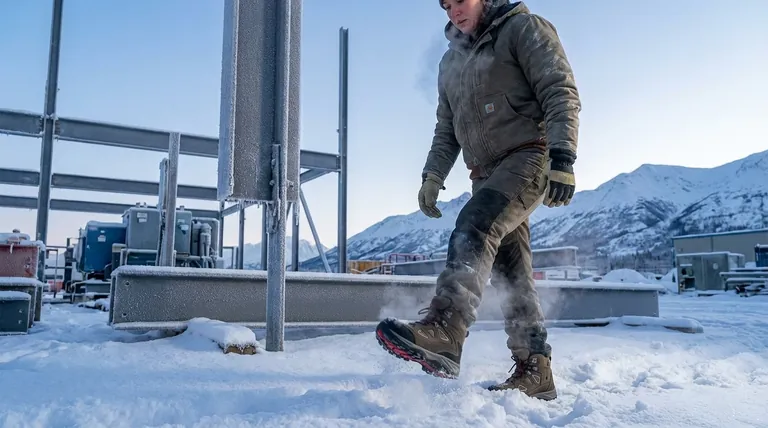
Beyond Warmth: The Core Functions of Insulation
Insulation in safety footwear is a critical performance feature that goes far beyond simple comfort. It's an engineered system designed to protect you from the environment you work in.
Regulating Foot Temperature
The main purpose of insulation is to trap a layer of air, warmed by your body heat, around your foot. This dramatically slows the rate at which cold from the outside environment can penetrate the boot.
This thermal regulation is essential for preventing cold-related health issues, from discomfort and numbness to more serious conditions like frostbite in extreme weather.
Enhancing All-Day Comfort and Focus
Cold feet are a major distraction. When your body is focused on staying warm, your mental and physical energy is diverted from the task at hand.
By keeping your feet comfortably warm, insulated boots help you maintain focus, which is a critical aspect of workplace safety. This sustained comfort reduces fatigue over long shifts.
Working in Tandem with Waterproofing
Insulation is most effective when your feet are dry. Moisture rapidly pulls heat away from the body, rendering even the best insulation less effective.
For this reason, high-quality insulated boots are almost always built with a waterproof membrane. This combination ensures your feet stay both dry from external moisture and warm from retained body heat.
How Insulation Impacts Safety Toe Performance
The material of your safety toe cap plays a significant role in the overall thermal performance of an insulated boot. The choice between steel and composite materials is not just about weight; it's about thermal conductivity.
The Steel Toe Conundrum
Steel is a highly conductive material. This means it efficiently transfers energy, including cold.
In a cold environment, a steel toe cap can act like an ice cube inside your boot, drawing heat away from your toes and directly counteracting the benefits of the boot's insulation.
The Composite Toe Advantage
Composite toes, made from materials like carbon fiber, Kevlar, or specialized plastics, are poor thermal conductors.
They do not transfer cold (or heat) easily, making them the superior choice for insulated footwear. A composite toe ensures that the front of your boot remains as thermally protected as the rest of your foot.
Maintaining the Safety Standard
It is critical to understand that both composite and steel toes are rated to meet the same ASTM standards for impact and compression resistance. The choice is not about one being "safer" from physical threats, but about which is better suited for your specific temperature environment.
Understanding the Trade-offs
While essential for cold weather, insulation is not a feature for every job site. Choosing an insulated boot when it isn't needed can create new problems.
Breathability and Overheating
The primary job of insulation is to trap heat. In warm or even mild conditions, this can lead to overheating and excessive sweating.
Sweaty feet can cause significant discomfort, blisters, and other skin issues. An insulated boot is a specialized tool for cold environments, not a year-round solution.
Bulk and Weight
Adding layers of insulation can increase the overall weight and bulk of a work boot. While modern materials have minimized this issue, it's still a factor to consider.
Uninsulated boots will almost always be lighter and more streamlined than their insulated counterparts.
Making the Right Choice for Your Environment
Selecting the appropriate boot requires an honest assessment of your typical working conditions. Use your most common environmental challenge as your guide.
- If your primary focus is working in cold, snowy, or freezing conditions: Prioritize a boot with a dedicated insulation package and a composite safety toe for maximum thermal protection.
- If your primary focus is protection from electrical hazards in the cold: A composite toe is essential, as it is non-metallic and does not conduct electricity or cold.
- If your primary focus is working in mixed weather or mildly cool environments: A lightly insulated or uninsulated waterproof boot will offer more versatility and prevent overheating on warmer days.
- If your primary focus is indoor or warm-weather work: Avoid insulated boots entirely to ensure your feet remain cool, dry, and comfortable.
Ultimately, selecting the right level of insulation transforms your work boot from simple protection into a critical tool for performance and safety.
Summary Table:
| Insulation Benefit | Key Function | Key Consideration |
|---|---|---|
| Temperature Regulation | Traps body heat to protect against cold and prevent frostbite. | Can cause overheating in warm environments. |
| Enhanced Comfort & Focus | Reduces fatigue and distraction by keeping feet warm. | Essential for maintaining safety during long shifts. |
| Synergy with Safety Toe | Composite toes (non-conductive) are ideal; steel toes can transfer cold. | Both meet ASTM safety standards; choice depends on environment. |
| Works with Waterproofing | Most effective when paired with a waterproof membrane to keep feet dry. | Moisture reduces insulation's effectiveness. |
Ready to equip your workforce with high-performance safety footwear?
As a large-scale manufacturer, 3515 produces a comprehensive range of insulated work boots for distributors, brand owners, and bulk clients. Our expertise ensures your team has the right footwear for extreme conditions, combining superior insulation, composite safety toes, and waterproofing for maximum comfort and safety.
Contact us today to discuss your specific needs and discover how we can support your business with reliable, high-quality footwear solutions.
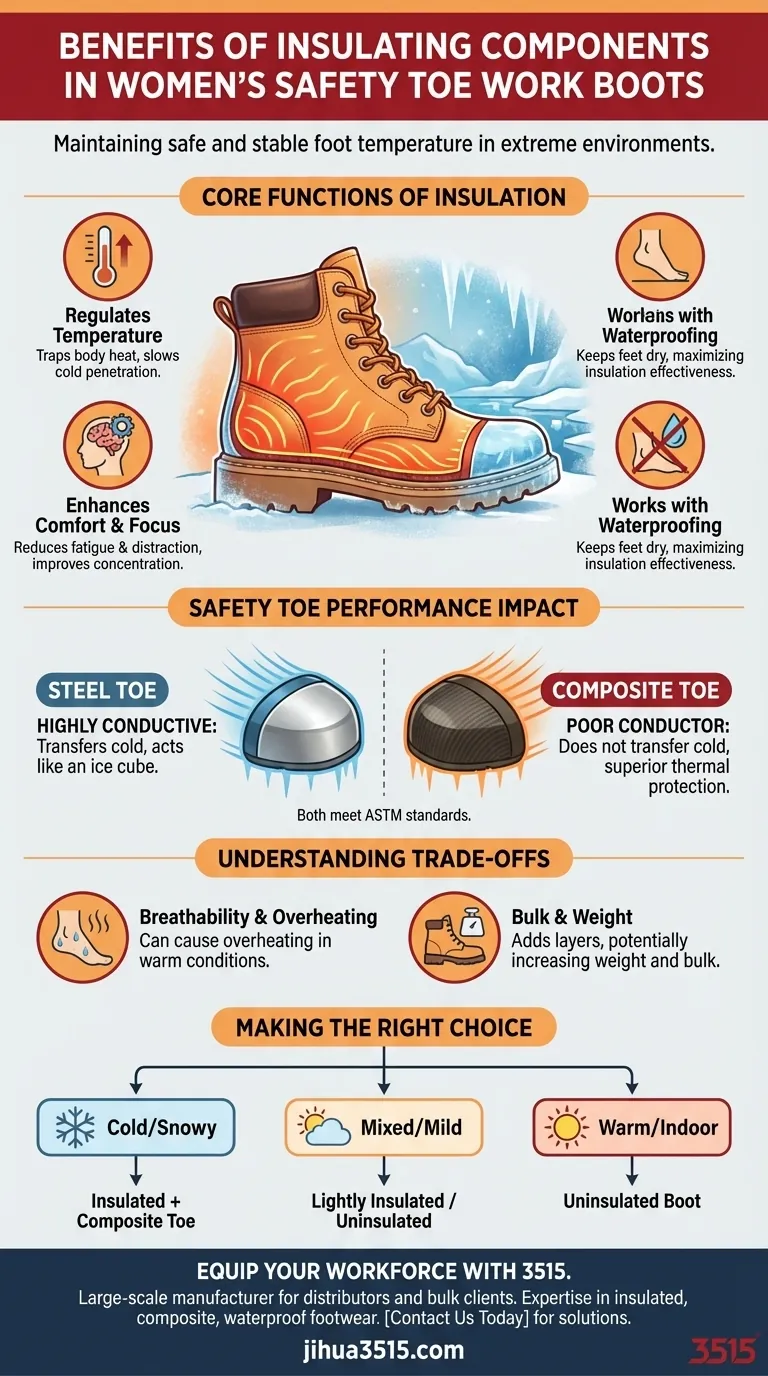
Visual Guide
Related Products
- Premium Insulated Safety Boots and Shoes for Wholesale & Bulk Orders
- Wholesale Leather Safety Boots with Customizable Protective Toe
- Wholesale Customizable Safety Boots Durable & Protective Footwear Manufacturing
- Wholesale Durable 6-Inch Work Boots | Custom & Private Label Manufacturer
- Durable Leather Moc Toe Work Boots for Wholesale & Custom Manufacturing
People Also Ask
- What are the recommended insulation ratings for mild winter conditions? A Guide for Active & Stationary Workers
- How does insulation thickness correlate with temperature ranges? A Guide to Choosing the Right Warmth
- What insulation level is needed for severe cold and stationary work? 1200g or Higher is Essential
- What safety advantages do insulated boots offer beyond warmth? Dielectric Protection & Superior Grip
- How does fleece lining contribute to the warmth of insulated boots? Trapping Air for Superior Cold Protection