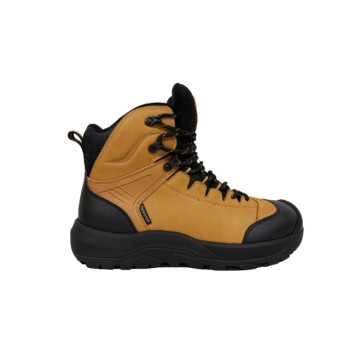
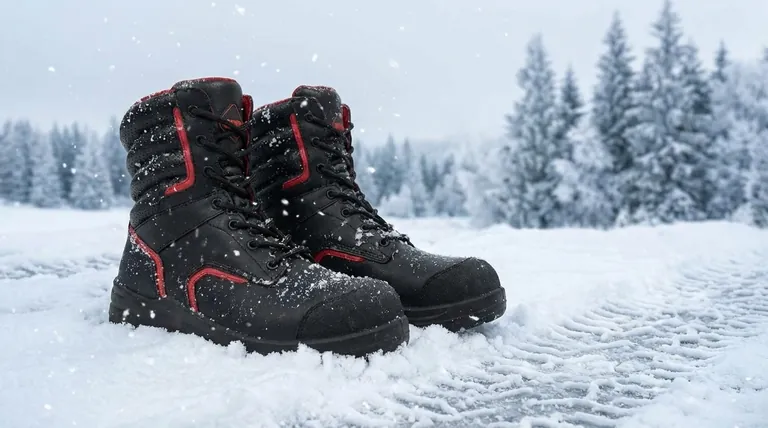
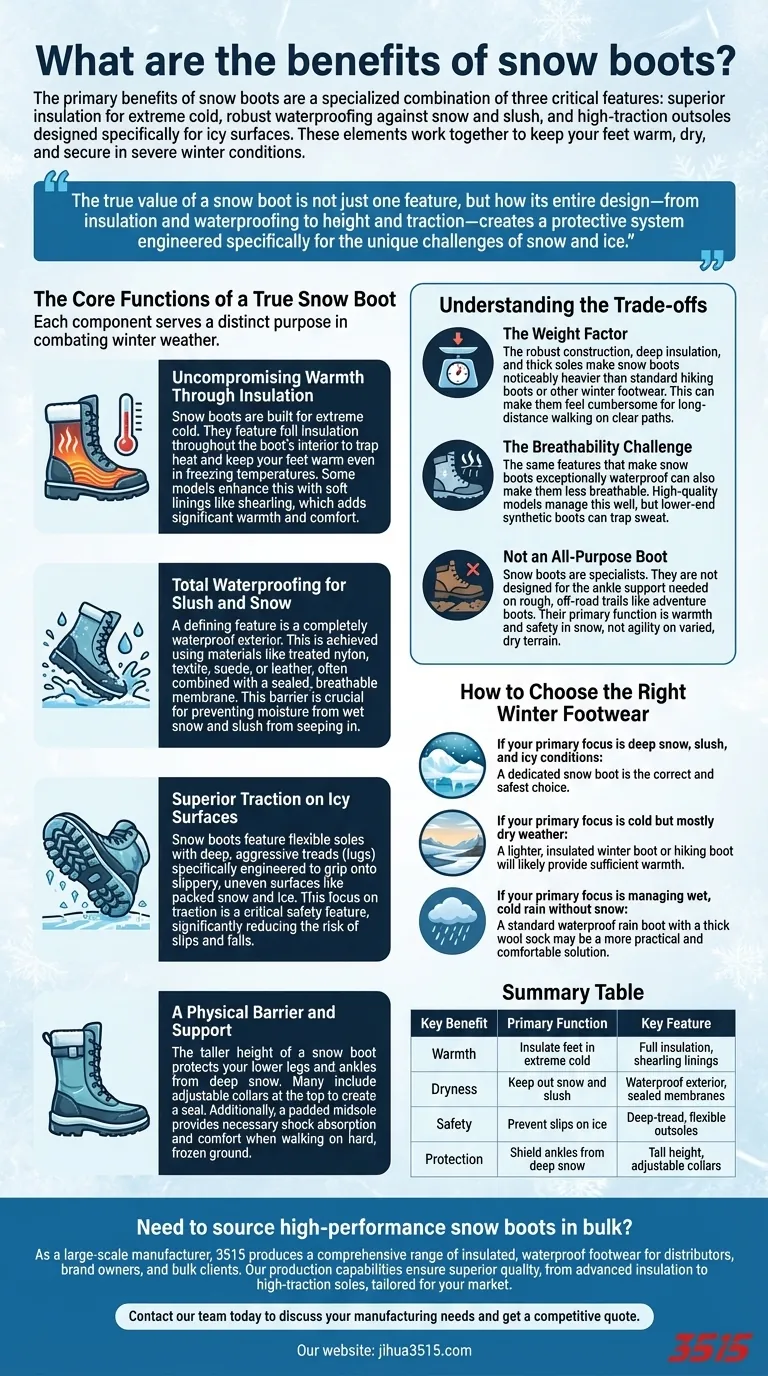
The primary benefits of snow boots are a specialized combination of three critical features: superior insulation for extreme cold, robust waterproofing against snow and slush, and high-traction outsoles designed specifically for icy surfaces. These elements work together to keep your feet warm, dry, and secure in severe winter conditions where other footwear would fail.
The true value of a snow boot is not just one feature, but how its entire design—from insulation and waterproofing to height and traction—creates a protective system engineered specifically for the unique challenges of snow and ice.
The Core Functions of a True Snow Boot
To understand their benefits, you must look at snow boots as a piece of specialized equipment. Each component serves a distinct purpose in combating winter weather.
Uncompromising Warmth Through Insulation
Snow boots are built for extreme cold. They feature full insulation throughout the boot's interior to trap heat and keep your feet warm even in freezing temperatures.
Some models enhance this with soft linings like shearling, which adds significant warmth and comfort.
Total Waterproofing for Slush and Snow
A defining feature is a completely waterproof exterior. This is achieved using materials like treated nylon, textile, suede, or leather, often combined with a sealed, breathable membrane.
This barrier is crucial for preventing moisture from wet snow and slush from seeping in, which is the fastest way for feet to get dangerously cold.
Superior Traction on Icy Surfaces
Standard boot soles are not designed for ice. Snow boots feature flexible soles with deep, aggressive treads (lugs) specifically engineered to grip onto slippery, uneven surfaces like packed snow and ice.
This focus on traction is a critical safety feature, significantly reducing the risk of slips and falls.
A Physical Barrier and Support
The taller height of a snow boot protects your lower legs and ankles from deep snow. Many include adjustable collars at the top to create a seal that keeps snow from falling inside.
Additionally, a padded midsole provides necessary shock absorption and comfort when walking on hard, frozen ground.
Understanding the Trade-offs
No specialized gear is perfect for every situation. Being objective about a snow boot's limitations is key to knowing when to use them.
The Weight Factor
The robust construction, deep insulation, and thick soles make snow boots noticeably heavier than standard hiking boots or other winter footwear. This can make them feel cumbersome for long-distance walking on clear paths.
The Breathability Challenge
The same features that make snow boots exceptionally waterproof can also make them less breathable. High-quality models manage this well, but lower-end synthetic boots can trap sweat.
This moisture buildup can eventually make your feet feel cold and damp from the inside, even if no external water gets in.
Not an All-Purpose Boot
Snow boots are specialists. They are not designed for the ankle support needed on rough, off-road trails like adventure boots. Their primary function is warmth and safety in snow, not agility on varied, dry terrain.
How to Choose the Right Winter Footwear
Selecting the correct boot depends entirely on the conditions you will face.
- If your primary focus is deep snow, slush, and icy conditions: A dedicated snow boot is the correct and safest choice. Its integrated system of warmth, waterproofing, and traction is non-negotiable.
- If your primary focus is cold but mostly dry weather: A lighter, insulated winter boot or hiking boot will likely provide sufficient warmth without the extra weight and bulk of a full snow boot.
- If your primary focus is managing wet, cold rain without snow: A standard waterproof rain boot with a thick wool sock may be a more practical and comfortable solution.
Choosing the right footwear is about matching the tool to the task, ensuring your comfort and safety in any winter environment.
Summary Table:
| Key Benefit | Primary Function | Key Feature |
|---|---|---|
| Warmth | Insulate feet in extreme cold | Full insulation, shearling linings |
| Dryness | Keep out snow and slush | Waterproof exterior, sealed membranes |
| Safety | Prevent slips on ice | Deep-tread, flexible outsoles |
| Protection | Shield ankles from deep snow | Tall height, adjustable collars |
Need to source high-performance snow boots in bulk?
As a large-scale manufacturer, 3515 produces a comprehensive range of insulated, waterproof footwear for distributors, brand owners, and bulk clients. Our production capabilities ensure superior quality, from advanced insulation to high-traction soles, tailored for your market.
Contact our team today to discuss your manufacturing needs and get a competitive quote.
Visual Guide
Related Products
- Premium Insulated Safety Boots and Shoes for Wholesale & Bulk Orders
- Durable Waterproof Rain Boots | Custom Manufacturer for Wholesale & Brands
- Factory Direct Wholesale Rain Boots Durable Waterproof & Fully Customizable
- Wholesale Waterproof Tactical Boots Custom Suede & High-Traction Soles
- Wholesale Lightweight Tactical Boots Custom Manufacturer for Desert & Combat Use
People Also Ask
- What are the recommended insulation ratings for mild winter conditions? A Guide for Active & Stationary Workers
- How does insulation thickness correlate with temperature ranges? A Guide to Choosing the Right Warmth
- What insulation level is needed for severe cold and stationary work? 1200g or Higher is Essential
- What safety advantages do insulated boots offer beyond warmth? Dielectric Protection & Superior Grip
- How does fleece lining contribute to the warmth of insulated boots? Trapping Air for Superior Cold Protection