
In short, the primary benefits of plastic riding boots are their exceptional durability and low maintenance. They are highly resistant to the harsh conditions of a stable environment, making them an extremely practical choice for everyday groundwork, for children, or for any rider who spends significant time working with horses on the ground.
The decision between plastic and traditional leather boots is fundamentally a choice between a practical, durable "workhorse" for the stable and a refined, high-performance tool for the saddle. Understanding this distinction is key to selecting the right boot for your needs.
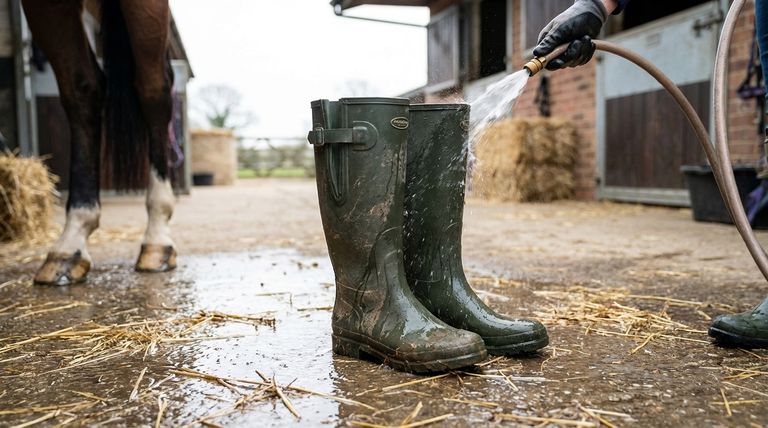
The Core Advantages of Plastic Boots
Plastic and other synthetic riding boots are engineered for practicality. Their value proposition lies in their ability to withstand the daily rigors of equestrian life with minimal upkeep.
Unmatched Durability and Resistance
Unlike leather, plastic is completely waterproof and impervious to mud, manure, and ammonia. This makes them far more resistant to the wear and tear of a stable environment, ensuring they won't degrade from constant exposure to moisture and dirt.
Ideal for Stable and Groundwork
Their robust, easy-to-clean nature makes them perfectly suited for tasks outside the saddle. You can move from mucking out a stall to hosing down a horse without worrying about damaging your footwear. A quick rinse is often all that's needed to clean them.
A Practical Choice for Beginners and Children
For new riders and children, plastic boots are an excellent starting point. They are typically more affordable than leather and their low-maintenance requirements are ideal for those still learning the ropes of horse care.
Simplicity and Ease of Use
Many synthetic boots are designed for convenience. They are often simple pull-on styles or may feature a back closure, making them quick and easy to get on and off for daily use around the yard.
Understanding the Trade-offs: Plastic vs. Leather
While plastic boots excel in durability, they present trade-offs when compared to traditional leather boots, particularly regarding in-saddle performance.
Feel and Flexibility
Leather is known for breaking in and molding to the rider's leg, which allows for a closer contact and a more nuanced "feel" when applying leg aids to the horse. Plastic boots are generally stiffer and may not offer the same level of sensitivity.
Breathability and Long-Term Comfort
Leather is a natural material that breathes, which can significantly improve comfort during long rides by managing heat and sweat. Plastic is not breathable and can become hot and sweaty, especially in warm weather.
Appearance and Tradition
For the show ring, well-maintained long leather boots provide a classic, smart, and professional appearance that is the standard for competition. While some modern synthetics are stylish, they often cannot replicate the traditional aesthetic of high-quality leather.
In-Saddle Protection and Support
Long leather boots offer superior protection against chafing and pinching from stirrup leathers. Their structured design also helps to stabilize the rider's lower leg, promoting a better and more secure position in the saddle.
Making the Right Choice for Your Needs
Selecting the correct boot means matching the material's strengths to your primary activities.
- If your primary focus is daily stable work, groundwork, or casual riding: A plastic or synthetic boot is the superior choice for its unmatched durability, low cost, and ease of care.
- If your primary focus is competitive showing and refined performance: A traditional long leather boot is the correct tool for its superior feel, support, and professional appearance.
- If your primary focus is a versatile starting point for a beginner: Short synthetic boots are an excellent, affordable option that provides comfort and utility both on and off the horse.
Ultimately, choosing your riding boot is about selecting the right tool for the job you are asking it to do.
Summary Table:
| Benefit | Key Feature | Ideal For |
|---|---|---|
| Durability | Waterproof, resistant to mud/manure | Daily stable work & harsh conditions |
| Low Maintenance | Easy to clean with a quick rinse | Riders who prioritize convenience |
| Cost-Effective | Typically more affordable than leather | Beginners, children, and budget-conscious riders |
| Practicality | Often simple pull-on or back-closure styles | Groundwork and casual riding |
Looking for durable, low-maintenance riding boots for your customers?
As a large-scale manufacturer, 3515 produces a comprehensive range of footwear for distributors, brand owners, and bulk clients. Our production capabilities encompass all types of shoes and boots, including high-performance plastic riding boots built for the rigors of the stable.
We can help you stock reliable, high-quality equestrian footwear that meets the demands of your market. Contact us today to discuss your manufacturing needs and elevate your product line!
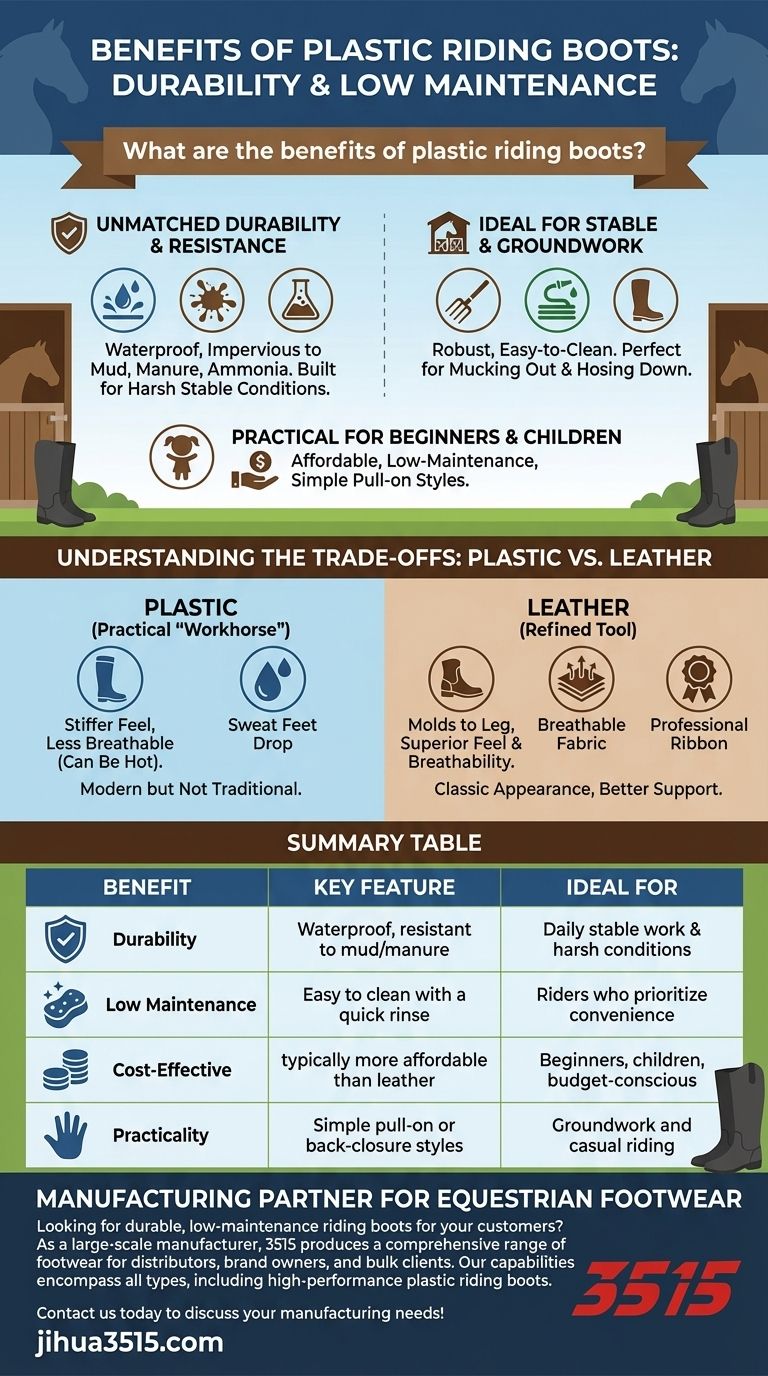
Visual Guide
Related Products
- Heavy-Duty Waterproof Nubuck Safety Boots Safety Shoes for Bulk Supply
- High-Traction Suede Tactical Boots Wholesale & Custom Manufacturing
- Premium Wholesale Waterproof Safety Boots High Performance Protection for Industrial Markets
- Premium Wholesale Tactical Style Safety Shoes Boots with Quick Lacing
- Premium Waterproof High-Cut Industrial Safety Boots for Wholesale and Bulk Orders
People Also Ask
- What primary protective functions do professional safety boots provide in urban solid waste recovery and waste picking processes? Discover Dual-Layer Protection.
- How do safety boots reduce cutting hazards? Essential Protection for Your Workforce
- Which organizations develop safety standards for work boots? Ensure Compliance & Worker Safety
- What are the common types of safety boots and their primary uses? A Guide to Industrial Footwear
- Why is ankle and arch support important in safety footwear? Prevent Injury & Fatigue



















