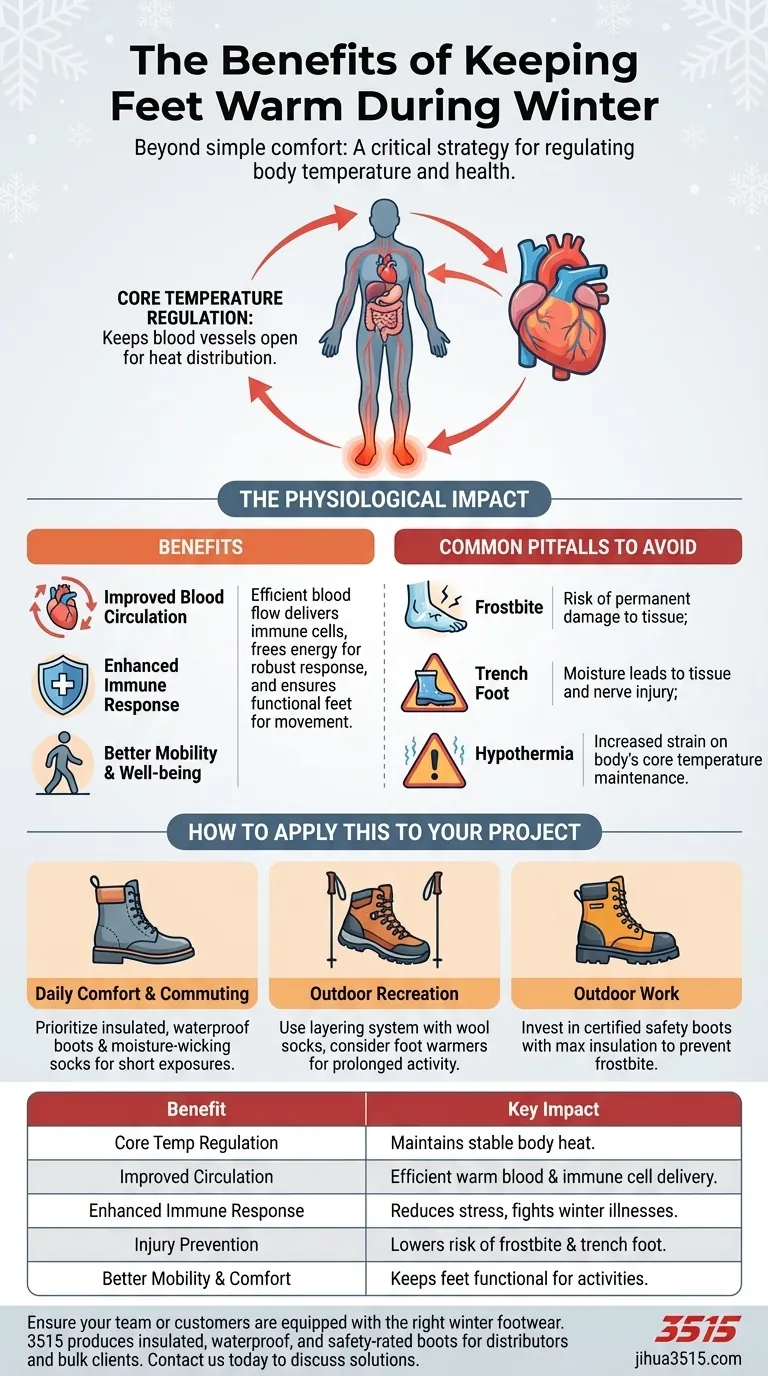
Beyond simple comfort, keeping your feet warm in winter is a critical strategy for regulating your entire body's temperature. It improves blood circulation by helping blood vessels remain open, which distributes heat more effectively, supports your immune system, and helps conserve the energy your body would otherwise spend just trying to stay warm.
Maintaining warm feet is not just about avoiding discomfort; it's a fundamental mechanism for preserving core body heat, preventing serious tissue damage like frostbite, and ensuring your body can function efficiently in cold conditions.
The Physiological Impact of Cold Feet
When your body senses cold, its primary goal is to protect your vital organs. It does this by constricting blood vessels in your extremities—your hands and feet—to reduce heat loss and keep your core warm. Keeping your feet intentionally warm counteracts this survival mechanism, leading to significant benefits.
Circulation and Core Temperature Regulation
When your feet are warm, the blood vessels in them stay dilated, or open. This allows warm blood to circulate freely, not only preventing your feet from feeling cold but also helping to maintain a more stable temperature throughout your entire body. If your extremities get cold, the rest of your body struggles to regulate its temperature effectively.
Immune System and Energy Levels
Efficient blood flow ensures that immune cells are delivered effectively throughout your body. By keeping your feet warm, you reduce the overall stress on your system, freeing up energy and resources that support a robust immune response and help reduce the likelihood of common illnesses like colds and flu.
Mobility and Well-being
Cold, numb feet directly impact your mobility and balance. Simple acts like walking can become difficult and uncomfortable. Maintaining warmth ensures your feet remain functional and comfortable, allowing you to work safely and enjoy winter activities.
Common Pitfalls to Avoid
Failing to protect your feet from the cold is not a minor oversight; it exposes you to significant health risks that go far beyond temporary discomfort. Understanding these dangers highlights the true importance of proper foot care in winter.
The Risk of Frostbite
Frostbite is a serious injury caused by the freezing of skin and underlying tissues. Cold feet are highly susceptible. Initial symptoms include numbness and a waxy appearance, but prolonged exposure can lead to permanent damage to skin, tissues, blood vessels, and nerves.
The Danger of Trench Foot
You don't need freezing temperatures to cause serious harm. Trench foot is a condition caused by prolonged exposure to cold and wet conditions. Moisture from snow or sweat drains heat rapidly, leading to tissue damage, swelling, and nerve injury.
The Onset of Hypothermia
Your feet are a key area of heat loss for the body. While cold feet alone won't cause hypothermia, they place a significant strain on your body's ability to maintain its core temperature. This added burden increases your overall risk of developing this life-threatening condition in extreme cold.
How to Apply This to Your Project
Your strategy for keeping your feet warm should adapt to your specific activity and environment.
- If your primary focus is daily comfort and commuting: Prioritize well-insulated, waterproof boots and quality moisture-wicking socks to handle short exposures to cold and slush.
- If your primary focus is outdoor recreation like hiking or skiing: Use a layering system with a thin, moisture-wicking liner sock and a thicker wool sock, and consider using supplemental foot warmers for prolonged activity.
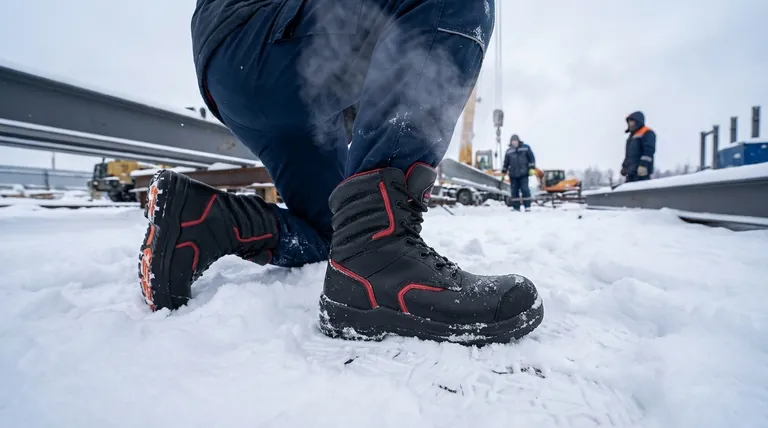
- If your primary focus is safety in an outdoor work environment: Invest in certified safety boots with maximum insulation and waterproofing, as preventing conditions like frostbite is a non-negotiable priority.
Protecting your feet from the cold is a simple but powerful investment in your overall health, safety, and ability to thrive during winter.
Summary Table:
| Benefit | Key Impact |
|---|---|
| Core Temperature Regulation | Maintains stable body heat by preventing blood vessel constriction in extremities. |
| Improved Blood Circulation | Ensures efficient delivery of warm blood and immune cells throughout the body. |
| Enhanced Immune Response | Reduces systemic stress, conserving energy to fight off winter illnesses. |
| Injury Prevention | Significantly lowers the risk of serious conditions like frostbite and trench foot. |
| Better Mobility & Comfort | Keeps feet functional and comfortable for work, commuting, or outdoor activities. |
Ensure your team or customers are equipped with the right winter footwear. As a large-scale manufacturer, 3515 produces a comprehensive range of insulated, waterproof, and safety-rated boots and shoes for distributors, brand owners, and bulk clients. From daily commuter boots to heavy-duty work footwear, we have the production capabilities to meet your needs.
Contact us today to discuss how our winter footwear solutions can protect health and enhance performance.
Visual Guide