
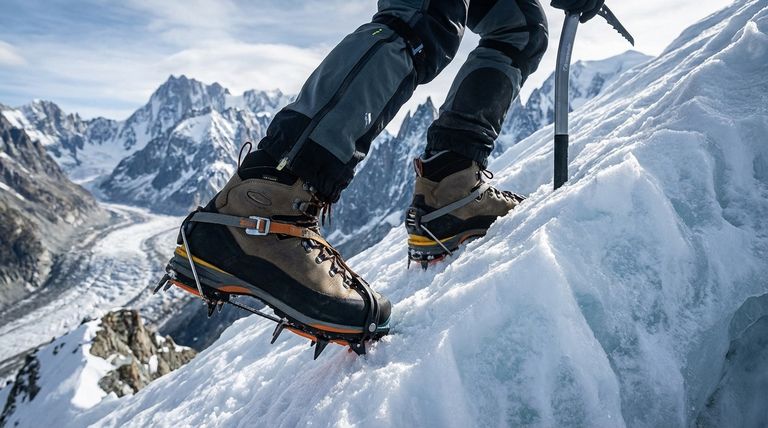
In short, mountaineering boots are highly specialized tools designed for ascending steep, technical terrain in alpine environments. Unlike regular hiking or snow boots, their purpose extends beyond warmth and waterproofing to provide a rigid, stable platform for climbing rock, ice, and snow-covered peaks.
The defining characteristic of a mountaineering boot is not just its warmth, but its unyielding stiffness. This rigidity is essential for providing a secure platform for crampons and supporting a climber's entire weight on the smallest of edges.
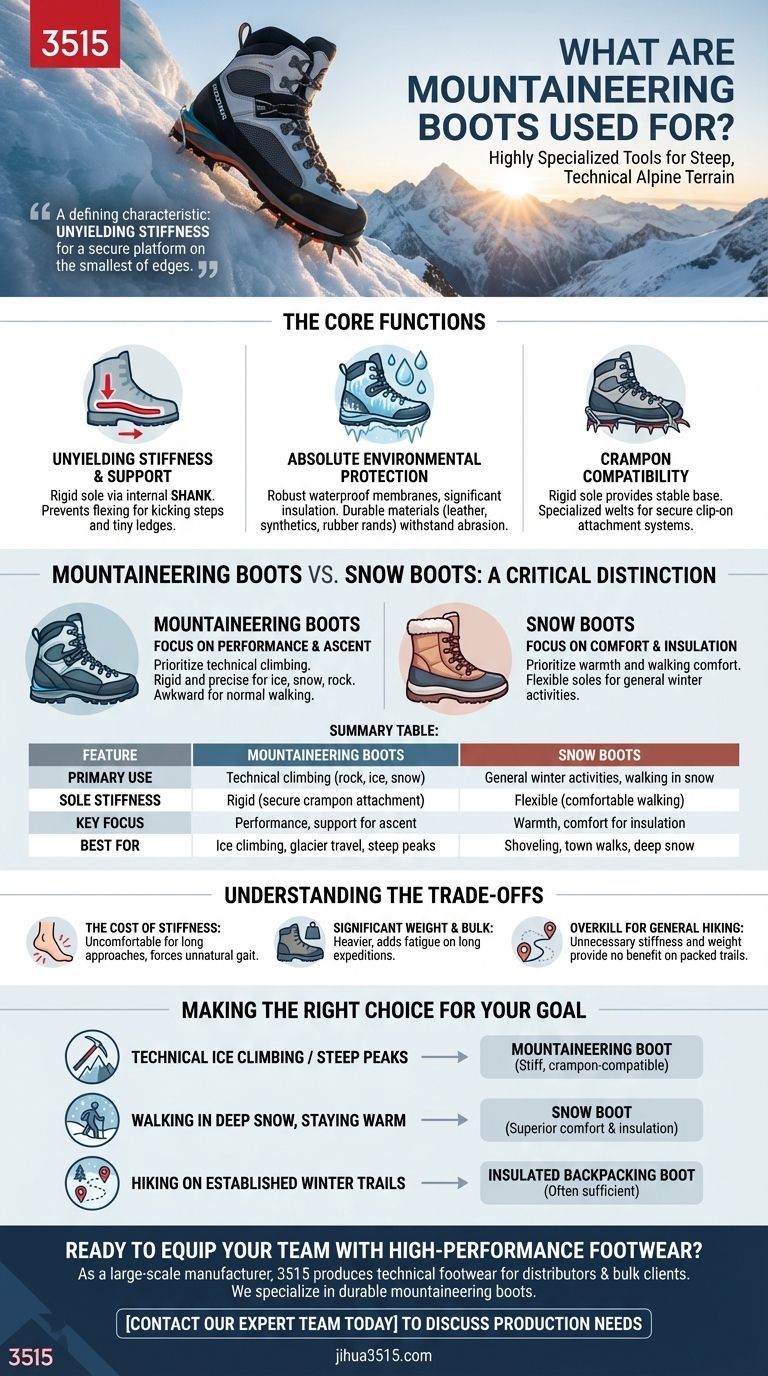
The Core Functions of a Mountaineering Boot
A true mountaineering boot, also known as an alpine boot, is engineered around three critical performance pillars that separate it from all other footwear.
Unyielding Stiffness and Support
The most important feature is a rigid sole, which is achieved with an internal support plate called a shank.
These shanks, often running three-quarters or the full length of the boot, prevent the sole from flexing. This rigidity allows you to kick steps into hard snow and stand securely on tiny rock ledges.
Absolute Environmental Protection
Mountaineering boots are built for the harshest conditions on earth. They feature robust, waterproof membranes and significant insulation to protect against extreme cold.
Their construction often includes highly durable materials like thick leather, synthetic fabrics, and protective rubber or Kevlar rands to withstand abrasion from rock and ice.
Crampon Compatibility
The rigid sole creates a stable base for attaching crampons—the metal spikes essential for traveling on glaciers and climbing ice.
Specialized welts on the heel and toe of the boot allow for a secure, clip-on attachment system that would be impossible with a flexible boot.
Mountaineering Boots vs. Snow Boots: A Critical Distinction
While both are used in snow, their intended purposes are worlds apart. Confusing them can be uncomfortable at best and dangerous at worst.
Focus on Performance vs. Comfort
Mountaineering boots prioritize technical performance. Their stiffness makes them precise for climbing but often awkward and clunky for normal walking on flat ground.
Snow boots prioritize warmth and walking comfort. They are designed with flexible soles and plush insulation for activities like shoveling a driveway or walking through a snowy town.
The Difference in Application
Mountaineering boots are for ascent. Their features are specifically for gaining elevation on technical terrain involving ice, snow, and rock.
Snow boots are for insulation and traction in snowy, slushy, or icy conditions. They are excellent for keeping feet warm and dry during general winter activities but lack the support needed for climbing.
Understanding the Trade-offs
The specialized nature of mountaineering boots comes with significant compromises that make them unsuitable for general use.
The Cost of Stiffness
The rigidity required for climbing makes these boots very uncomfortable for long approaches on trails. The sole barely flexes, forcing an unnatural, rocking gait.
Significant Weight and Bulk
To achieve the necessary durability and support, mountaineering boots are significantly heavier and bulkier than any other type of footwear. This adds to fatigue on long expeditions.
Overkill for General Hiking
Using a mountaineering boot for a simple winter hike is unnecessary. The extreme stiffness and weight provide no benefit on a packed trail and will only lead to discomfort.
Making the Right Choice for Your Goal
Selecting the correct footwear is about matching the tool to the specific demands of the environment and the objective.
- If your primary focus is technical ice climbing or ascending steep, snowy peaks: A stiff, fully crampon-compatible mountaineering boot is the only safe and effective choice.
- If your primary focus is staying warm and dry while walking in deep snow: A dedicated snow boot provides superior comfort, insulation, and usability for non-technical activities.
- If your primary focus is hiking on established, non-technical winter trails: Insulated and waterproof backpacking boots are often sufficient, though snow boots can offer more warmth.
Ultimately, choosing the right boot is a critical decision based on the technical demands of your objective.
Summary Table:
| Feature | Mountaineering Boots | Snow Boots |
|---|---|---|
| Primary Use | Technical climbing on rock, ice, and snow | General winter activities, walking in snow |
| Sole Stiffness | Rigid (for secure crampon attachment) | Flexible (for comfortable walking) |
| Key Focus | Performance and support for ascent | Warmth and comfort for insulation |
| Best For | Ice climbing, glacier travel, steep peaks | Shoveling, snowy town walks, deep snow |
Ready to Equip Your Team with High-Performance Footwear?
As a large-scale manufacturer, 3515 produces a comprehensive range of technical and outdoor footwear for distributors, brand owners, and bulk clients. Our production capabilities encompass all types of boots, including specialized mountaineering footwear designed for durability and performance in extreme conditions.
Let us help you source or develop the perfect boots for your customers' adventures. Contact our expert team today to discuss your production needs!
Visual Guide
Related Products
- Wholesale High-Traction Camo Boots - Custom Manufacturer for Brands
- Wholesale Lightweight Tactical Boots Custom Manufacturer for Desert & Combat Use
- Durable Rubber Sole Outdoor Shoes Wholesale & Custom Manufacturing
- Durable High-Ankle Tactical Boots Wholesale Manufacturer for Custom & Bulk Orders
- Durable High-Ankle Tactical Boots for Wholesale & Custom Manufacturing
People Also Ask
- What are the key features of the new line of camo boots? Built for Extreme Cold & Rugged Terrain
- Are camo boots necessary for hunting success? Prioritize Performance Over Pattern
- What is the technical logic behind using closed-eye testing for tactical boots? Unlocking Peak Footwear Stability
- How does the Rank Score Test identify the primary causes of premature failure in tactical and work boots? Key Insights
- What shoes to wear for a security job? Durable, Protective Footwear for Long Shifts



















