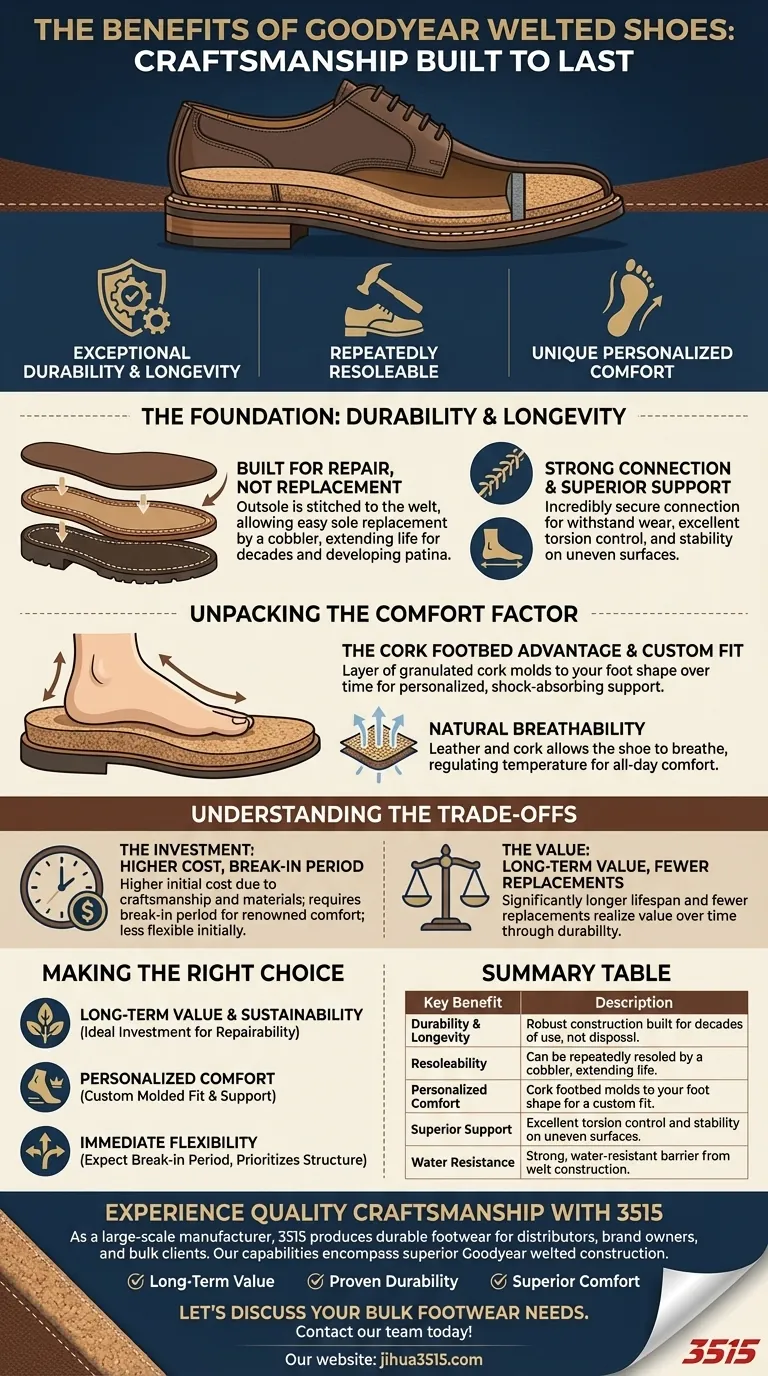
The primary benefits of Goodyear welted shoes are their exceptional durability, the ability to be repeatedly resoled, and a unique comfort that develops as the shoe's cork footbed molds to your foot. This construction method creates a strong, water-resistant, and sustainable piece of footwear designed for longevity rather than disposal.
At its core, Goodyear welting is a method of footwear construction that prioritizes long-term value. It trades initial, out-of-the-box softness for a durable, repairable shoe that becomes more comfortable and personalized the longer you wear it.
The Foundation: Durability and Longevity
The defining feature of a Goodyear welt is its robust construction, which is engineered for a long and serviceable life. This isn't just about surviving daily wear; it's about being built to be renewed.
Built for Repair, Not Replacement
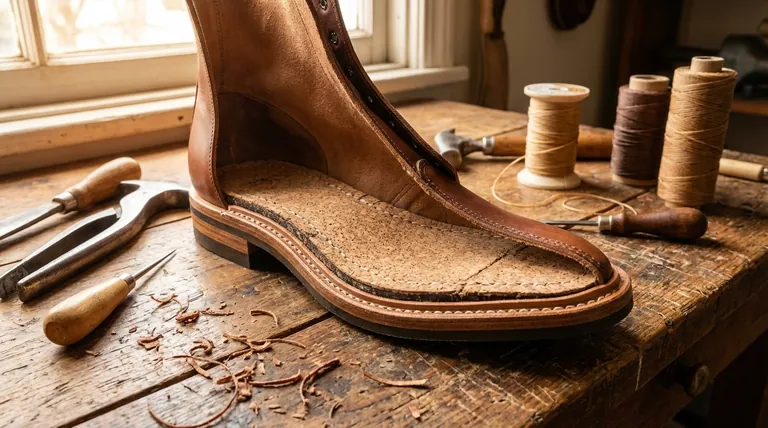
The genius of the Goodyear welt is how the outsole is stitched to the welt (a strip of leather), not directly to the upper. This allows a cobbler to easily remove the old sole and attach a new one without compromising the shoe's structure.
This repairability means that as long as the uppers are cared for, the shoes can last for decades, developing a desirable patina over years of wear.
A Strong and Secure Connection
The welt creates an incredibly strong and secure connection between the shoe's upper and its sole. This method withstands regular wear and tear far better than shoes where the sole is simply glued on.
Superior Foot Protection
This sturdy construction provides excellent torsion control, making the shoes stable and supportive, especially on uneven surfaces. This is a key reason the method is also used in high-quality work and safety boots.
Unpacking the Comfort Factor
While known for being stiff initially, Goodyear welted shoes are prized for the personalized comfort they develop over time. This is a direct result of the materials used in their construction.
The Cork Footbed Advantage
A space between the insole and the outsole is filled with a layer of granulated cork. This material is lightweight, breathable, and an excellent shock absorber.
Creating a Custom Fit
With time and wear, the cork footbed compresses and molds to the unique shape of your foot. This process creates a personalized, custom-like fit that provides exceptional support and comfort.
Natural Breathability
The use of natural materials like leather and cork in the construction allows the shoe to breathe, which helps regulate temperature and manage moisture for greater all-day comfort.
Understanding the Trade-offs
No construction method is perfect for every situation. Being a trusted advisor means acknowledging the potential downsides to ensure you make an informed decision.
The Initial Break-in Period
The same robust construction that provides longevity can make the shoes feel stiff and rigid out of the box. Goodyear welted footwear almost always requires a break-in period before it achieves its renowned comfort.
Higher Upfront Cost
The craftsmanship and high-quality materials involved mean that Goodyear welted shoes have a significantly higher initial cost than their cemented or Blake-stitched counterparts. The value is realized over the long term through durability and fewer replacements.
Reduced Flexibility
Compared to more athletic or casual constructions, a Goodyear welted shoe is less flexible. The structure that provides support and durability inherently limits the shoe's ability to bend.
Making the Right Choice for Your Goal
Selecting a Goodyear welted shoe is an investment in a particular philosophy of footwear. Your primary goal should guide your decision.
- If your primary focus is long-term value and sustainability: Goodyear welted shoes are an ideal investment due to their inherent repairability, which dramatically extends their usable life.
- If your primary focus is personalized comfort: The cork footbed that molds to your unique foot shape over time offers a level of customized support that is hard to match.
- If your primary focus is immediate, out-of-the-box flexibility: Be prepared for a break-in period, as this construction prioritizes structure and longevity over initial softness.
Ultimately, choosing a Goodyear welted shoe is a decision to invest in craftsmanship that is built to last.
Summary Table:
| Key Benefit | Description |
|---|---|
| Durability & Longevity | Robust construction built for decades of use, not disposal. |
| Resoleability | Can be repeatedly resoled by a cobbler, extending their life. |
| Personalized Comfort | Cork footbed molds to your foot shape over time for a custom fit. |
| Superior Support | Excellent torsion control and stability on uneven surfaces. |
| Water Resistance | The welt construction creates a strong, water-resistant barrier. |
Ready to Experience the Difference of Quality Craftsmanship?
As a large-scale manufacturer, 3515 produces a comprehensive range of durable footwear for distributors, brand owners, and bulk clients. Our production capabilities encompass all types of shoes and boots, including the superior Goodyear welted construction.
Partner with us to offer your customers:
- Long-Term Value: Footwear built to last for decades, not seasons.
- Proven Durability: Shoes that withstand regular wear and tear.
- Superior Comfort: A unique fit that gets better over time.
Let's discuss how we can meet your bulk footwear needs.
Contact our team today to request a quote or discuss your project!
Visual Guide
Related Products
- Durable Goodyear Welt Leather Work Boots for Wholesale & Private Label
- Wholesale Durable Leather Work Boots | 8-Inch Goodyear Welt Manufacturer
- Wholesale Durable & Breathable Training Shoes for Custom Brands
- Wholesale Breathable Training Shoes Custom Athletic Footwear Manufacturer
- Custom OEM Training Shoes Wholesale Manufacturer Durable & Breathable
People Also Ask
- What is the difference between full-grain and top-grain leather? Premium Material Guide for Boot Manufacturers
- What are the advantages of leather as an upper material for work boots? Unmatched Durability & Custom Comfort
- Why is it important to waterproof leather work boots? Protect Your Investment and Performance
- How should new leather work boots be broken in? A Guide to Comfort and Durability
- What are the advantages of leather uppers in work boots? Unmatched Durability & Protection